


Nineteenth Century Horse Sculpture
Nineteenth century horse sculpture brings physical power and equine grace into a room through cast metal and carved timber.

Nineteenth Century Horse Sculpture
A nineteenth century horse sculpture captures the form and movement of the animal through various artistic traditions, ranging from French folk art to academic realism. When searching for a nineteenth century horse sculpture, a buyer encounters domestic decorative figures, Grand Tour souvenirs, and full-scale playground items.
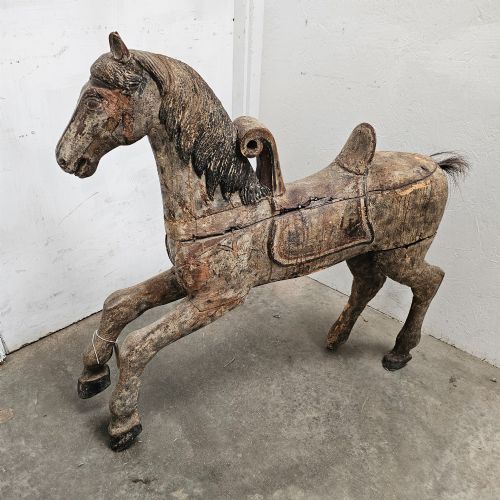
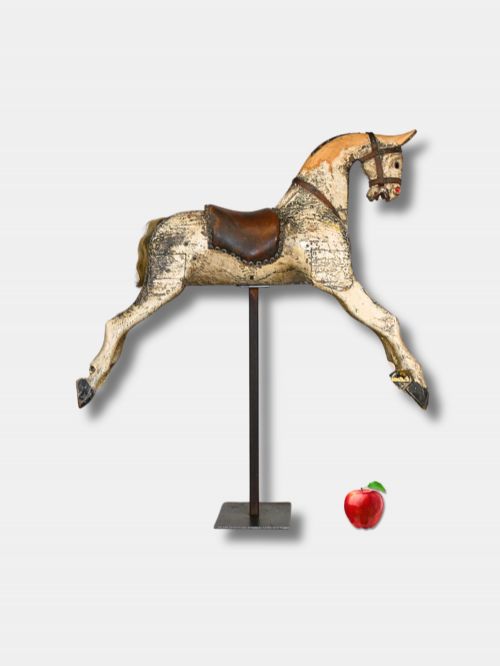
The objects on this page span the Victorian era and the broader nineteenth century, appearing as single freestanding figures, pairs, and mounted groups on stone bases. Common manifestations include grand patinated bronzes, carved wooden carousel horses, and painted timber rocking horses.
Origins stretch across England, France, and Italy, reflecting distinct regional tastes in animalier sculpture and decorative arts. French foundries and Italian souvenir carvers dominate the record, alongside English makers of children's toys and playground rides.
How they were made
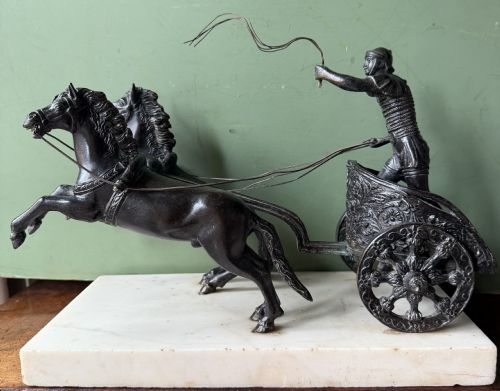
Makers utilised bronze, gilt bronze, and iron for cast metal works, employing lost-wax and sand-casting methods to achieve fine musculature and surface detail. Many of these metal figures are mounted upon marble plinths or olive wood bases.
Carved pieces rely on solid timber, occasionally enhanced with organic elements such as horsehair and leather for manes, tails, and tack. Painters applied original pigments directly to wood surfaces, creating textured finishes that endure on rocking and carousel figures.
Some wooden carousel survivors still carry the faint scent of old stable leather and decades of childhood imagination.
What varies in quality
The distinction between ordinary and exceptional work lies in the anatomical accuracy and expressive tension captured by the maker. Superior bronzes display crisp chasing and nuanced patination, while finer wooden carvings retain dynamic posture and well-preserved original paint.
Material integration also separates tiers of production, seen in how cleanly a bronze figure mounts to its marble plinth or how carefully olive wood bases are turned. The depth of detail in the casting or carving dictates the visual impact of the piece.
P. J. Mene
The Nineteenth Century Horse Sculpture Glossary
- Animalier
- A nineteenth-century artistic movement focused on the realistic depiction of animals, particularly horses, lions, and hounds. Sculptors in this genre studied live subjects closely to capture naturalistic movement.
- Grand Tour
- A traditional trip through Europe undertaken by upper-class young men in the eighteenth and nineteenth centuries to study classical art. Souvenirs purchased on these journeys frequently included small bronze sculptures of horses and charioteers.
- Lost-wax casting
- A metal-casting method where a molten metal is poured into a mould that has been created by means of a wax model. Once the mould is made, the wax is melted and drained away, leaving a cavity for the bronze.
- Patina
- A thin layer that naturally or artificially develops on the surface of bronze due to oxidation or chemical treatment. This coloration protects the metal and defines the highlights and shadows of the sculpture.
- Plinth
- A heavy base or slab upon which a statue, pillar, or vase is mounted. In nineteenth-century sculpture, these are frequently fashioned from white marble or polished olive wood.
Nineteenth Century Horse Sculpture: Frequently Asked Questions
What materials are nineteenth century horse sculptures made from?
These sculptures utilise cast metals including bronze, gilt bronze, and iron, alongside carved woods such as olive wood and pine. Some pieces incorporate organic materials like leather and horsehair to represent harnesses and manes.
Metal works often feature marble plinths for added weight and display presence, while wooden examples frequently retain layers of original paint.
Where were these horse sculptures made?
The pieces originate primarily from workshops and foundries across England, France, and Italy. French makers specialised in animalier bronzes, while Italian craftsmen produced Grand Tour souvenirs.
English production is represented strongly by traditional wooden rocking horses and carousel figures intended for domestic and recreational use.
How do I care for an antique bronze horse?
Antique bronze requires minimal intervention to preserve its original patina and surface finish. Dusting with a soft, dry cloth prevents particulate buildup without disturbing the metal.
Avoid liquid cleaners, polishes, and abrasive cloths, which can strip away historic patination and damage the underlying bronze.
How do I distinguish between French and Italian Grand Tour bronzes?
French animalier bronzes generally focus on the naturalistic movement of animals, often bearing foundry marks or artist signatures. Italian Grand Tour pieces frequently commemorate classical antiquity, depicting subjects like charioteers mounted upon white marble or olive wood bases.
Examining the base material and the subject matter helps clarify the likely origin of the casting.