




Antique Equine Statue
An antique equine statue captures the power and grace of the horse in bronze, terracotta, wood, and ceramic.

Antique Equine Statue
An antique equine statue brings the form of the horse into interior spaces, spanning periods from pre-sixteenth century pottery to early twentieth-century bronzes. When searching for an antique equine statue, collectors encounter everything from French Animalier bronzes and Victorian cast iron hitching posts to hand-carved hardwood studies and Japanese Showa period bronzes.
These pieces function as sculptural studies, mantel ornaments, and architectural salvage. The selection ranges from realistic depictions of draught horses and Arabian stallions to stylised Art Deco figures and Tang dynasty pottery horses.
Materials and construction
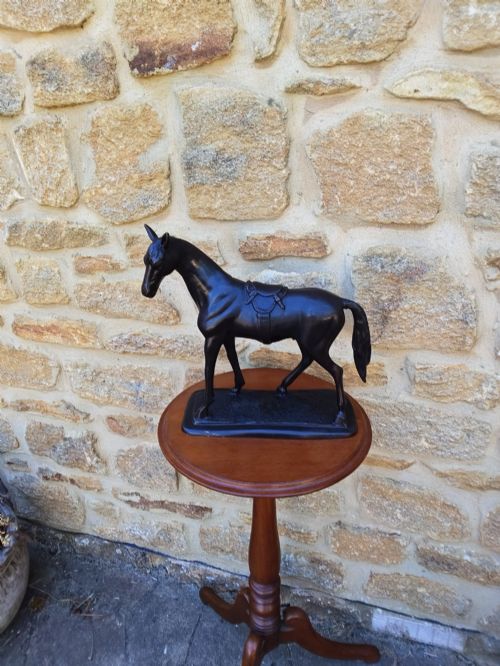
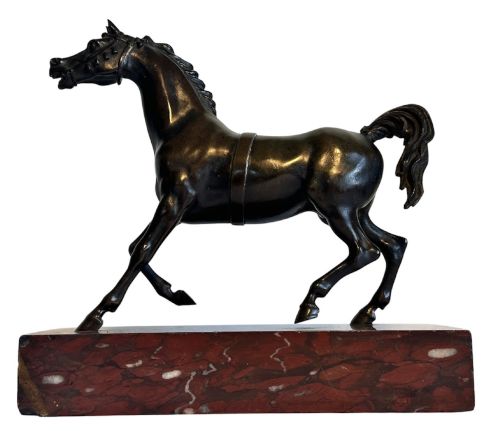
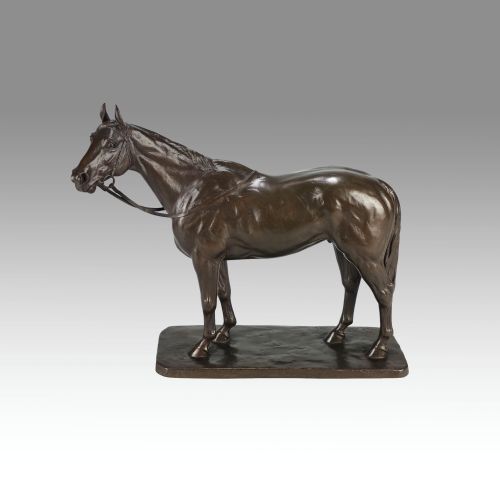
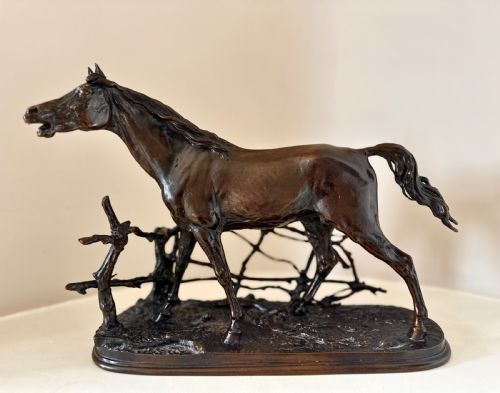
Foundry-cast bronze remains the dominant medium, often finished with a dark patina and mounted upon marble or bronze bases. Works in this group utilise the lost-wax casting method to capture musculature, veins, and harness details with precision.
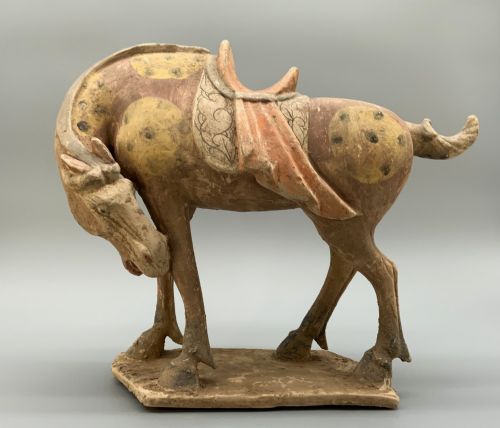
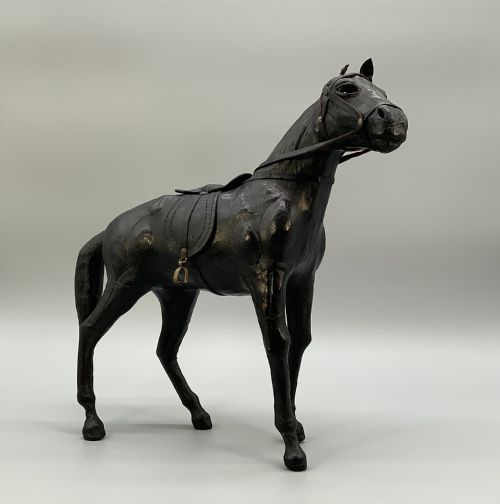
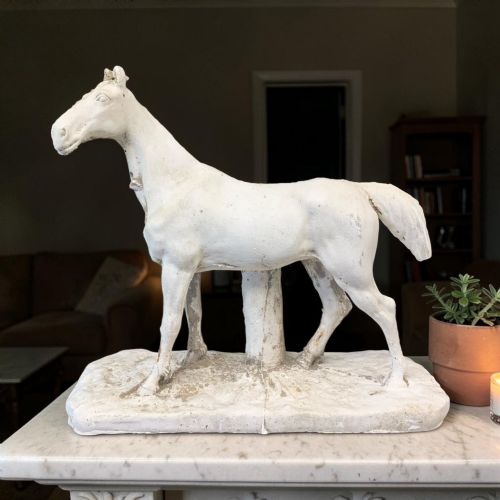
Pottery and ceramic versions employ terracotta and clay, occasionally finished with sancai glazes or mineral pigments. Other pieces utilise carved hardwood, leather over armatures, cast iron, and studio plaster.
A solitary bronze nostril stands ready to anchor the most specific equestrian collection imaginable.
Assessing quality and execution
Quality rests upon the fidelity of the anatomical modelling and the crispness of the casting or carving. Superior examples demonstrate a deep understanding of equine movement and tension, whereas lesser pieces rely on stiff outlines and repetitive surface textures.
The sophistication of the patination or glaze further separates standard production from exceptional work. Signed casts by recognised makers and pieces retaining original surface treatments command greater attention.
P J Mêne·Kunio Itô·Sakai Kōzan·Liberty & Co
The Antique Equine Statue Glossary
- Animalier
- A nineteenth-century artistic movement dedicated to the realistic portrayal of animals, particularly associated with French bronze sculptors. These works focus heavily on anatomical accuracy and naturalistic poses.
- Marly Horse
- A monumental sculptural type depicting a rearing horse restrained by a handler, originating from the famous marble groups commissioned for the Château de Marly. Scale models of these figures were frequently produced in bronze during the nineteenth century.
- Sancai
- A traditional Chinese three-colour glaze used prominently on pottery figures during the Tang dynasty. The palette typically combines amber, green, and cream tones.
- Cast iron
- An iron-carbon alloy poured into moulds to create sturdy architectural elements and utilitarian figures, such as Victorian hitching posts. This material provides substantial weight and durability.
- Patina
- The surface coloration and sheen developed naturally over time or applied chemically by a foundry to bronze and metalwork. It protects the underlying metal while enhancing visual depth.
Antique Equine Statue: Frequently Asked Questions
How do I identify a French Animalier bronze?
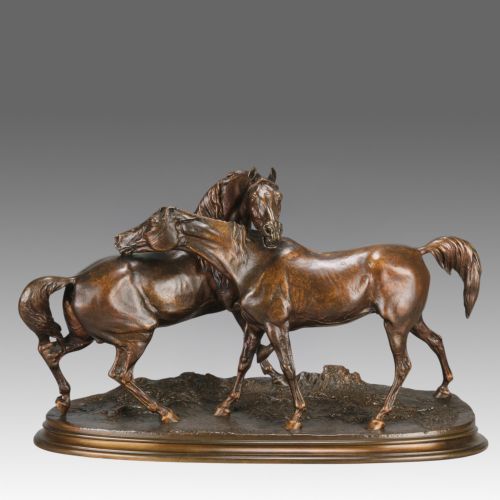
French Animalier bronzes from the nineteenth century are typically characterised by dynamic realism, capturing animals in motion or moments of struggle. They often bear the signature of the sculptor directly upon the bronze base.
Many of these pieces were cast by prominent foundries in Paris and feature rich, dark patinas that highlight the musculature of the horse.
Are Tang dynasty pottery horses genuine?
Pottery horses attributed to the Tang dynasty reflect ancient burial traditions where ceramic figures accompanied the deceased. These works utilise low-fired earthenware bodies, sometimes decorated with sancai glazes or traces of mineral pigment.
Evaluating these objects requires careful examination of the clay body, firing wear, and surface degradation associated with ancient burial environments.
What is the difference between a bronze stallion and a cast iron hitching post?
Bronze stallions are finely detailed sculptural artworks intended for interior display, often cast using the lost-wax method and mounted on marble bases. They prioritise artistic expression and anatomical precision.
Cast iron horse head hitching posts served a functional architectural purpose outside Victorian properties, offering rugged durability and weather resistance rather than fine artistic nuance.
How should I display a heavy bronze horse sculpture?
Because many equine sculptures incorporate dense materials like bronze and marble, they require a stable, level surface capable of supporting considerable weight. Placing them on sturdy sideboards or dedicated pedestals ensures safety.
Keep these pieces away from direct heat sources and moisture to preserve the integrity of the metal patina or wooden base.