



Antique French Bronze Horses
These antique french bronze horses capture equine power in metal, offering collectors dynamic animalier sculpture rooted in nineteenth-century French ateliers.
Antique French Bronze Horses
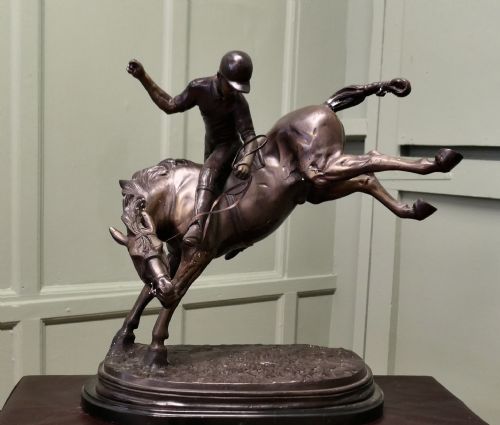
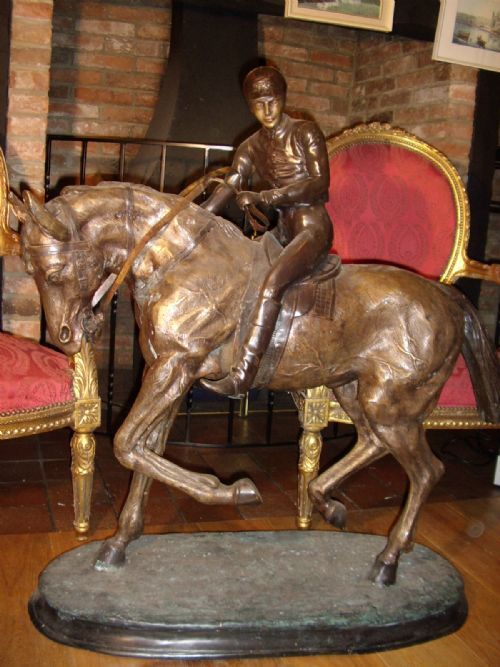
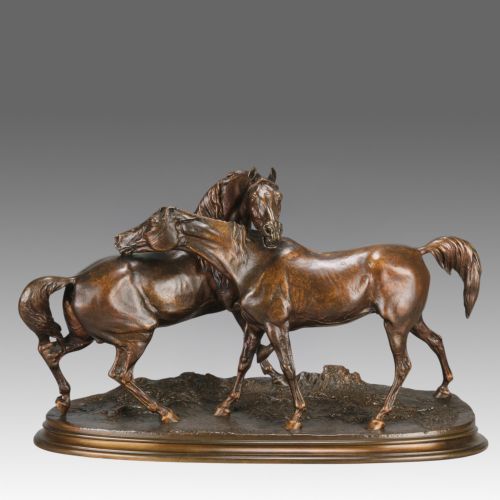
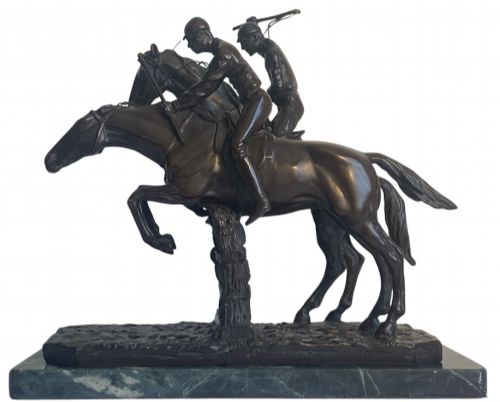
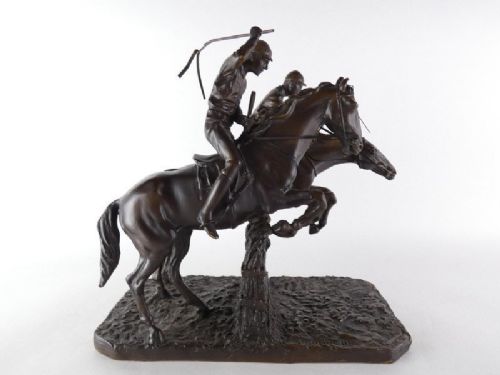
Antique french bronze horses span dynamic animalier groups, monumental pairs, and functional decorative objects like mantel clocks and sewing companions. Buyers encounter spirited subjects ranging from racing thoroughbreds and steeplechase jumpers to historical figures on horseback.
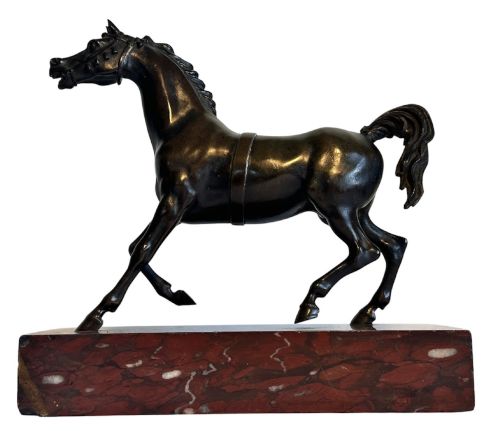
Nineteenth-century animalier sculpture dominates the selection, reflecting a period fascination with realistic animal anatomy in motion. Pieces frequently rest upon heavy marble or alabaster bases, grounding the weight of the metal.
How They Were Made
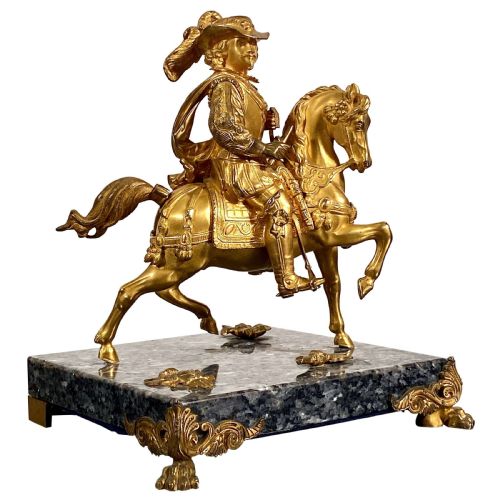
Foundries utilised traditional casting methods to shape molten bronze into complex equestrian forms, capturing fine musculature and tack. Many pieces received dark patination, while others combined cast bronze with gilt bronze, ormolu, and silver plating.
Artists mounted finished bronze figures onto fitted marble or sienna marble bases, occasionally incorporating alabaster or opaline glass into smaller decorative novelties. Artisans signed bases and figures, recording the sculptor and foundry work.
What Varies in Quality
Quality rests in the crispness of the chasing and the fidelity of the anatomical modelling across the horse and rider. Superior castings preserve fine textural details in the mane, muscle tone, and harness without soft edges.
The choice and execution of the base material distinguish works, from simple bronze mounts to substantial sienna marble and ormolu clock housings. Signed examples by documented sculptors carry distinct craftsmanship markers that separate them from unsigned workshop editions.
Pierre Jules Mène·Isidore Jules Bonheur·Charles Crozatier·Pierre Lenordez·E. Drouot·Xavier Raphanel·Paul Joseph Gayrard·Constantin Cristesco
The Antique French Bronze Horses Glossary
- Animalier
- A nineteenth-century artistic movement focused on the realistic depiction of animals. Sculptors in this genre studied live subjects closely to capture natural movement.
- Ormolu
- Gilded bronze applied to decorative arts and clock mounts. This technique creates a rich golden finish alongside darker patinated bronze elements.
- Patina
- The surface coloration and sheen developed naturally over time or applied chemically during casting. It protects the metal while defining sculptural shadows.
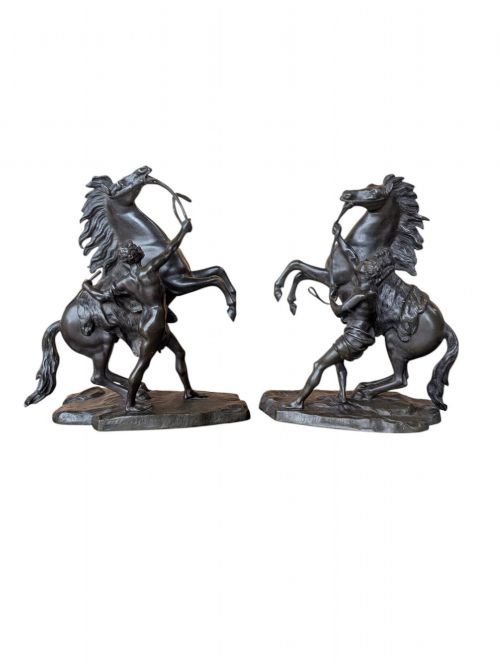
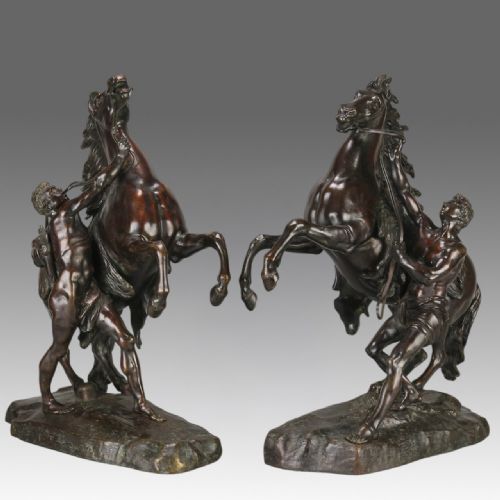
- Marly Horses
- Monumental sculptural groups depicting rearing horses restrained by grooms. These famous compositions derive from original works created for French royal parks.
- Grand Tour
- Extended travel through Europe undertaken by nineteenth-century collectors. Travellers frequently purchased bronze statuettes and souvenirs along the way.
Antique French Bronze Horses: Frequently Asked Questions
What are animalier bronze horses?
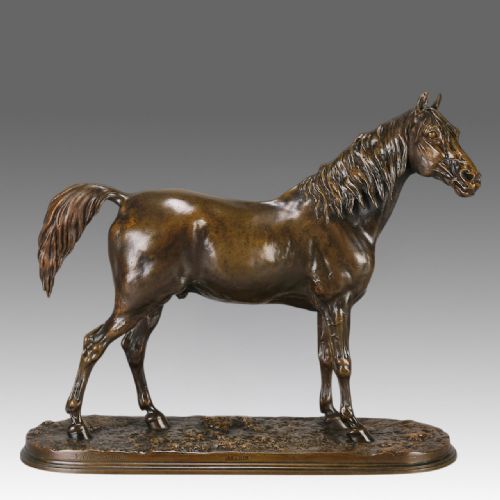
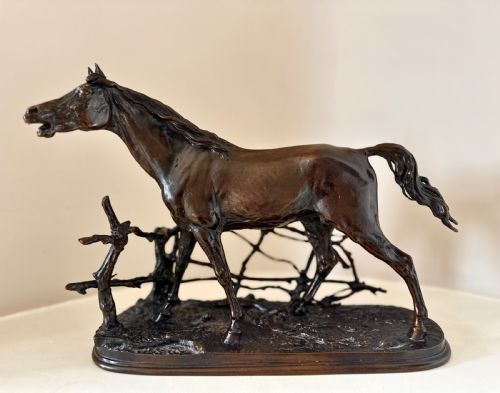
Animalier bronze horses are nineteenth-century sculptures focusing on realistic equine forms. These pieces portray horses in active poses, such as jumping, racing, or standing.
French ateliers produced numerous variations, capturing the muscular detail and temperament of the animals through metal casting.
How do I identify Marly horses?
Marly horses depict rearing animals held back by handlers, based on famous monumental public sculptures. They often appear in matched pairs cast in bronze.
Look for the characteristic rearing posture and the presence of an attendant figure struggling with the reins.
Were these horses used in clocks?
Clockmakers integrated bronze horses into mantel clocks, placing the equine figures atop sienna marble clock housings. These functional objects combined timekeeping movements with sculptural bronze groups.
Such pieces served as decorative centrepieces in nineteenth-century interiors.
What is the Palais Royal connection?
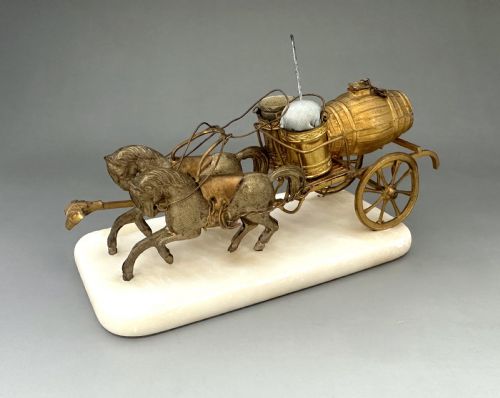
Palais Royal horse-drawn sewing companions and trinket boxes incorporate miniature equine elements into novelty desk accessories. These small items combined gilt brass, bronze, and opaline glass.
They reflect French nineteenth-century ingenuity in creating functional luxury novelties.