


French Equestrian Statue
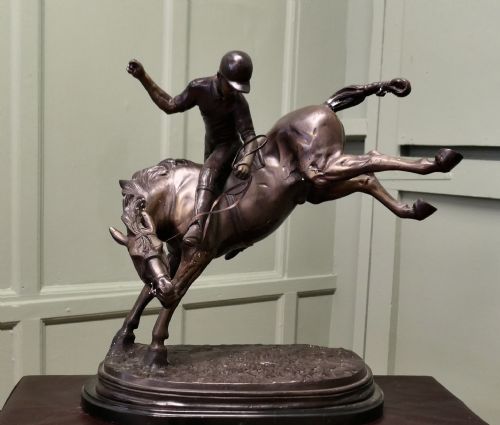
A french equestrian statue captures horse and rider in dynamic motion, bringing nineteenth-century animalier mastery directly into a room.
French Equestrian Statue
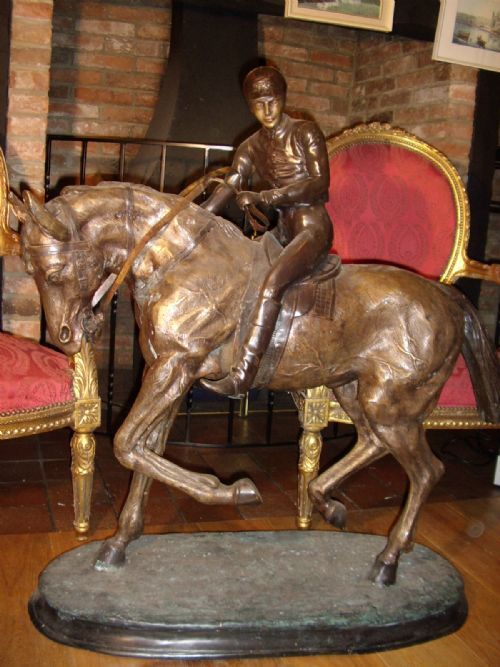
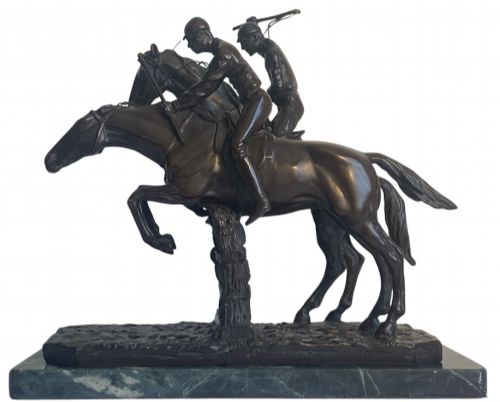
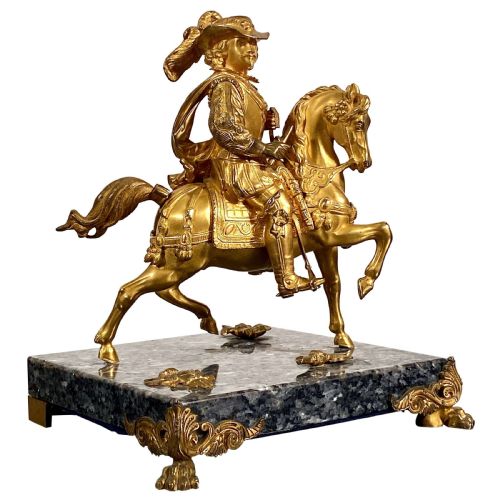
A french equestrian statue depicts mounted military figures, historical leaders such as Napoleon, and racing subjects captured mid-action. These works frequently emerge from the nineteenth century under the French Animalier school, focusing heavily on accurate equine anatomy.
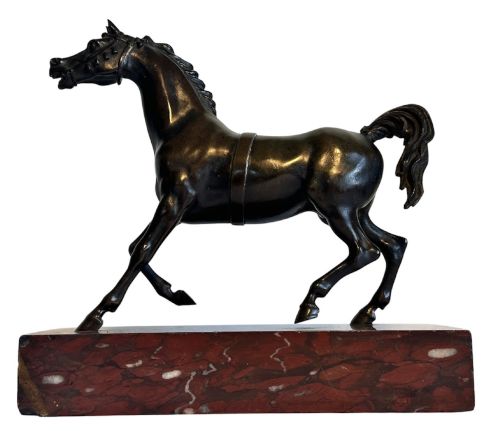
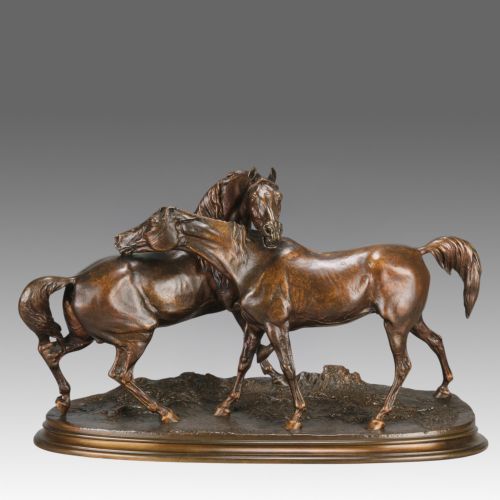
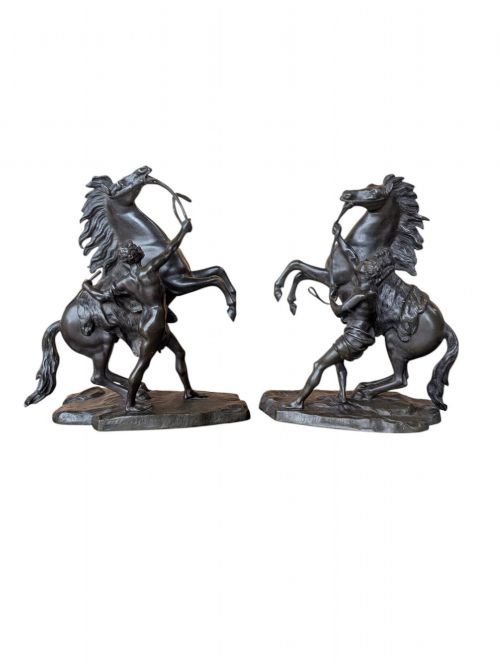
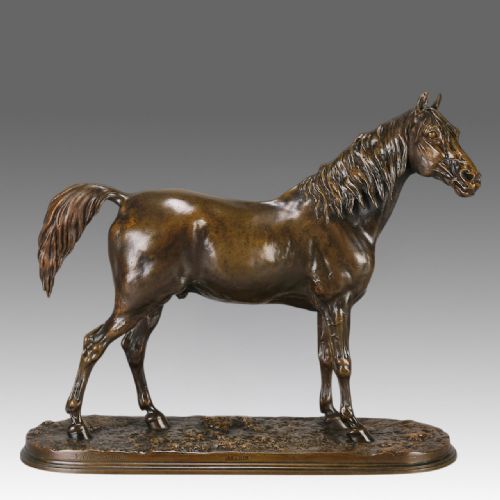
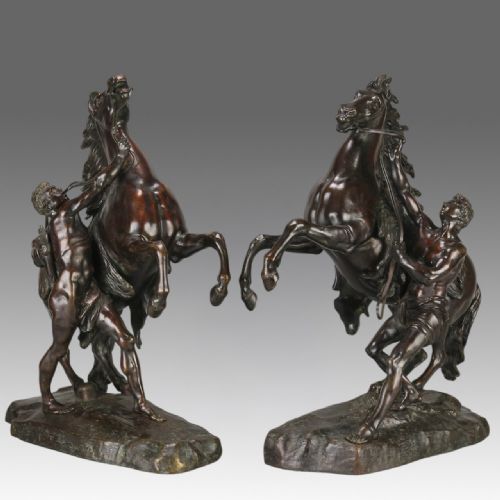
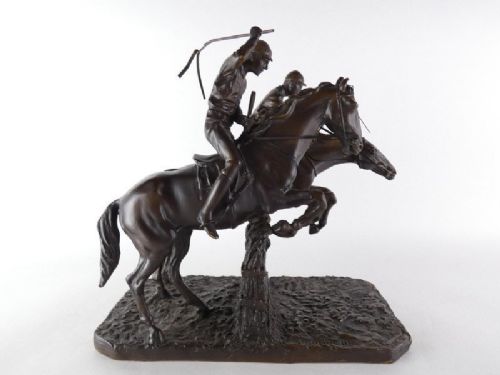
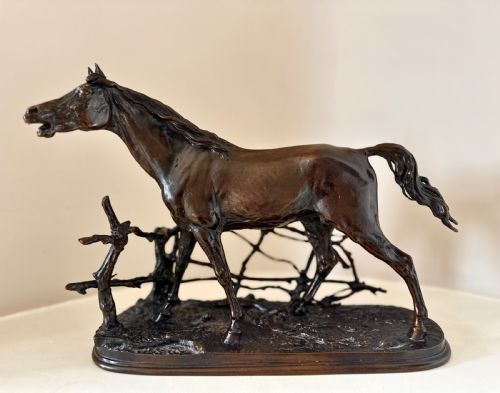
Buyers commonly encounter bronze casts mounted on marble bases, alongside sculptural mantel clocks integrating horse and rider. Subjects range from Marly horses to steeplechase scenes and Arab stallions with handlers.
Materials and Technique
Foundry workers utilised bronze casting, often applying dark patination or gilt and ormolu finishes to highlight the musculature of the horse. Marble served as a heavy stabilizing base for substantial bronze groups.
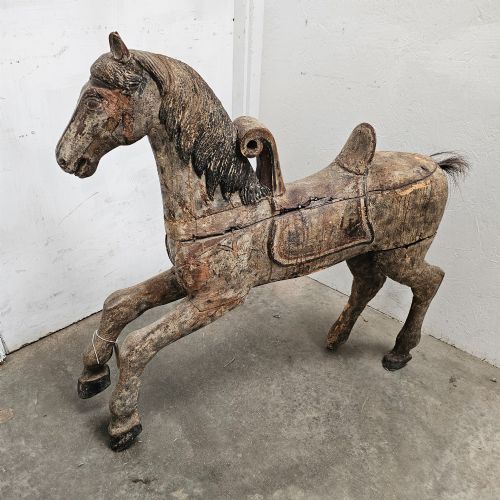
Selected works incorporate carved wood, horsehair, and enamel details, particularly in folk art pieces or clock dials. Cautious chiselling and hand-finishing after casting defined the output of prominent nineteenth-century workshops.
Some nineteenth-century French bronze groups depict monkeys enthusiastically racing horses across the mantelpiece.
Markers of Quality
The definition in the casting of muscle sinews, facial expressions, and tack separates standard decorative figures from masterworks. Sharp chased details that retain crisp edges after patination indicate superior foundry work.
Proportion and balance across horse and rider dictate the visual success of the sculpture. Heavier, multi-figure groupings require sophisticated weight distribution, particularly when mounted upon marble plinths.
Pierre Jules Meme·Jules Bonheur·Alfred Dubucand·Charles Crozatier·Pierre Lenordez·Xavier Raphanel·Paul Joseph Gayrard
The French Equestrian Statue Glossary
- Animalier
- A nineteenth-century art movement focusing on the realistic depiction of animals. Sculptors in this tradition studied live subjects closely at menageries and racecourses.
- Marly Horses
- Large sculptural groups depicting restrained horses and grooms, originally created by Guillaume Coustou for the Château de Marly. These iconic compositions were frequently reduced in bronze for domestic display.
- Patination
- The chemical treatment or natural ageing applied to the surface of bronze. This process alters the colour from raw metal to deep browns, greens, or blacks.
- Ormolu
- Gilt bronze ornamentation mounted on furniture, clocks, or sculptures. The technique involves applying a gold amalgam to heated bronze.
French Equestrian Statue: Frequently Asked Questions
How do I identify a cast?
Inspect the surface under a strong light to check for crisp chiselling marks and deep patination. Foundry stamps and signatures inscribed into the base often indicate the original sculptor or producing workshop.
Heavier casts generally demonstrate greater density in the metalwork. Compare the proportions of the horse against known nineteenth-century animalier standards.
Where should I display bronze statues?
Place statues on sturdy mantelpieces, desks, or dedicated pedestals that can support the substantial weight of bronze and marble bases. Keep pieces away from direct heat sources to protect the patination.
Ensure adequate clearance around dynamic compositions featuring outstretched reins or leaping horses. Good lighting from the side emphasises the musculature of the animals.
How do I clean bronze figures?
Dust the sculpture gently with a soft, dry microfibre cloth to remove settling particles. Avoid using abrasive cleaning agents, oils, or water that might strip the historic patination.
Professional conservation is recommended if oxidation or white spots appear on the metal surface. Regular light dusting prevents grime accumulation in recessed details.
What periods do these pieces span?
Most works originate from the nineteenth century, reflecting the height of the French Animalier school and Victorian-era taste. Pieces frequently date from the eighteen-fifties through the early twentieth century.
Later twentieth-century casts also appear, continuing traditional foundry methods. Reviewing base construction and mounting materials helps confirm the period.