




Classical Bronze Equestrian Figures
These classical bronze equestrian figures capture horse and rider in cast metal, bringing the weight and authority of antique sculpture straight into your study.

Classical Bronze Equestrian Figures
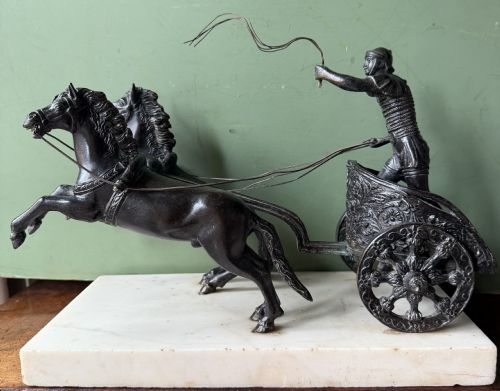
When you search for classical bronze equestrian figures, you encounter sculptural works depicting horses alongside riders, charioteers, or grooms. These pieces frequently draw upon celebrated historical monuments and heroic subjects, ranging from mythological compositions to military portrayals.
The selections available here lean heavily into nineteenth-century production, particularly Victorian pieces and French Neoclassical interpretations. Grand Tour souvenirs also feature prominently among these offerings, often taking the form of smaller cabinet studies cast in Italy during the middle years of the nineteenth century.
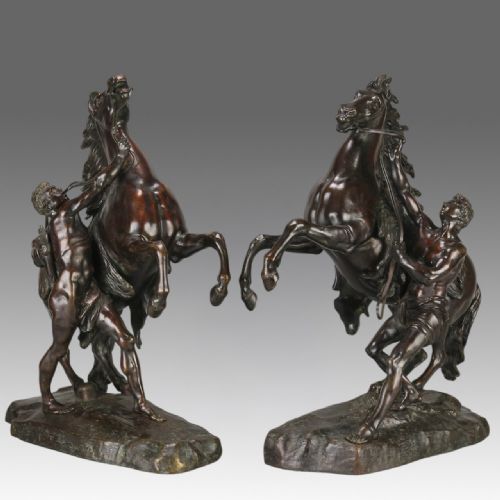
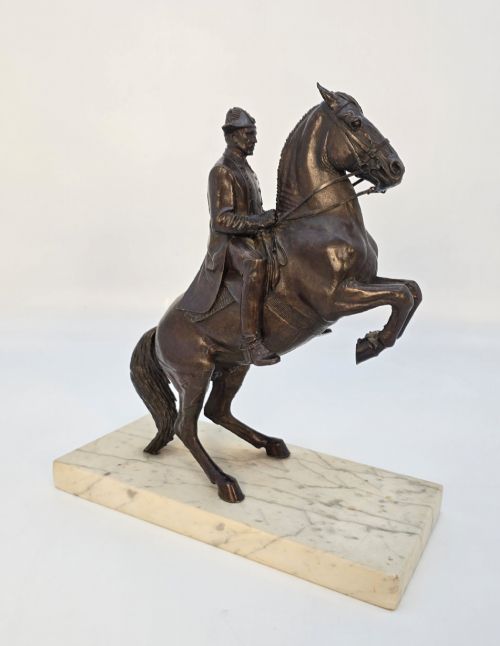
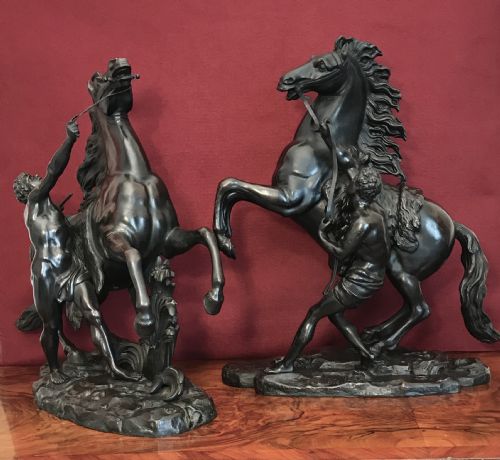
Many of these sculptures look directly to famed prototypes, such as the monumental Marly Horses after Coustou or reductions of Renaissance masterpieces like Verrocchio's Colleoni. You will also find independent equestrian studies depicting nude male figures or Spanish Riding School subjects executed around the middle of the twentieth century.
How they were made
These figures rely upon traditional metal casting techniques, utilising bronze to capture anatomical detail in both animal and human forms. The resulting metal surfaces receive careful chemical treatments to produce distinctive patinated bronze finishes that range from dark tones to lighter, warmer shades.
Many of these sculptures are mounted upon heavier supportive elements, frequently taking the form of white marble plinth bases that provide both stability and visual contrast to the dark metal. The casting process allows for fine rendering of musculature, harness details, and flowing manes.
Represented styles include French Neoclassical, Academic Realism, and nineteenth-century Victorian forms.
What varies in quality
The distinction between average and exceptional examples rests primarily in the crispness of the chase work and the sensitivity of the metal chasing following the cast. Finer pieces retain sharp definition in facial expressions, equine muscle tone, and drapery without softening of the contours.
The depth and richness of the original patina further separate superior sculptures from ordinary ones, as does the quality and integration of any associated stone plinth bases. Pieces that demonstrate a closer adherence to the spirit of their grand prototypes without losing sculptural autonomy generally command greater attention.
Charles Crozatier·Coustou·Verrocchio
The Classical Bronze Equestrian Figures Glossary
- Patinated bronze
- Bronze that has been treated with chemical solutions to alter its surface colour and tone. This process protects the metal while producing dark, golden, or greenish hues.
- Grand Tour
- A traditional journey through Europe undertaken by upper-class young men for educational purposes. Travellers frequently purchased small bronze souvenirs of famous monuments to bring home.
- Plinth base
- A heavy solid block or slab serving as a support for a statue. Many nineteenth-century cabinet bronzes are permanently mounted upon white marble versions.
- Neoclassical
- A style originating in the mid-eighteenth century inspired by the art of classical antiquity. It emphasises severe lines, heroic subjects, and balanced composition.
- Marly Horses
- A pair of monumental marble sculptures commissioned by Louis XV for the horse pond at the Chateau de Marly. Numerous nineteenth-century bronze reductions replicate these rearing animals and their grooms.
Classical Bronze Equestrian Figures: Frequently Asked Questions
What periods do these bronzes come from?
The pieces span the nineteenth and twentieth centuries, incorporating Victorian productions alongside earlier French and Italian works.
Datings on these listings frequently reference the late nineteenth century, the Victorian era, and mid-twentieth-century interpretations.
Where were Grand Tour bronzes made?
Grand Tour souvenirs were principally manufactured in workshops across Italy, particularly during the mid-nineteenth century.
These portable sculptures were acquired by travellers visiting classical antiquities and Renaissance monuments.
How should I display a marble-based bronze?
These sculptures require a stable, level surface capable of supporting considerable weight due to the dense combination of metal and stone.
Keep them away from direct heat sources and moisture to preserve both the marble plinth and the delicate patinated bronze surface.
What are the Marly Horses?
The Marly Horses are famous sculptural groups depicting wild horses restrained by their grooms, originally created for royal French grounds.
Nineteenth-century bronze editions capture these rearing, muscular animals in miniature or cabinet scale.