



Antique Leather Horse
These antique leather horse pieces bring equestrian craftsmanship indoors, offering collectors tangible pieces of nineteenth and twentieth-century history.
Antique Leather Horse
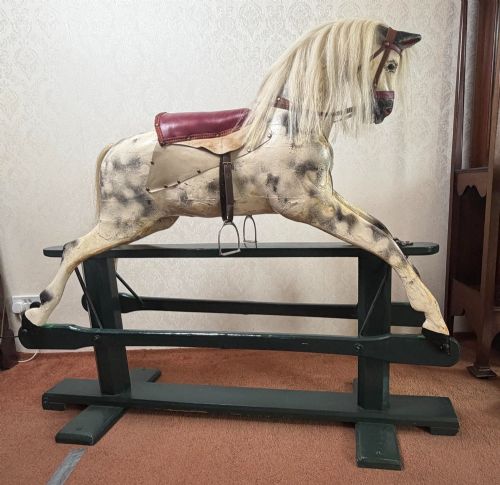
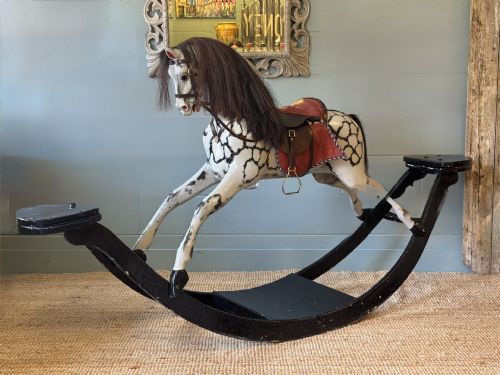
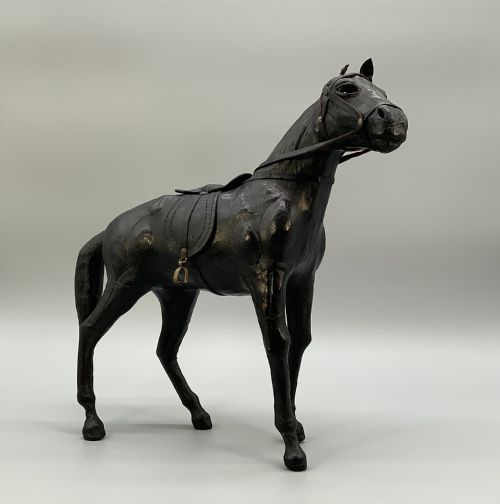
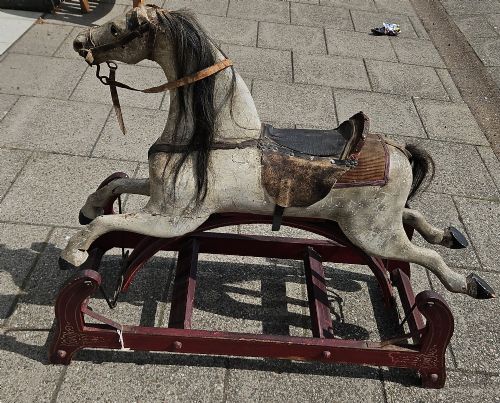
An antique leather horse encompasses carved wooden rocking horses covered in hide, life-sized decorative leather display models, and gym equipment such as leather pommel horses. The examples seen on this page span the Victorian era, the Edwardian period, and the interwar years.
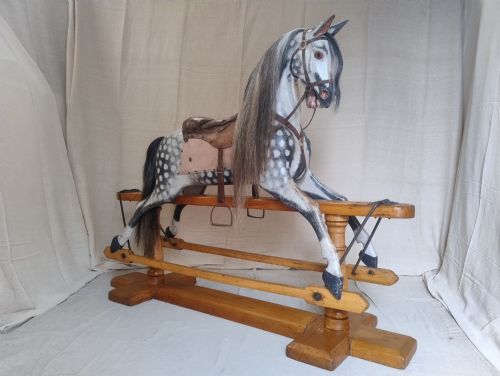
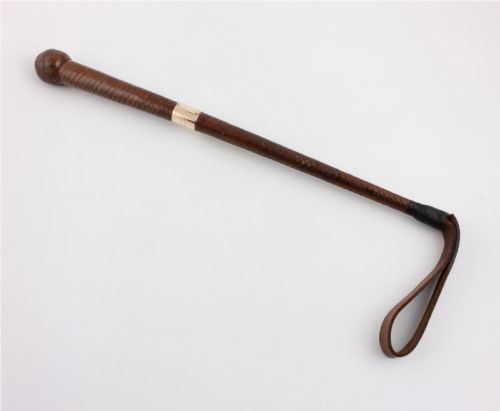
Rocking horses dominate the selection, often formed from carved pine or other woods mounted on original wooden rockers or safety stands. Alongside these toys stand decorative models, leather sofas and chairs stuffed with horsehair, and equestrian equipment like saddles and whips.
Most pieces originate from British makers and workshops working through the late nineteenth and early twentieth centuries. Buyers encounter everything from child-sized pull-along toys to extra-large decorative sculptures stamped by prominent firms.
How they were made
Constructors built rocking horses and decorative models around carved wood frames, utilising pine and other timber for the primary bodies. Artisans stretched leather over these wooden cores, sometimes hand-dyeing the hide to achieve rich whisky-brown or dappled finishes.
Internal padding frequently relied on horsehair stuffing within coiled spring systems, particularly for upholstered seating and upholstered animal forms. Metal components such as brass, iron, and glass appeared in mountings, tack, bridle work, and structural reinforcements.
Listings feature items spanning the Victorian era, Edwardian period, Arts and Crafts movement, and interwar years, utilising leather, pine, brass, and horsehair.
What varies in quality
The distinction between standard items and superior examples rests on maker attribution and the survival of original surface finishes. Pieces carrying stamps from renowned workshops or documented makers command greater attention from serious collectors.
The integrity of the carved wooden structure and the condition of the fitted leather skin dictate overall standard. Original tack, glass eyes, horsehair manes, and untransformed rockers elevate a piece above heavily altered or later-renovated equivalents.
G & J Lines of London·F.H.Ayres·Collinson·Liberty & Co
The Antique Leather Horse Glossary
- Martingale
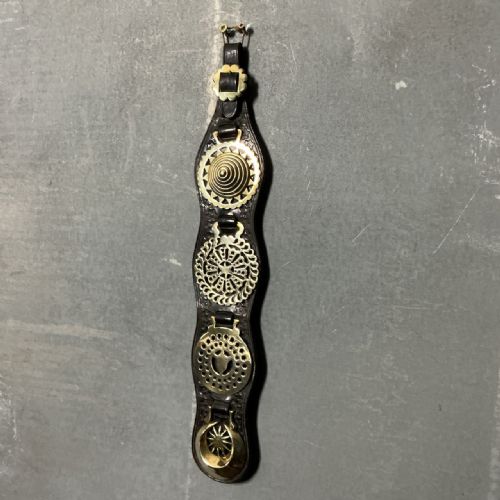
- A strap or set of straps used in horse tack to restrict excessive upward head movement. Victorian horse brass martingales display decorative brass ornaments mounted on leather straps.
- Pommel horse
- A piece of gymnasium equipment featuring a padded body covered in leather, historically used for vaulting exercises. Antique examples often utilise heavy metal bases and genuine leather upholstery stuffed with horsehair.
- Rocking horse
- A toy horse mounted on curved wooden rockers or a swinging frame designed for children. Nineteenth and twentieth-century versions feature carved wooden bodies covered in real hide or painted finishes.
- Coaching trunk
- A sturdy luggage chest designed for travel on horse-drawn coaches. These pieces often feature leather construction with protective brass banding and iron hardware.
- Horsehair fill
- Animal hair utilised as traditional stuffing inside upholstery, saddles, and leather animal models. It provides resilient cushioning for sofas, chaise longues, and stuffed figures.
Antique Leather Horse: Frequently Asked Questions
What is an antique leather horse?
An antique leather horse is a decorative model, rocking horse, or gymnastic apparatus constructed from wood and covered in genuine leather during the nineteenth or twentieth century.
These items were manufactured primarily as children's toys, decorative sculptures, or sporting equipment in British workshops.
How were rocking horses constructed?
Makers carved the body from pine or other timber and mounted it onto curved wooden rockers or safety stands.
The wooden core was then covered in leather, fitted with glass eyes, and finished with real horsehair manes and tails.
Are these pieces child safe?
Antique rocking horses and pull-along toys were built to nineteenth and twentieth-century standards and lack modern safety certifications.
Today, buyers acquire them primarily as decorative display items or collectible antiques rather than functional toys for young children.
How do I date an antique rocking horse?
Dating relies on construction methods, wood types, tack styles, and maker marks stamped into the leather or wood.
Victorian and Edwardian examples often feature distinct carving styles and mounting systems that separate them from later interwar pieces.