


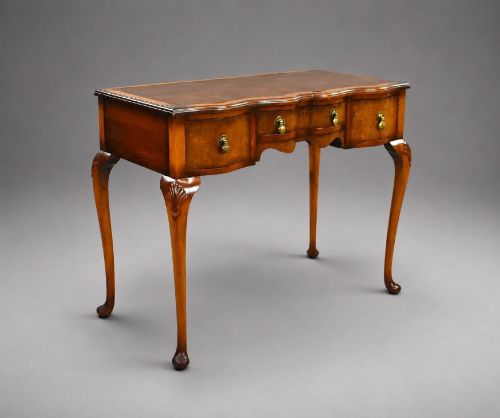
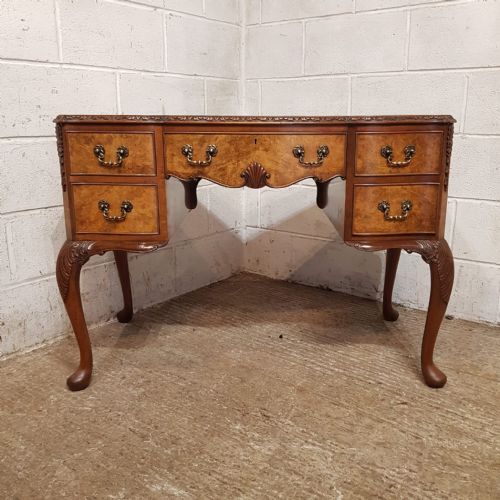


Queen Anne Style Writing Desk
A queen anne style writing desk brings curved elegance and figured veneers into a room, offering a compact surface for correspondence.
Queen Anne Style Writing Desk
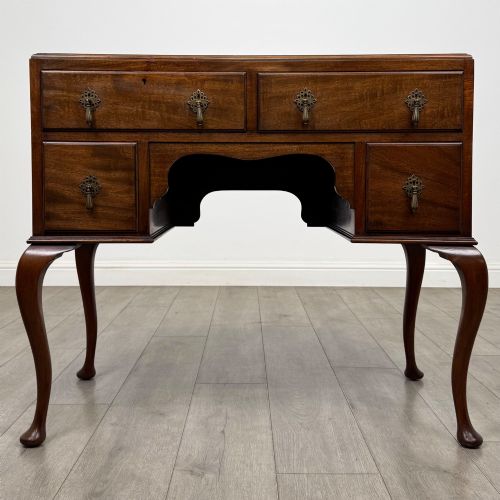
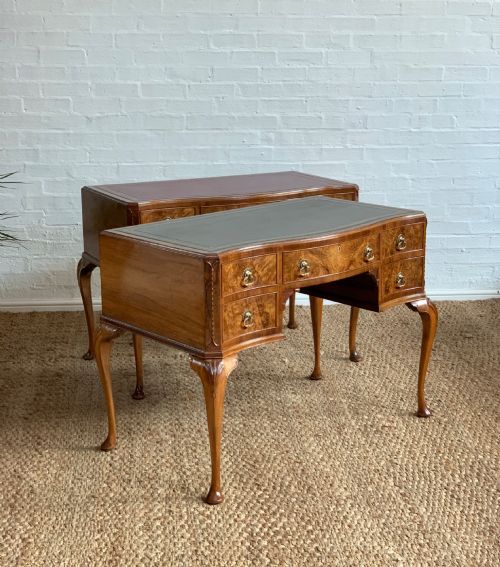
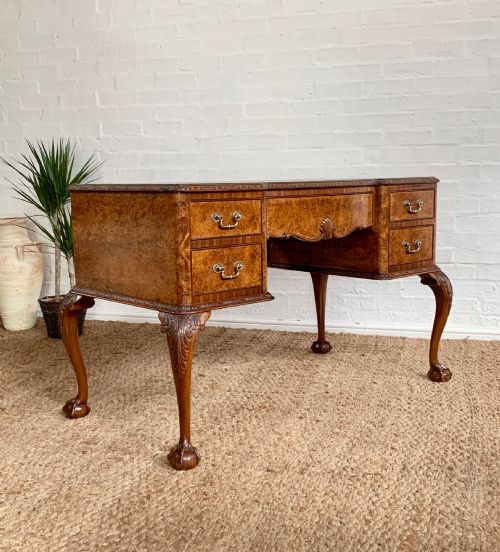
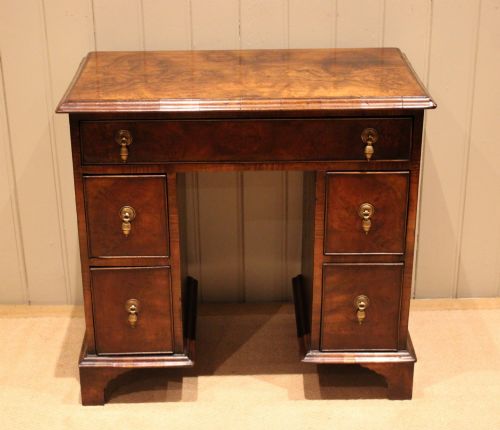
A queen anne style writing desk encompasses freestanding writing tables, kneehole desks, and drop-front bureaux originating largely from the Edwardian era through the early twentieth century. These pieces draw upon eighteenth-century forms, characterised by distinct cabriole legs and restrained proportions suited for domestic studies.
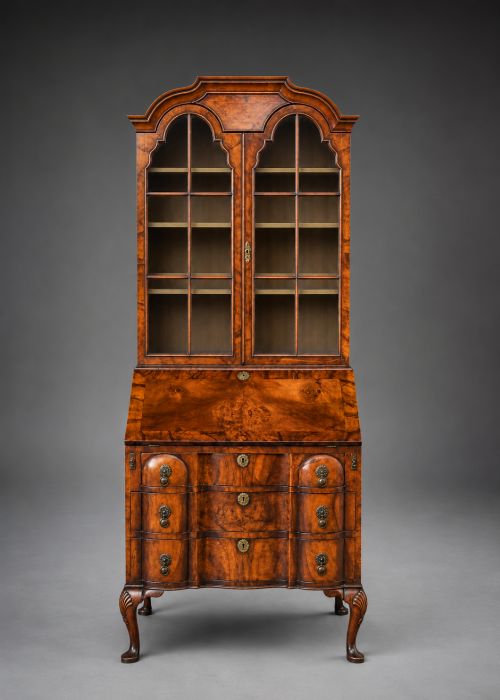
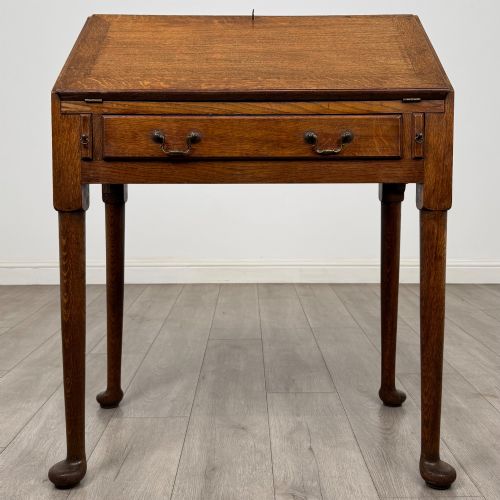
The version most commonly encountered on this page is the bureau or writing desk fashioned from burr walnut veneer. Makers of the revival periods produced these items extensively, pairing traditional silhouettes with fitted interior compartments and leather writing inserts.
How They Were Made
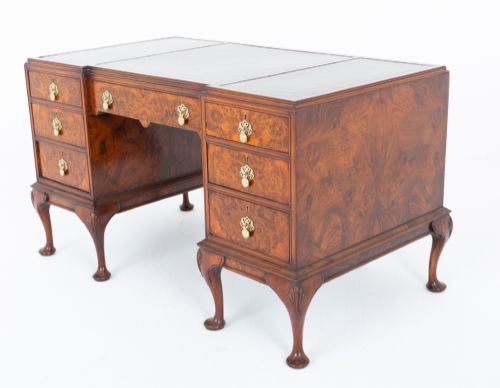
Cabinetmakers constructed the carcase using timbers such as oak or mahogany as a solid foundation, applying highly figured burr walnut veneers to the exterior surfaces. Crossbanding and stringing lines frequently border the drawer fronts and writing flaps to frame the grain patterns.
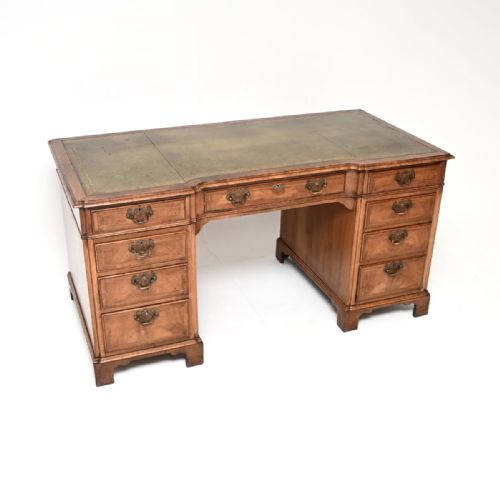
Fittings include cast brass handles and escutcheons, alongside tooled leather inserts set into the writing surfaces. Joinery relies on traditional dovetail construction for the drawers and pegged mortise and tenon joints for the frames.
Listings on this site feature walnut, oak, and mahogany timbers, frequently enhanced with burr walnut veneer and brass hardware.
What Varies in Quality
The choice of veneer defines the visual impact of the piece, with dense, highly figured burr walnut commanding greater visual depth than plainer cuts of timber. Skill in matching the grain across drawer fronts and top panels distinguishes higher workshop standards.
Proportion and execution of the cabriole leg shape dictate the overall grace of the form. Finer examples display balanced curves that flow naturally from the apron down to the pad or hoof foot, avoiding stiffness in the silhouette.
Wylie & Lochhead Glasgow·maples of London·Gill & Reigate·Whytock & Reid·Morris Of Glasgow
The Queen Anne Style Writing Desk Glossary
- Cabriole leg
- A furniture leg that bends outward in a convex curve at the knee and tapers inward in a concave curve toward the foot. This form derives from animal limbs and defines the aesthetic of the period.
- Burr walnut
- A veneer sliced from the knotty growth of a walnut tree, yielding a swirling, highly decorative grain pattern. Cabinetmakers apply this material to the primary display surfaces of desks and cabinets.
- Bureau
- A writing desk featuring a sloping hinged flap that opens to reveal a compartment of small drawers and pigeonholes. It sits either on a frame with legs or atop a bank of drawers.
- Kneehole desk
- A compact pedestal desk featuring a recessed central space for the user's legs, flanked by columns of small drawers. This form allows for organised storage within a modest footprint.
- Lowboy
- A small table with drawers resembling the lower section of a tallboy chest, frequently utilised as a dressing or writing surface. It rests on four tall cabriole legs.
Queen Anne Style Writing Desk: Frequently Asked Questions
What is a queen anne style writing desk?
A queen anne style writing desk is a piece of furniture designed with the characteristic curved lines, cabriole legs, and figured wood veneers associated with the early eighteenth century. Most examples found today date from the revival periods of the late nineteenth and early twentieth centuries.
These desks serve as practical writing stations while introducing traditional decorative woodwork into a modern interior. They range from simple writing tables to bureau bookcases with fitted interior compartments.
How do I distinguish original pieces from revival items?
Revival desks from the Edwardian era and the 1920s or 1930s often display construction methods, secondary timbers, and hardware characteristic of twentieth-century manufacturing. Examining the drawer linings, internal blocking, and backboards clarifies the period of manufacture.
Cabinetmakers working during the revival periods adopted eighteenth-century aesthetic codes while utilising contemporary tools and adhesives. Comparing the timber patination and construction details helps determine the precise age of the desk.
How should I care for a walnut veneer surface?
Walnut veneer requires protection from direct sunlight and excessive temperature fluctuations to prevent the wood from drying and the glue from failing. Maintaining a stable indoor climate preserves the integrity of the delicate burr patterns.
Regular dusting with a soft, dry cloth is sufficient for routine maintenance. Avoid silicone-based polishes, opting instead for traditional microcrystalline wax applied sparingly to nourish the timber.