


Queen Anne Style Lowboy
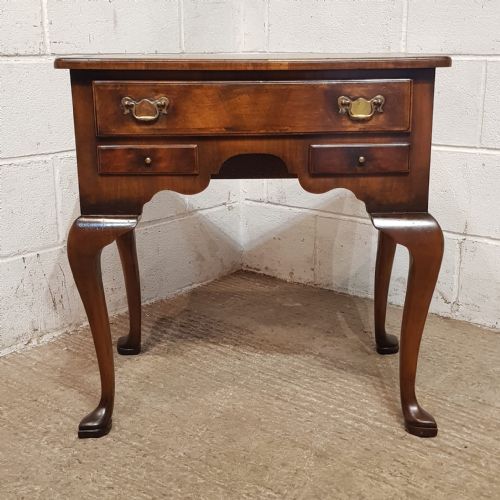
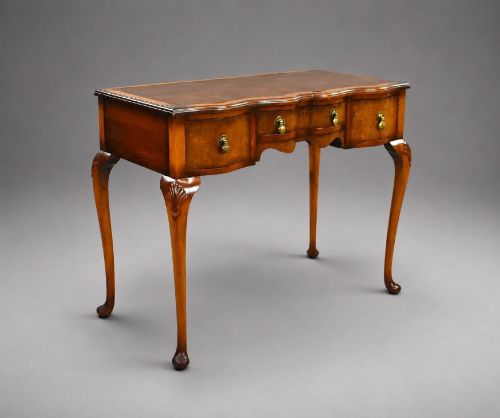
A queen anne style lowboy is a compact table with drawers, prized for graceful cabriole legs and rich wood grain.
Queen Anne Style Lowboy
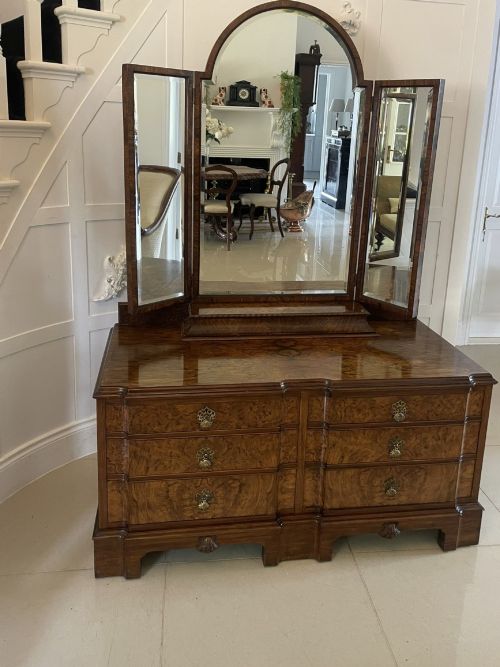
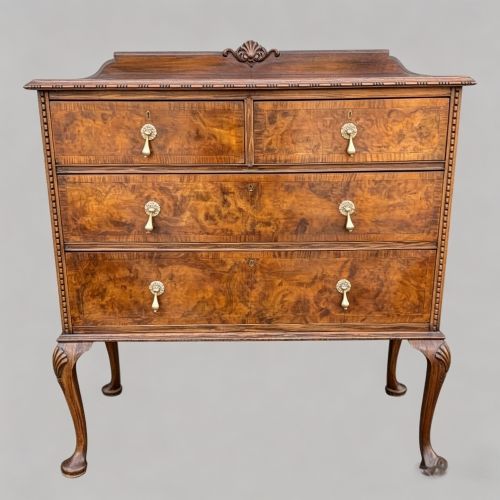
When searching for a queen anne style lowboy, you encounter small tables equipped with drawers designed for domestic use as dressing tables, writing desks, or side tables. Most examples on this page date from the early twentieth century, spanning revival periods like the Edwardian era and the 1920s, alongside genuine Georgian pieces.
How they were made
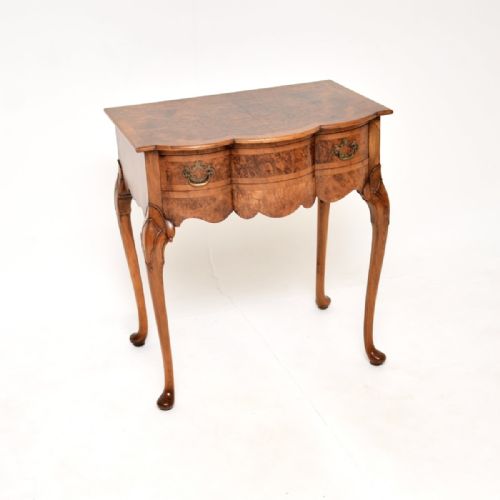
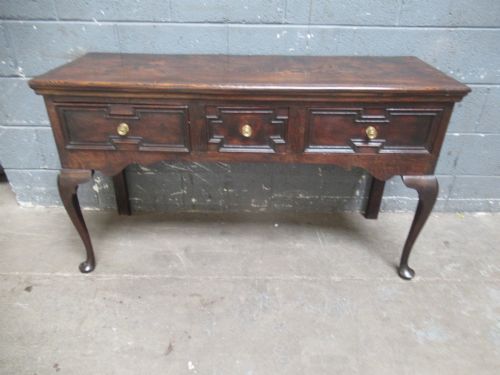
Cabinet makers utilised solid timbers such as oak and mahogany, alongside walnut and burr walnut veneers selected for decorative grain patterns. Brass is common for drawer pulls and handles, providing a bright contrast to the dark polished wood surfaces.
Construction techniques combine traditional joinery with veneer application on drawer fronts and table tops. Surfaces receive polish to enhance the natural figure of the timber, particularly on burr walnut examples.
Queen Anne Style Lowboy Retail Price Guide 2026
Typical asking prices for queen anne style lowboy among the pieces listed under this phrase on Sellingantiques today, from the lower quarter to the upper quarter. They describe what is for sale here now, not the wider market.
What varies in quality
Quality rests upon the selection of timber veneers and the crispness of carved details on the legs and frieze. Pieces featuring highly figured burr walnut display superior visual depth compared to plain walnut or secondary woods.
Proportion and execution of the signature cabriole legs determine refinement. Finer examples exhibit balanced curves and carefully fitted drawer construction with well-matched wood grain across the front.
Shoolbred and Co·Whytock and Reid
The Queen Anne Style Lowboy Glossary
- Lowboy
- A small side table with one or more rows of drawers, standing on relatively tall legs. This form originated in the late seventeenth century and remained popular through the Georgian period.
- Cabriole leg
- A furniture leg that curves outward and then tapers inward, inspired by the shape of an animal's leg. It typically ends in a pad or claw foot on revival pieces.
- Burr walnut
- A veneer taken from the gnarled growth of a walnut tree, yielding highly decorative swirling patterns. Cabinet makers prized this wood for high-status table tops and drawer fronts.
- Georgian revival
- A style popular in the late nineteenth and early twentieth centuries that reinterprets eighteenth-century furniture designs. These pieces emulate the proportions and ornamentation of the Georgian era.
Queen Anne Style Lowboy: Frequently Asked Questions
What is a lowboy used for?
A lowboy served historically as a small dressing table or a side table for storing personal items. Today, people use them as hallway console tables, compact desks, or decorative accent tables in living spaces.
Because of their modest proportions, they fit easily into smaller rooms while offering practical drawer storage and a flat surface for lamps or ornaments.
How do I date a queen anne style lowboy?
Dating depends on examining the construction methods, wood types, and secondary timbers used inside the drawers. Pieces marked as revival styles often date from the Edwardian era up to the 1930s, showing machine-sawn elements.
In contrast, eighteenth-century originals display hand-cut joinery, pegged joints, and timber characteristics typical of the Georgian period. Comparing the hardware and finish helps confirm the era of manufacture.
Are these pieces made of solid walnut?
Most examples utilise a combination of solid woods for the frame and legs, paired with walnut or burr walnut veneers applied to the drawer fronts and top. This technique allowed makers to display decorative grain patterns without risking the warping associated with solid burr timber.
Secondary woods like oak or mahogany frequently appear in the drawer linings and internal framing structure.
How do I style a lowboy at home?
Position a lowboy against a hallway wall or in a bedroom as a dressing table paired with a small stool. The flat top accommodates a table lamp, a small mirror, or decorative ceramics.
The drawers provide discreet storage for keys, stationery, or daily essentials, keeping surfaces tidy while adding period character to the room.