


Queen Anne Style Console
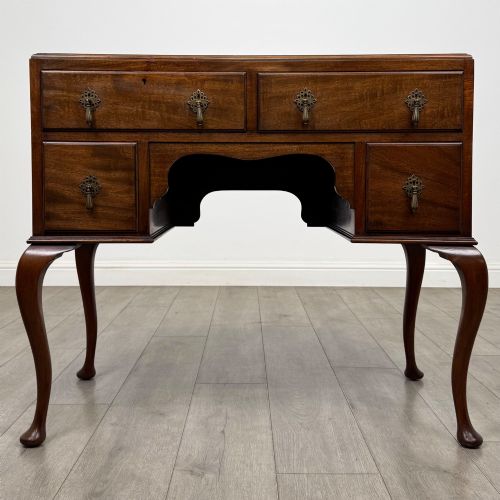
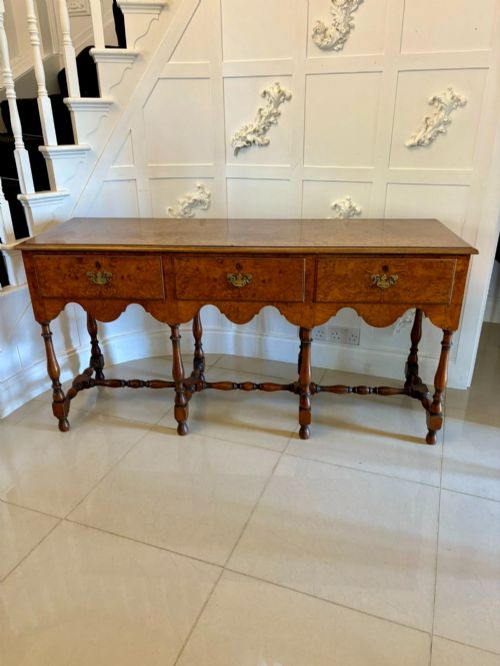
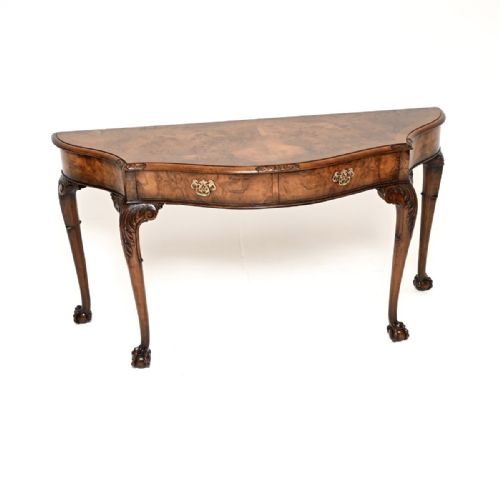
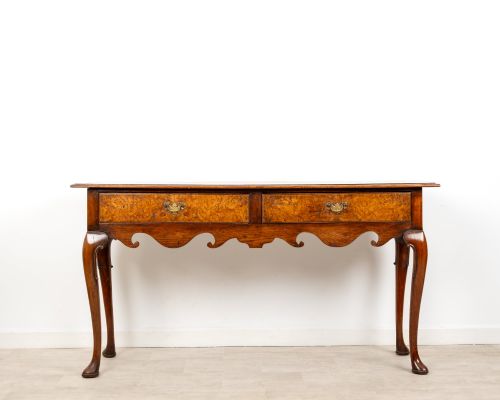
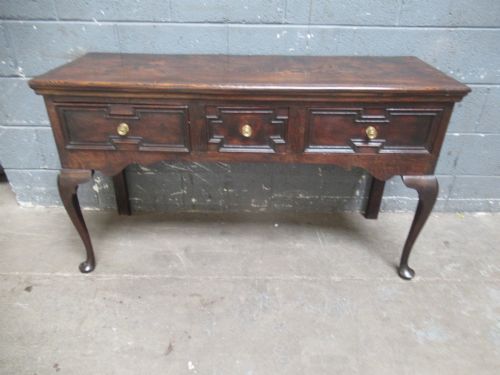
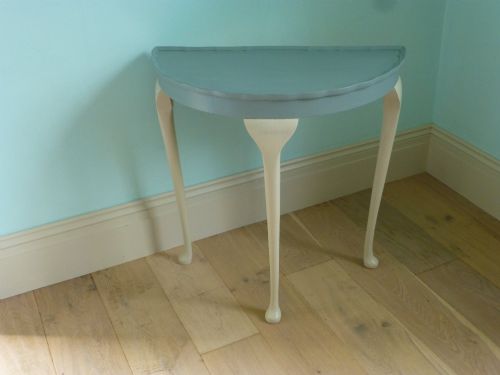
These pieces are queen anne style console tables, bringing elegant cabriole lines and rich timber grains to a hallway or drawing room.
Queen Anne Style Console
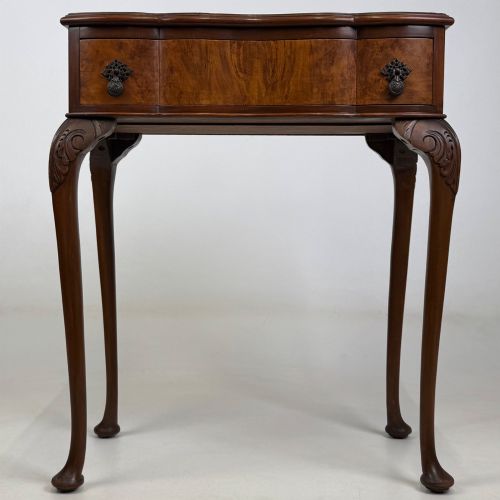
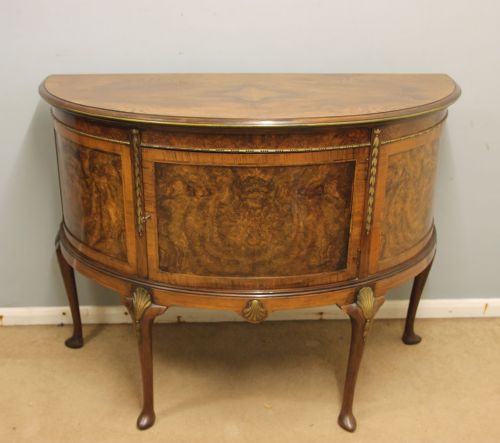
A queen anne style console table brings the graceful proportions and distinctive cabriole legs of early eighteenth-century design into later periods. The selection here spans twentieth-century revivals, Edwardian pieces, and the nineteenth century, capturing a lasting enthusiasm for walnut and mahogany.
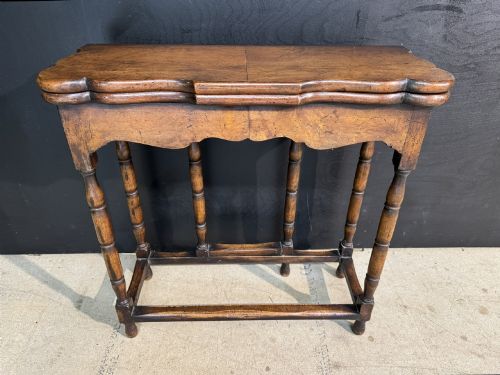
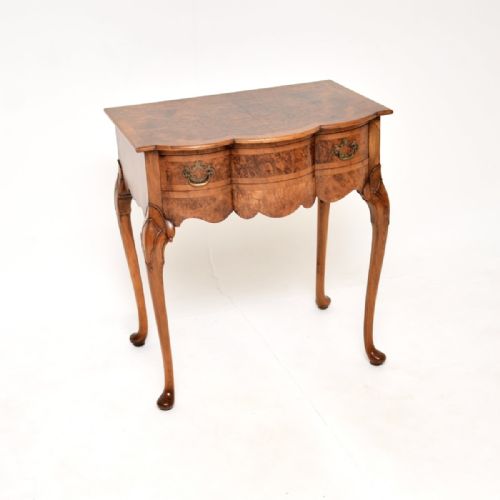
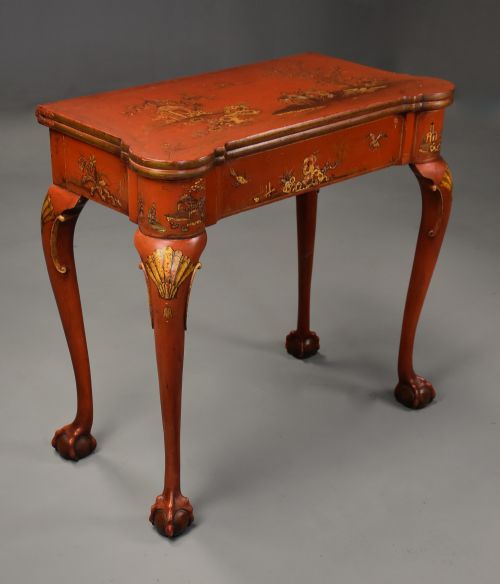
Beyond standard console tables, the evidence includes related forms such as lowboys, card tables, and side tables. These pieces often feature burr walnut veneers, crossbanding, and occasional lacquered Chinoiserie finishes that recall the decorative ambition of the original period.
Materials and Construction
Walnut dominates these pieces, particularly through the application of burr walnut veneer to create highly figured, decorative surfaces on tabletops and drawer fronts. Mahogany and oak also appear, alongside brass hardware and occasional painted lacquer work.
Cabinetmakers utilised timber construction combined with specialised veneering techniques to achieve the characteristic warmth and pattern of the wood. Folding actions on card tables and shaped console frames demonstrate traditional joinery adapted for domestic use.
Listings span walnut, burr walnut veneer, mahogany, oak, and brass, reflecting dominant revival materials from the Edwardian era to the twentieth century.
Evaluating Quality
Quality rests in the selection of the timber veneer and the crispness of the carving on the cabriole legs. Finer examples display symmetrical burr walnut figuring across the top and well-proportioned curves that echo period originals.
Construction details such as drawer linings, the precision of crossbanding, and the weight of the timber separate standard production from superior pieces. Maker attribution further distinguishes the upper tier of these walnut tables.
Maple and Co·Epstein and Co
The Queen Anne Style Console Glossary
- Cabriole leg
- A furniture leg that curves out and then tapers in, ending in a pad or claw foot. This form defines the silhouette of queen anne style console tables.
- Burr walnut
- A wood veneer taken from a growth or burl on the walnut tree, prized for its swirling, decorative grain patterns. It forms the primary surface decoration on many console tables here.
- Lowboy
- A small table with drawers, resembling the lower section of a highboy or tallboy chest. Several examples appear alongside console tables in walnut and mahogany.
- Crossbanding
- A narrow strip of veneer applied to the border of a tabletop with the grain running perpendicular to the main surface. This technique frames the primary burr walnut panels.
- Chinoiserie
- European decorative art imitating Chinese styles, often featuring painted lacquer and gilt motifs. The evidence includes red lacquered card tables finished in this manner.
Queen Anne Style Console: Frequently Asked Questions
What is a queen anne style console?
A queen anne style console is a decorative side table featuring curved cabriole legs and typically finished in walnut or mahogany veneer.
These tables were designed to sit against a wall in halls or living spaces, combining display utility with traditional revival craftsmanship.
How do I identify burr walnut?
Burr walnut is recognised by its dense, swirling grain patterns created by irregular tree growths. It provides a highly decorative surface on table tops.
Cabinetmakers slice this wood into thin veneers to display the complex patterns across the face of the console.
Are these tables from the eighteenth century?
Most pieces listed date from later revival periods, including Edwardian and twentieth-century production, rather than the original eighteenth century. Makers of these eras revived earlier forms using traditional walnut and mahogany timbers.
This revival craftsmanship offers the aesthetic of the period combined with the structural stability of twentieth-century manufacturing.
How should I place a console table?
A console table sits flat against a hallway or living room wall, often paired with a mirror or decorative object above. Folding card table variants can also be opened into the room for games.
Keep walnut and mahogany pieces away from direct heat sources to protect the timber and veneer.