



1920s Walnut Dressing Table
A 1920s walnut dressing table brings character and practical surface space to a bedroom through rich timber figuring and period proportion.
1920s Walnut Dressing Table
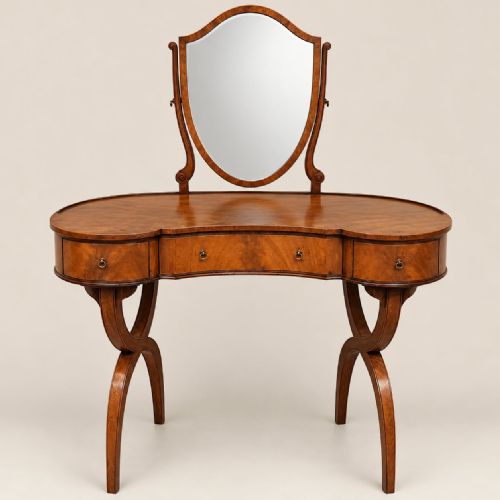
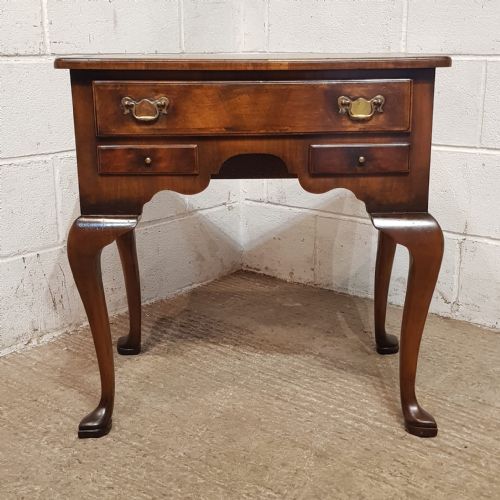
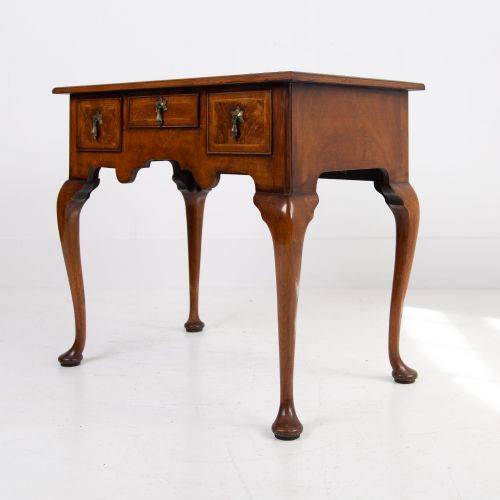
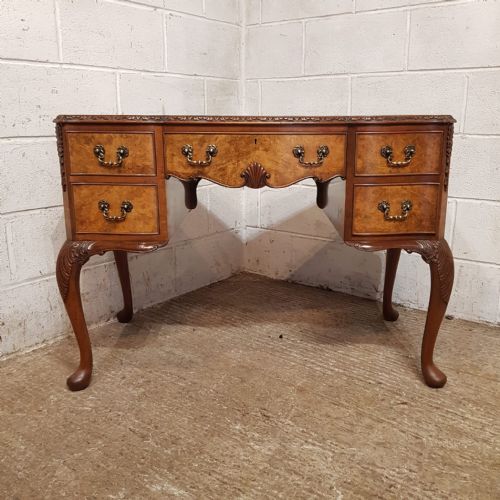
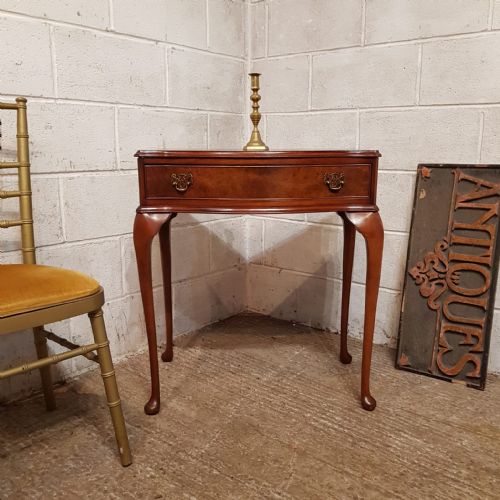
When you search for a 1920s walnut dressing table, you encounter period furniture rooted in the styles of the 1920s, 1930s, and Edwardian eras. The pieces recorded here span forms such as lowboys, console tables, desks, side tables, and footstools that serve similar functional spaces.
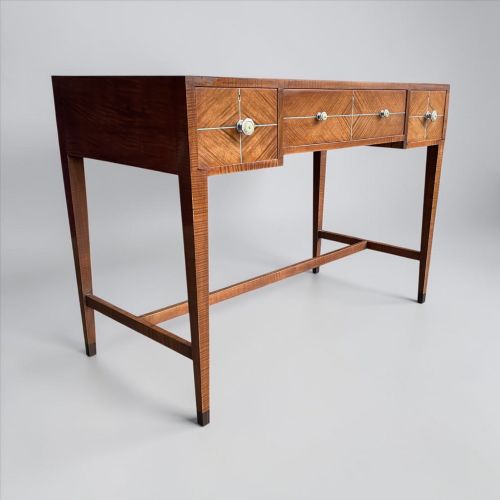
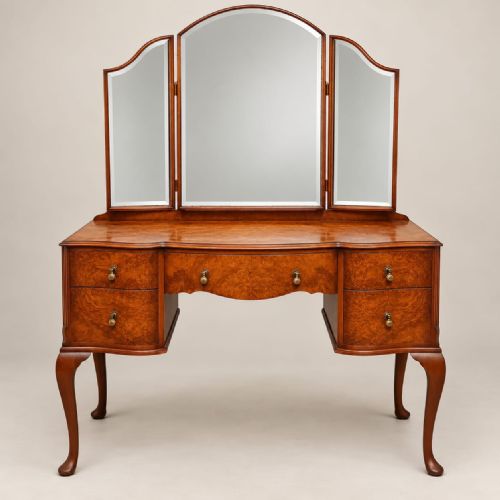
The versions you are most likely to meet on this page lean heavily into Queen Anne Revival and Art Deco aesthetic treatments. These styles utilise traditional silhouettes alongside the distinctive grain patterns of walnut timber.
Makers of the period applied these designs to domestic furniture intended for daily use, combining practical drawer storage with decorative presence. Walnut and burr walnut dominate the construction, often accented with brass hardware and complementary textiles.
How they were made
Craftsmen built these pieces primarily using walnut and burr walnut timbers, prized for their complex and decorative grain patterns. Secondary materials such as brass provided functional hardware for handles and drawer pulls.
Construction techniques balanced structural joinery with aesthetic surface work, notably in serpentine and bow-fronted cabinetry. Artisans also incorporated secondary elements like leather, metal, wool, and tapestry in associated pieces like stools.
The application of burr walnut veneers required specialist skill to wrap curved fronts and tabletops evenly. Cabinetmakers relied on traditional woodworking methods to ensure stability across lowboys, desks, and console tables.
1920s Walnut Dressing Table Retail Price Guide 2026
Typical asking prices for 1920s walnut dressing table among the pieces listed under this phrase on Sellingantiques today, from the lower quarter to the upper quarter. They describe what is for sale here now, not the wider market.
Needlepoint footstools quietly shared the parlour floor with grand burr walnut desks, offering comfort where timber could not.
What varies in quality
Quality in these pieces rests upon the selection and matching of the walnut veneer across prominent surfaces. Finer examples display symmetrical burr figuring that flows naturally across drawer fronts and tabletops.
The refinement of the silhouette distinguishes finer pieces, particularly in the shaping of serpentine and bow-fronted structures. Attention to proportion in Queen Anne style cabriole legs or geometric Art Deco lines defines the upper tier of manufacture.
Hardware choice and secondary timber selection also mark the division between standard production and superior work. Solid brass fittings and careful internal construction signal a higher standard of original craftsmanship.
The 1920s Walnut Dressing Table Glossary
- Burr walnut
- A veneer taken from the knotted growth of a walnut tree, displaying swirling, highly decorative grain patterns. This material forms the primary visual draw on top surfaces and drawer fronts.
- Lowboy
- A small occasional table featuring one or more rows of drawers, commonly raised on tall legs. These pieces function well as compact dressing or writing surfaces.
- Queen Anne Revival
- A decorative style popular in the early twentieth century that revives eighteenth-century motifs such as cabriole legs and pad feet. It brings traditional elegance to interwar furniture.
- Serpentine front
- A furniture front characterised by a central concave curve flanked by two convex curves, or the reverse. This shaping requires precise carpentry and veneer work.
- Console table
- A table designed to stand against a wall, frequently featuring decorative legs and a shallow depth. They provide surface display without dominating floor space.
1920s Walnut Dressing Table: Frequently Asked Questions
What is a burr walnut dressing table?
A burr walnut dressing table is a period furniture piece surfaced with highly figured wood veneer taken from tree growths. This creates complex swirling patterns across the primary surfaces.
Such tables often incorporate drawers for storage and reflect the revival styles popular during the early twentieth century.
How do I identify Art Deco furniture?
Art Deco furniture relies on clean geometric lines, streamlined forms, and modern material pairings rather than historical revival motifs. These pieces typically emerged during the 1930s.
The style prioritises sleek silhouettes and polished wooden surfaces without heavy carving.
Where should I place a lowboy?
A lowboy suits bedrooms, hallways, or living spaces where a compact surface with drawer storage is required. Its modest footprint allows it to fit into tighter architectural spaces.
Historically used for grooming, it functions well today as a small desk or display table.