

Vintage Entry Console Table
A vintage entry console table sets the tone for a home the moment the front door opens, offering a purposeful surface for correspondence and daily arrivals.
Vintage Entry Console Table
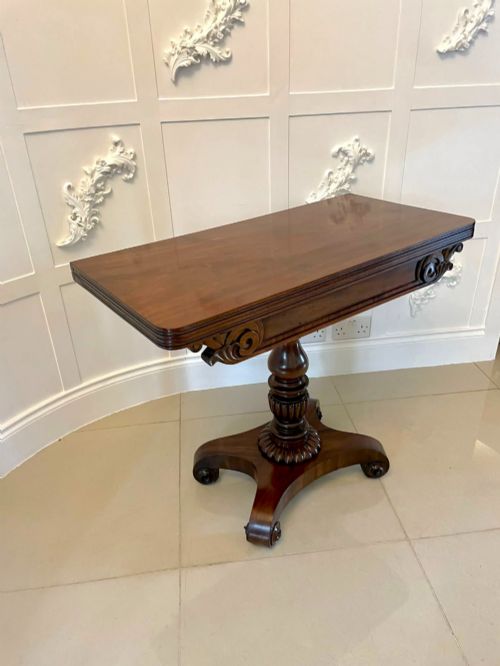
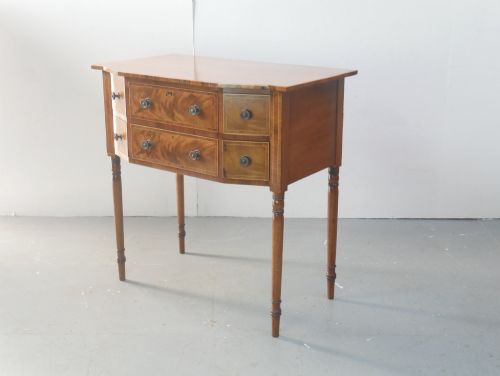
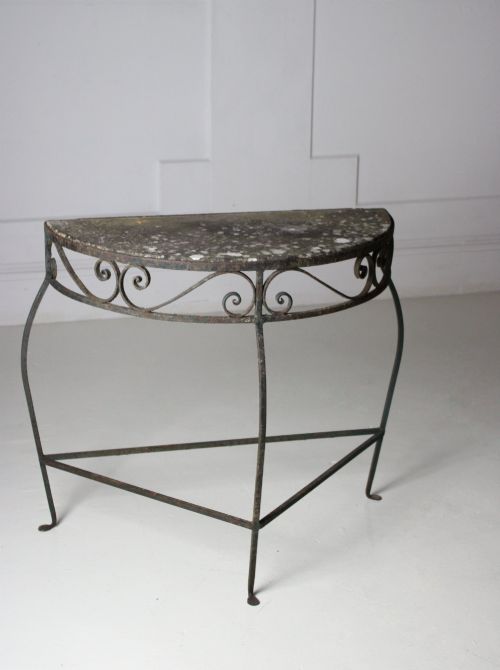
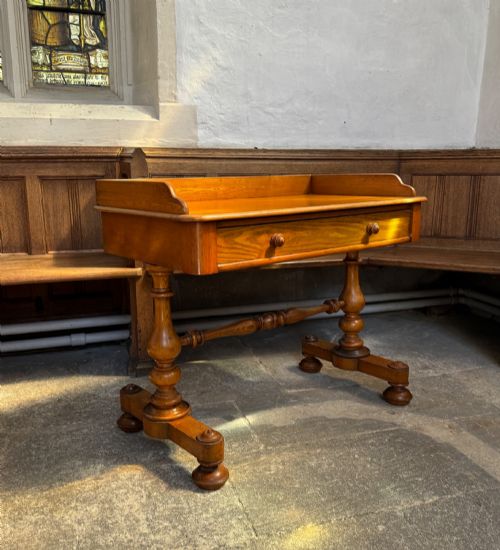
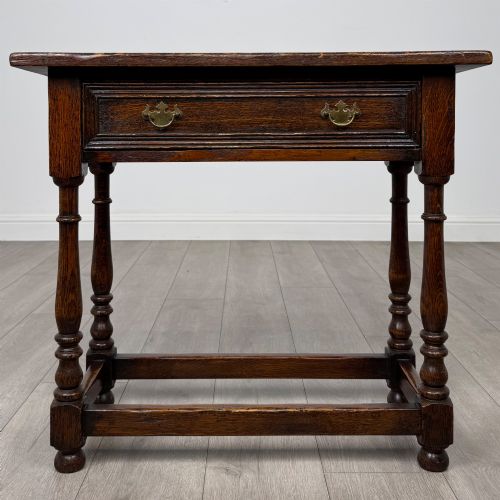
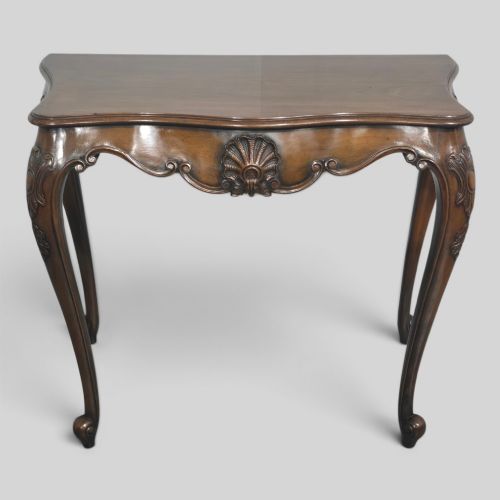
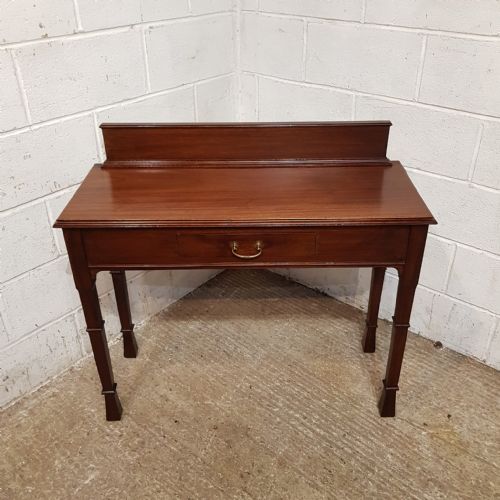
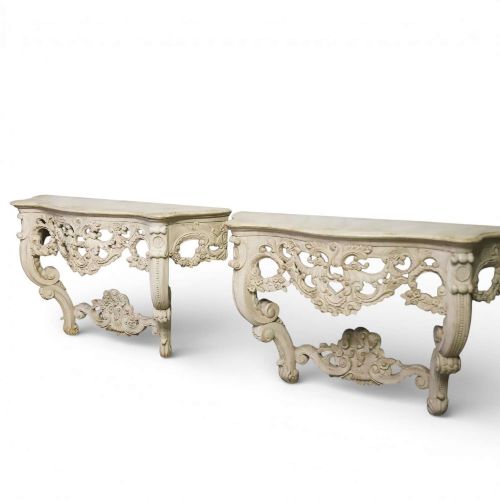
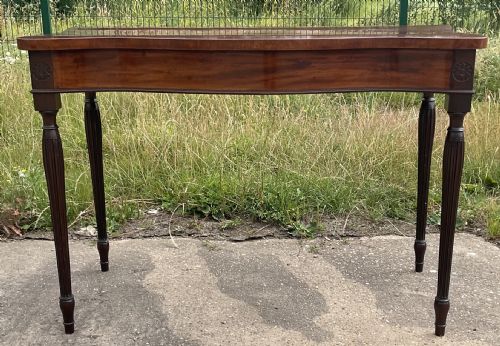
A vintage entry console table sits flat against a wall in a hallway or landing, designed to provide a narrow surface without blocking narrow circulation routes. These pieces take various forms across the selection, including half-moon demi-lune shapes, straight-fronted serving tables, and wall-mounted consoles.
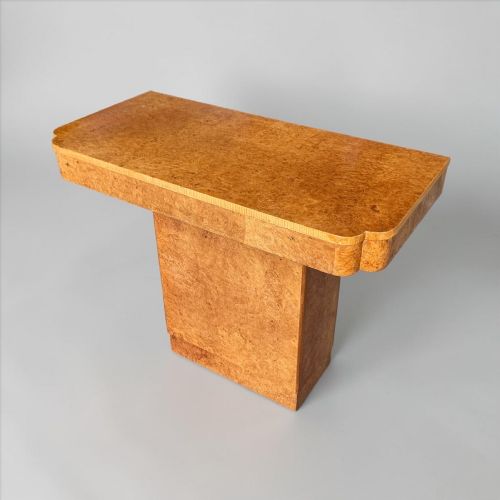
The pieces span a wide chronological range, drawing heavily on nineteenth-century proportions alongside early twentieth-century designs. Examples frequently channel traditional aesthetics such as Georgian, Queen Anne, and Sheraton revivals, alongside the clean geometric lines typical of the Art Deco period.
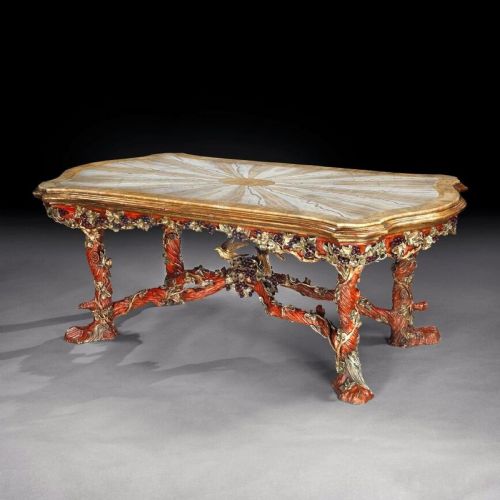
Makers adapted these tables for tighter spaces, resulting in compact dimensions that suit modern hallways just as well as they suited Victorian and Edwardian vestibules. Buyers will find everything from simple oak and mahogany boards to elaborate carved wood surfaces paired with contrasting bases.
Materials and construction methods
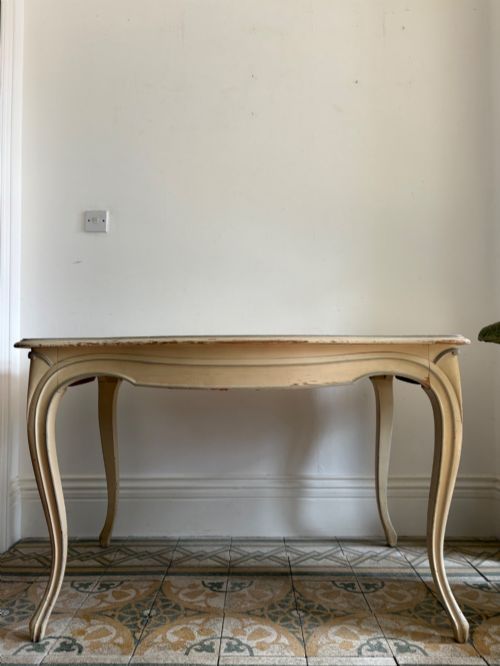
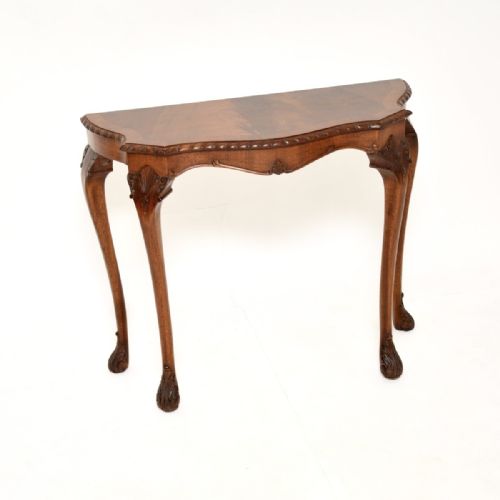
Cabinet makers relied primarily on dense hardwoods like mahogany, oak, and walnut, frequently employing burr walnut veneers to create striking, figured grain patterns on the top surfaces. Softwoods appear under painted or cream finishes, while specialised pieces introduce contrasting textures through carved wood, wrought iron, and cast iron industrial machine bases.
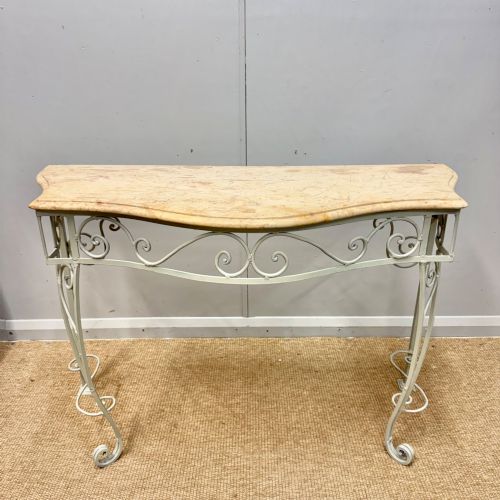
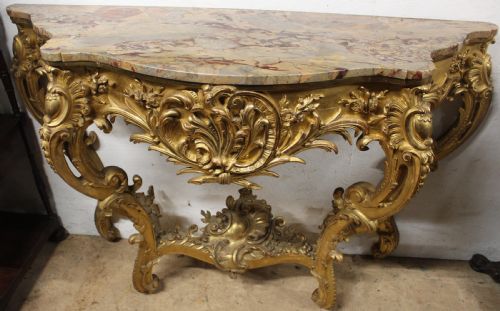
Tops frequently showcase premium stone inserts, utilising marble and onyx slabs that provide a cool, durable surface above carved cabriole legs, straight tapering legs, or elaborate wall brackets. Inset suede and painted details add further textural variation to the timber frames across French and English workshops.
Listings feature woods such as mahogany, oak, walnut, and burr walnut, frequently paired with marble and wrought iron.
Evaluating standard and distinction
Quality rests in the harmony of proportions and the selection of timber veneers, where highly figured burr walnut or rich mahogany displays deliberate grain matching across the primary surfaces. Superior examples demonstrate crisp hand-carved detail in the woodwork and solid structural integrity in the joints rather than relying on surface decoration alone.
The integration of secondary materials defines the upper tier of the selection, such as heavy polished marble or onyx slabs properly seated within rebated timber frames. Maker attribution also elevates certain pieces, distinguishing standard workshop production from signed items produced by established firms.
Amleto Bertoni·Hille·Fortnum and Mason·Maple and Co.
The Vintage Entry Console Table Glossary
- Demi-lune
- A half-moon shape used for console and card tables designed to stand flush against a wall. This profile maximises floor space in narrow hallways.
- Console table
- A table supported by wall brackets or legs, intended for placement against a vertical surface. Historically utilised for display and decorative objects.
- Burr walnut
- Timber taken from a growth deformation on a walnut tree, yielding complex, swirling grain patterns. Highly prized by cabinet makers for decorative veneer work.
- Cabriole leg
- A furniture leg that curves out in a convex arc and then bends inward in a concave arc, ending in a pad or claw foot. This form derives from traditional animal leg motifs.
Vintage Entry Console Table: Frequently Asked Questions
How do I choose the right size?
Measure the available width and depth of your hallway carefully, ensuring enough clearance remains for doors to open and people to pass comfortably. Narrow console tables work best in confined corridors where standard side tables would obstruct movement.
Consider the height of existing skirting boards and wall sockets to ensure the table sits flush against the wall without interference.
Can these tables be used for dining storage?
Many vintage console tables function effectively as serving tables or sideboards in dining rooms, particularly longer mahogany or burr walnut variants. Their shallow depth allows them to hold dishes and cutlery without encroaching on dining space.
Models featuring drawers or lower shelves offer practical storage for linens and tableware.
How do I care for a marble top?
Wipe marble and onyx surfaces regularly with a soft, damp cloth and mild neutral soap, avoiding acidic cleaners that can etch the stone. Use coasters under drinks to prevent moisture rings from penetrating unsealed portions.
Periodic application of a specialist stone wax helps maintain the natural sheen and protects against everyday staining.
How do I identify an Art Deco console?
Art Deco console tables typically feature streamlined geometric forms, symmetric arrangements, and exotic veneers like elm or burr walnut. These pieces often discard traditional carved ornamentation in favour of clean architectural silhouettes.
Look for expert craftsmanship from notable department stores and design houses active during the interwar period.