



Queen Anne Silver Flatware
Queen Anne silver flatware brings early eighteenth-century dining tables to life through heavy spoons and table forks fashioned from Britannia silver and sterling silver.
Queen Anne Silver Flatware
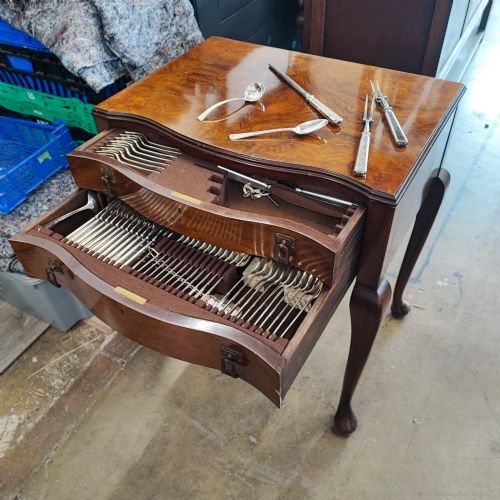
The pieces seen on this page span the eighteenth century and the nineteen-twentieth century, capturing both original items from the reign and later revivals. Buyers encounter forms such as Dognose tablespoons, rattail spoons, and complete canteens housed in mahogany and burr walnut tables.
Provincial and regional pieces feature alongside London work, offering collectors marked examples from makers in Plymouth, East Anglia, and Scotland. These utensils show specific stylistic markers like lace back decoration and armorial crests.
Materials and construction
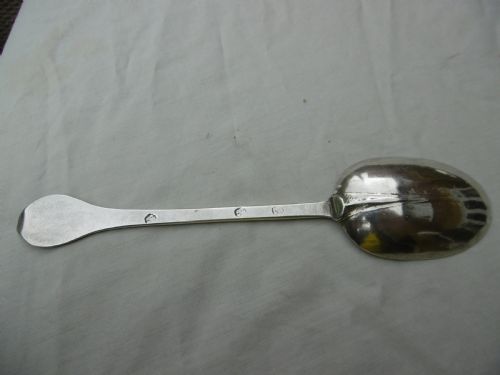
Makers shaped these utensils from sterling silver and high-purity Britannia silver, utilising steel for the blades of related cutlery sets. The metal was beaten and formed into sturdy shafts, featuring rattail drops on the reverse of bowls for reinforcement.
Later twentieth-century iterations combine silver plate and steel within fitted canteen tables lined with felt. Artisans housed these comprehensive cutlery sets in wooden cabinetry fashioned from mahogany and burr walnut.
Listings span the eighteenth century and nineteen-twentieth century, combining sterling silver, Britannia silver, silver plate, and mahogany.
Assessing quality and distinction
The clarity and legibility of the hallmarks separate ordinary survivals from exceptional collector pieces. Clear maker's marks, date letters, and regional town marks establish precise origins and add significant historical weight.
The survival of original crests, armorial engravings, and crisp lace back detailing indicates superior preservation. Weight and the integrity of the rattail attachment further distinguish heavier table forks and tablespoons from worn examples.
Benjamin Watts·John Smith·John Pike of Plymouth·Richard Rae·Lawrence Coles London·J Ladyman
The Queen Anne Silver Flatware Glossary
- Britannia silver
- A standard of silver stricter than sterling, introduced by Act of Parliament in 1697 to discourage the melting of coinage. It contains ninety-five point eight percent pure silver.
- Dognose spoon
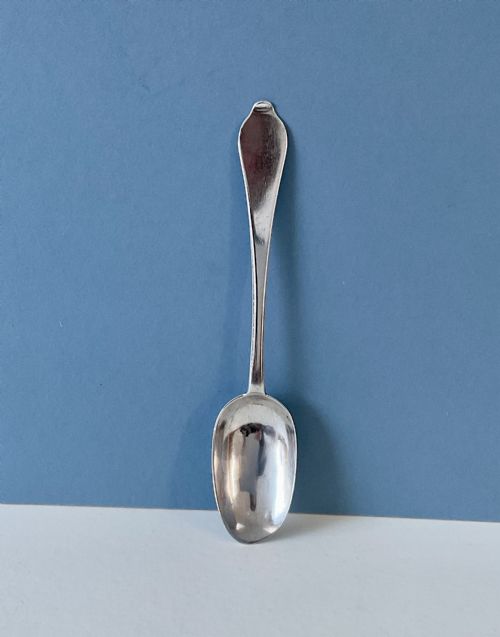
- An early form of spoon popular around the turn of the eighteenth century, featuring a rounded terminal turned up at the end and a prominent rattail down the back of the bowl.
- Rattail
- A tapering spine of metal extending from the handle down the reverse of the spoon bowl to strengthen the joint. It is a defining feature of flatware from this period.
- Table fork
- A dining implement with prongs, which appeared in domestic use alongside spoons during the late seventeenth and early eighteenth centuries. Early examples often mirrored the handle design of contemporary spoons.
- Canteen
- A fitted box, chest, or table designed to hold a complete set of cutlery and flatware securely. They are frequently constructed from hardwoods like mahogany and burr walnut.
Queen Anne Silver Flatware: Frequently Asked Questions
What is a Dognose spoon?
A Dognose spoon is a distinctive style of flatware from the early eighteenth century with a flat, upturned terminal that resembles a dog's nose. These pieces often feature a central rattail down the back of the bowl for added strength.
Collectors prize this specific form for its clean lines and direct link to the reign of Queen Anne, sitting chronologically between the earlier trifid spoons and the later Hanoverian pattern.
How do I identify Britannia silver?
Britannia silver is identified through distinct hallmarks stamped into the metal, specifically the figure of Britannia and the head of a leopard or a lion's head erased. This metal standard was compulsory for all silver articles between 1697 and 1720.
Items bearing these marks contain a higher purity of silver than standard sterling, making genuine period pieces softer to the touch and noticeably whiter in colour.
Were canteens made in the period?
Complete canteens of cutlery as fitted dining room furniture are more commonly associated with later revival periods, such as the nineteen-twentieth century. Early eighteenth-century flatware was typically kept in leather cases or stored loose in drawers.
When buying a canteen dated to the twentieth century, expect to find fitted wooden tables housing matched sets of silver plate and steel utensils.
Why do some spoons have crests?
Crests and armorial engravings were added to flatware by wealthy families to denote ownership and lineage. Engravers pressed the family coat of arms or a specific crest onto the terminal of the spoon or fork.
These personalisations provide clues to the provenance of the piece, often allowing researchers to trace the utensil back to its original noble or gentry household.