



Antique Dognose Spoons
Antique dognose spoons are early flatware pieces offering distinct regional marks and characteristic notched terminals that collectors prize for their seventeenth and eighteenth-century provenance.
Antique Dognose Spoons
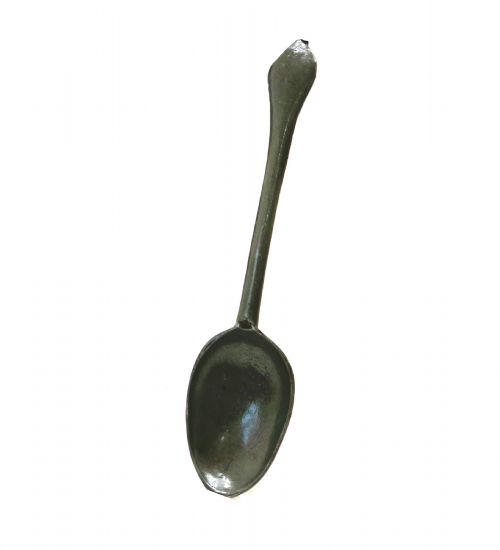
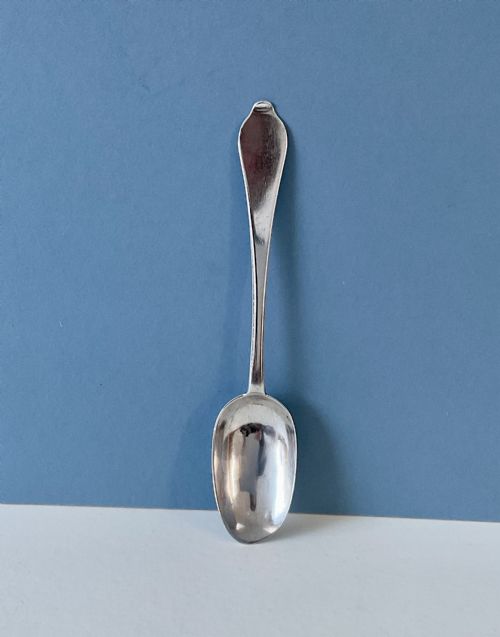
Antique dognose spoons represent a pivotal form in early eating history, emerging around the turn of the eighteenth century with a broadened, flattened tip that resembles a dog's nose. Buyers browsing this page will encounter sterling silver, Britannia silver, pewter and wood examples hailing from the seventeenth and eighteenth centuries.
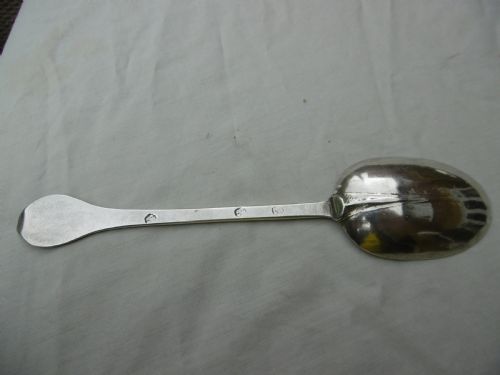
The prevailing format on this page is the tablespoon, often bearing the rattail reinforcement beneath the bowl and sometimes featuring provincial hallmarks or lace back decoration. Makers from London, the West Country, Scotland and East Anglia contributed to this corpus during the reigns of William III and Queen Anne.
Collectors seek these specific variations to anchor a chronological collection of British cutlery. The form bridges the earlier slip-top and puritan styles and the later Hanoverian pattern, making it essential for understanding domestic silver evolution.
How they were made
Silversmiths hammered these implements from sterling or higher-purity Britannia silver, shaping the stem and bowl from a single ingot. The distinctive upturned terminal and the central rattail spine on the reverse provided structural rigidity to the handle during use.
Pewterers and woodworkers also produced comparable domestic items in the same period, employing casting and carving techniques suited to their respective media. Makers punched their punchmarks directly into the metal surface, recording town marks, maker initials and date ciphers.
Listings span the seventeenth and eighteenth centuries, featuring sterling silver, Britannia silver, pewter, and wood across Queen Anne and William III styles.
What varies in quality
The clarity and legibility of the maker marks and town hallmarks govern the historical value of each piece. Crisp initials and well-preserved crests or lace back engravings distinguish workshop output from different regions.
Survival of original bowl shape and stem thickness separates ordinary examples from superior pieces that retain their initial heft and unpolished surface definition.
The Antique Dognose Spoons Glossary
- Dognose
- A spoon style featuring a flattened, rounded terminal with a slight notch, popular in the late seventeenth and early eighteenth centuries. This profile preceded the Hanoverian pattern.
- Rattail
- A tapering dorsal tongue of metal extending down the back of the bowl to reinforce the junction with the stem. It appears frequently on spoons from this era.
- Britannia Silver
- A higher standard of silver alloy introduced by parliamentary act in England to curb the melting of coinage for plate. It contains more pure silver per thousand than standard sterling.
- Lace Back
- Ornamental scrollwork or foliage engraved on the reverse of the spoon bowl, often seen on provincial examples. This decorative technique enhances the visual interest of early flatware.
- Provincial
- Descriptive of items made outside London by local silversmiths bearing regional marks. These pieces often exhibit unique regional stylistic quirks.
Antique Dognose Spoons: Frequently Asked Questions
What is a dognose spoon?
An antique dognose spoon is an early flatware form featuring a distinct rounded and notched terminal at the end of the handle. This design served diners from the late seventeenth century through the reign of Queen Anne.
The style marks the transitional phase between older flat-stemmed spoons and the upturned Hanoverian pattern that followed. Collectors value them for their age and the variety of regional British manufacturing styles.
How old are these spoons?
The pieces available date primarily from the late seventeenth century and the early eighteenth century. This places them firmly within the William III and Queen Anne periods.
Many examples bear specific dates or hallmarks from years between sixteen ninety-nine and the second decade of the eighteenth century. This makes them among the earliest collectible British domestic silver spoons.
What is a rattail on a spoon?
A rattail is a raised, tapering spine of metal that extends from the base of the handle down the back of the bowl. It functioned to strengthen the joint where the stem met the bowl during an era of robust daily use.
On dognose spoons, this feature is a standard hallmark of the period's manufacturing technique. Its presence helps confirm the chronological era of the piece.