
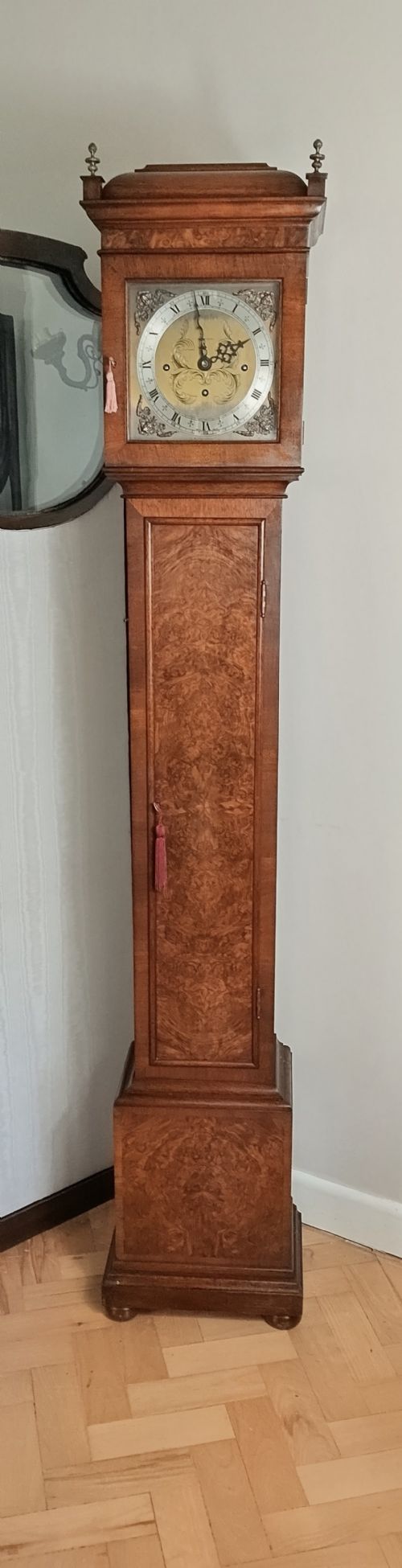


Queen Anne Longcase Clock
A queen anne longcase clock brings architectural walnut and meticulous brass dial work into a room.
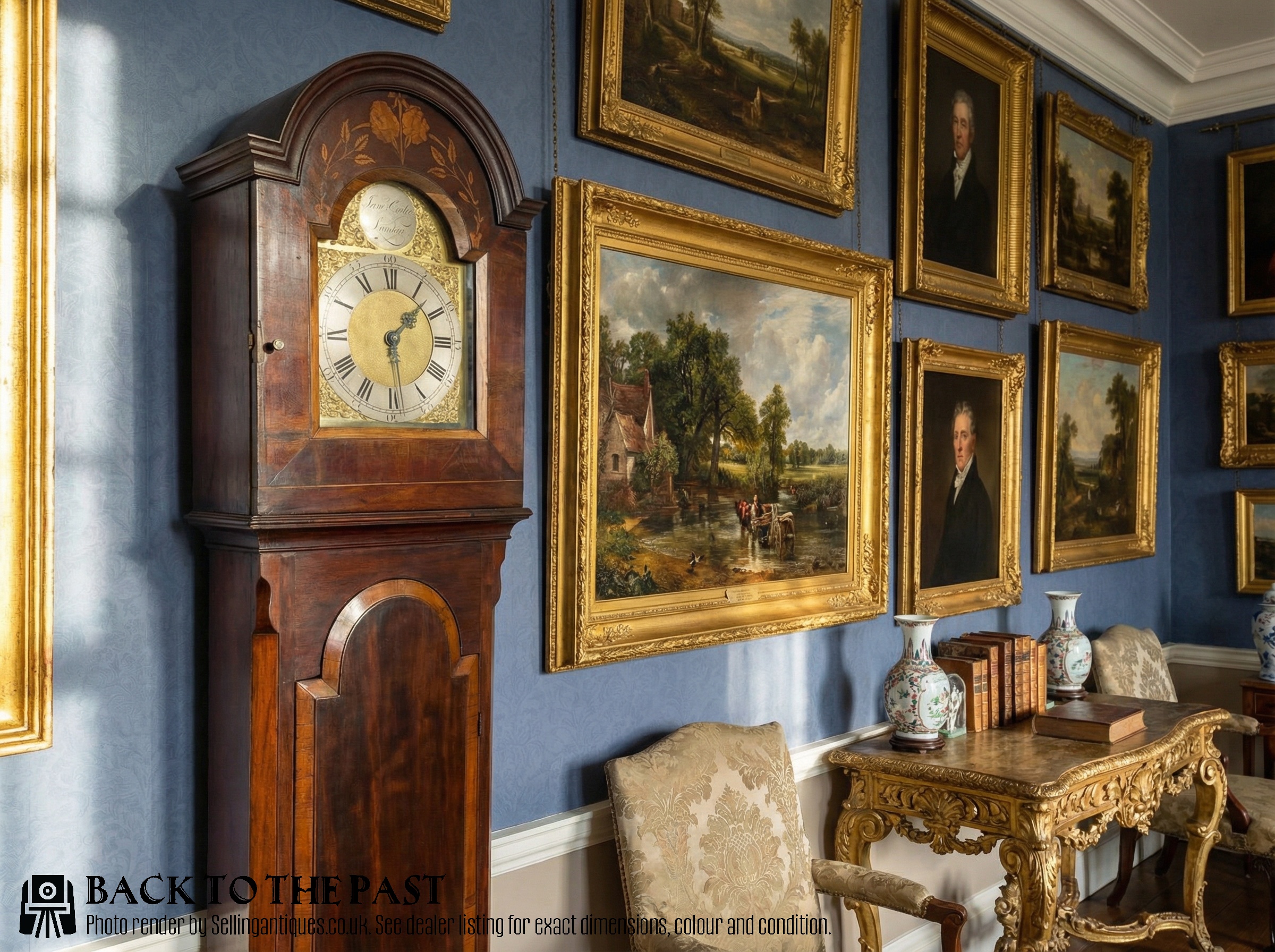
Queen Anne Longcase Clock
A queen anne longcase clock stands as a towering piece of horological history, rooted primarily in the early eighteenth century with later revivals appearing in the twentieth century. These tall floor clocks combine functional timekeeping with cabinetry, standing upright to house long pendulum drops and heavy weights.
Most examples encountered here showcase warm walnut veneers, burr walnut figures, or dark green chinoiserie finishes. The proportions tend to be slender, particularly in smaller granddaughter formats or early period items bearing square brass dials.
The style spans authentic pieces from the seventeen-hundreds alongside revival iterations from nineteen-ten to nineteen-fifty. Buyers often find variations ranging from grand eight-day movements down to thirty-hour or chiming grandmother configurations.
Materials and Construction
Cabinetmakers built the carcass using native timbers before applying figured walnut veneers and quarter-veneered panels. Ebonised wood and brass details provided structural contrast and decorative framing around glass viewing apertures.
Clockmakers fitted brass dials featuring engraved silvered chapter rings and intricate steel hands. Movements relied on brass gear trains and steel arbors, housing either thirty-hour or eight-day weights suspended by cords or chains.
Some clockmakers doubled as locksmiths, meaning your timepiece might share internal lineage with a Tudor strongbox.
Judging Quality and Execution
The sophistication of the movement and the pedigree of the maker separate standard examples from masterworks. Signed brass dials by known London or provincial makers indicate higher workshop status.
The selection and preservation of the burr walnut veneer dictate visual impact. Crisp carving, original glass, and untouched patination on the timber elevate an item above heavily restored or later revival counterparts.
Henry Massy·Langley Bradley·Joseph Jackeman·Thomas Cartwright·Thomas Wroth·Thomas Deykin·John Culliford
The Queen Anne Longcase Clock Glossary
- Chapter ring
- The metal ring on a clock dial that bears the hour numerals. It is frequently silvered and engraved.
- Grandmother clock
- A smaller version of the standard longcase clock, typically produced in the twentieth century. These shorter floor clocks fit domestic spaces with lower ceilings.
- Chinoiserie
- European decorative art imitating Chinese styles, often executed in lacquer on wood surfaces. This technique appears on green-ground clock cases from the early eighteenth century.
- Quarter veneered
- A method of arranging four matching veneer slices cut from the same log to form a symmetrical geometric pattern. This technique enhances the decorative grain on clock doors.
- Dial
- The face of the clock where time is displayed through hands and numerals. Brass is the predominant metal used in these early examples.
Queen Anne Longcase Clock: Frequently Asked Questions
How do I wind an eight day clock?
Use the provided crank key to wind the weights up via the winding holes on the brass dial face.
Take care not to overwind the mechanism, stopping as soon as resistance is felt.
Where should I place a longcase clock?
Position the clock against a sturdy interior wall on a level floor away from direct sunlight and draughts.
External walls can experience temperature fluctuations that affect the wood and timekeeping accuracy.
How do I tell an early piece from a revival?
Examine the construction methods, timber patination, and dial engraving style under magnification.
Eighteenth-century examples display hand-cut components and period timber shrinkage, unlike twentieth-century revival pieces.