
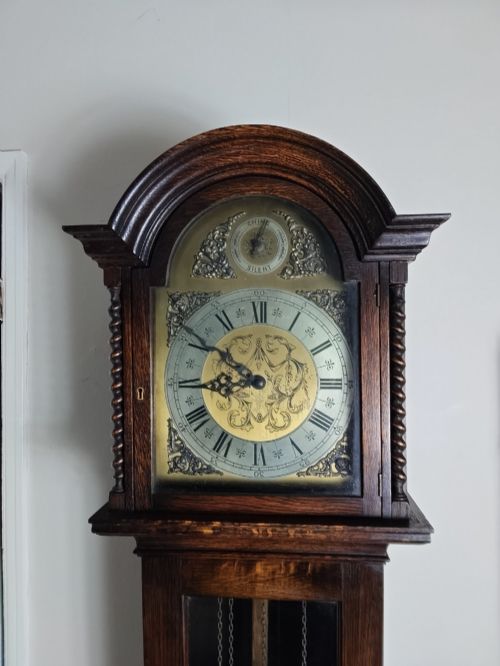
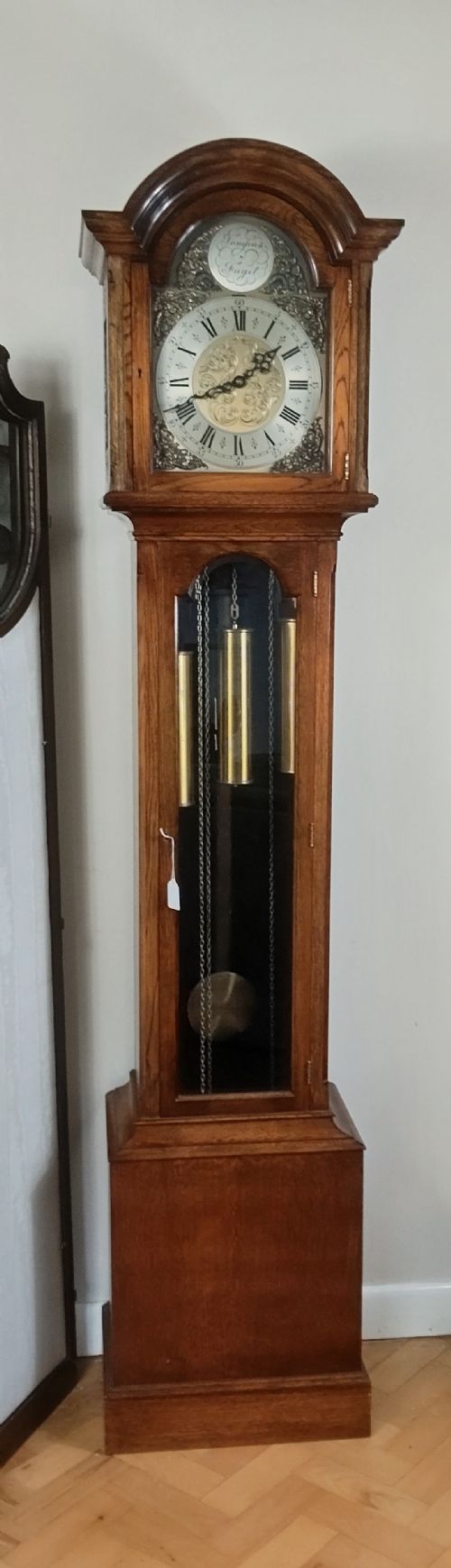


Quarter Chiming Floor Clock
A quarter chiming floor clock brings a rich acoustic presence to a room, measuring time with traditional melodies.
Quarter Chiming Floor Clock
A quarter chiming floor clock stands as a traditional timekeeper designed to mark the passage of every fifteen minutes with distinct notes. These tall wooden cases house complex movements built to play multiple tunes or strike upon bells and tubes.
Buyers encountering this selection will find longcase clocks, grandfather clocks, and smaller grandmother variants. The inventory spans pieces produced from the Victorian and Edwardian eras through the nineteen-twenties and nineteen-thirties.
Stylistic influences draw heavily upon earlier British design traditions, including Georgian, Queen Anne, and Jacobean revivals. Oak, mahogany, walnut, and burr walnut form the primary timber bodies enclosing these mechanical works.
How they were made
Cabinetmakers constructed the tall wooden housings using solid timbers alongside decorative veneers such as burr walnut and quarter veneered walnut. Glass panels were fitted into the trunk doors and hoods to protect the dial and pendulum while allowing visibility.
Clockmakers engineered heavy mechanical movements driven by weights or springs to operate the timekeeping trains alongside the musical and chiming mechanisms. Dials featured brass components and steel details, while the acoustic output relied upon tuned bells or hanging metal tubes.
Object forms span standard longcase clocks, grandfathers, and slender grandmother variants equipped with musical chiming movements.
What varies in quality
The sophistication of the internal movement dictates much of the standing of a quarter chiming floor clock. Simpler hour-strike configurations contrast with advanced musical cylinders capable of playing three distinct tunes across multiple bells or tubes.
Cabinetwork execution separates standard production from finer craftsmanship. The selection of figured timber veneers, such as burr walnut and rich mahogany, combined with balanced proportions in smaller grandmother or slim longcase forms, defines the upper tier.
Enfield·Camerer Cuss And Co
The Quarter Chiming Floor Clock Glossary
- Longcase clock
- A tall freestanding pendulum clock enclosed in a wooden case, commonly known as a grandfather clock.
- Grandmother clock
- A smaller, more slender version of the traditional longcase clock, typically produced during the early twentieth century.
- Quarter chiming
- A mechanical function that sounds a sequence of notes at fifteen-minute intervals before the full hour strike.
- Burr walnut
- A highly figured wood grain prized by cabinetmakers for its swirling patterns and decorative veneer potential.
- Dial
- The visible face of the clock featuring numerals, hands, and often decorative brass work.
Quarter Chiming Floor Clock: Frequently Asked Questions
What is a quarter chiming floor clock?
A quarter chiming floor clock is a tall mechanical timekeeper housed in a wooden case designed to sound musical notes or chimes every fifteen minutes.
These pieces combine cabinetmaking with complex horology, functioning as both decorative furniture and functional acoustic clocks.
How do grandfather and grandmother clocks differ?
Grandfather clocks are taller, full-sized longcase timekeepers designed for grand proportions and heavier weight-driven movements.
Grandmother clocks are significantly shorter and slimmer versions built to fit more compact modern living spaces without losing the chiming functionality.
How do these clocks produce their sound?
The internal movement activates hammers that strike against a series of tuned metal bells or hanging tubular gongs.
More advanced musical mechanisms utilise pinned cylinders to play specific melodies alongside the standard quarter-hour sequence.
What woods were used for the cases?
Cabinetmakers utilised traditional British timbers including oak, mahogany, and walnut to construct the protective tall cases.
Finer examples frequently feature decorative veneers such as burr walnut or quartered walnut patterns across the trunk doors and hoods.
From which periods do these clocks originate?
The available selection primarily dates from the Victorian and Edwardian eras through the nineteen-twenties and nineteen-thirties.
Design styles during these decades frequently revived earlier historic motifs, including Georgian and Jacobean aesthetics.