
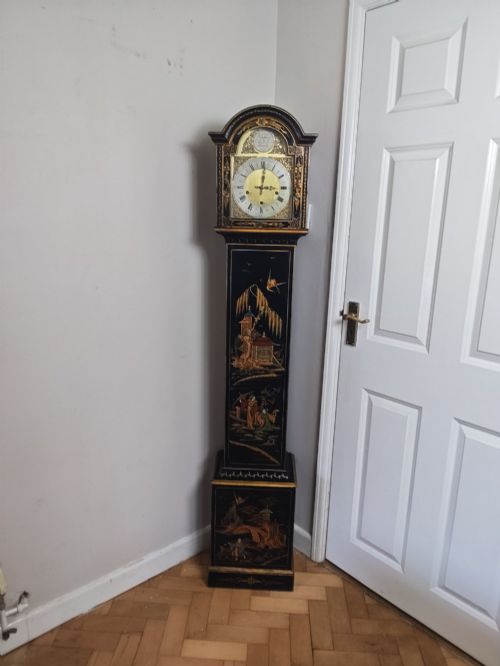
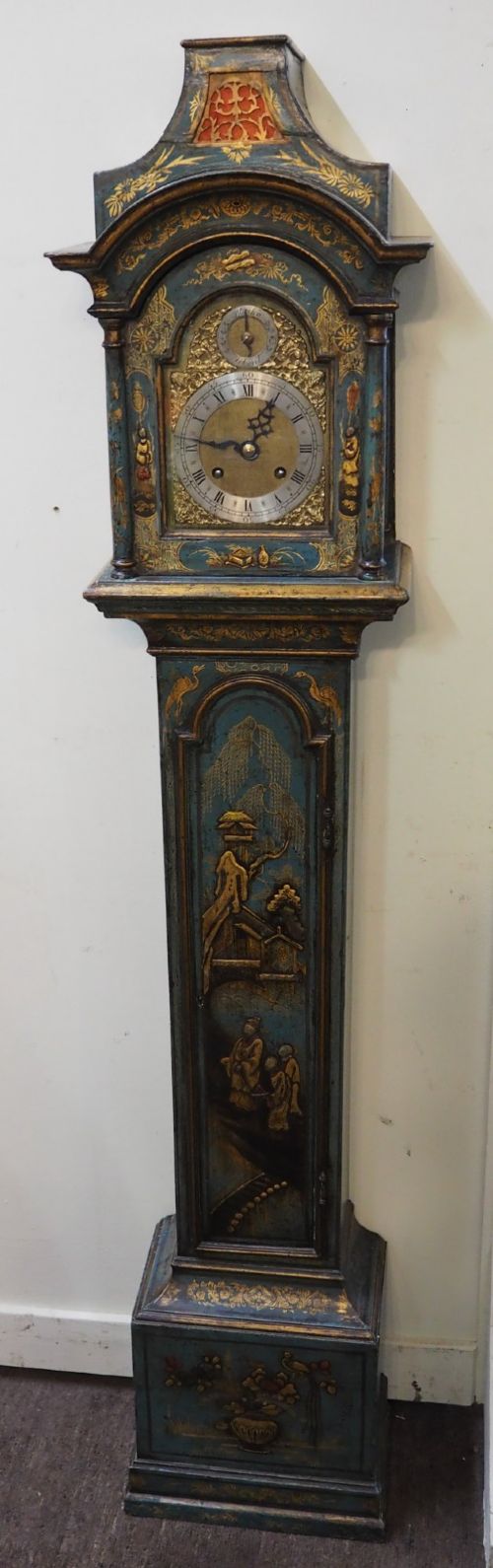


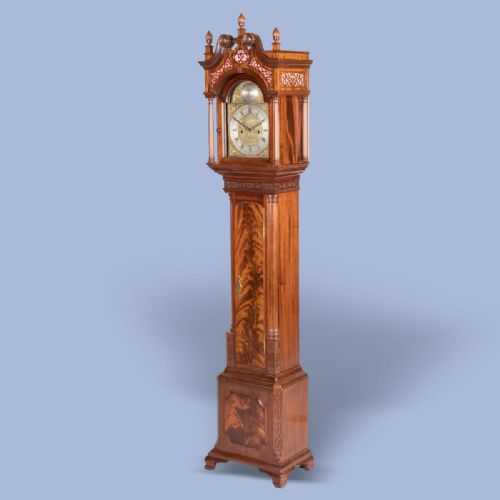

Grandmother Tall Case Clock
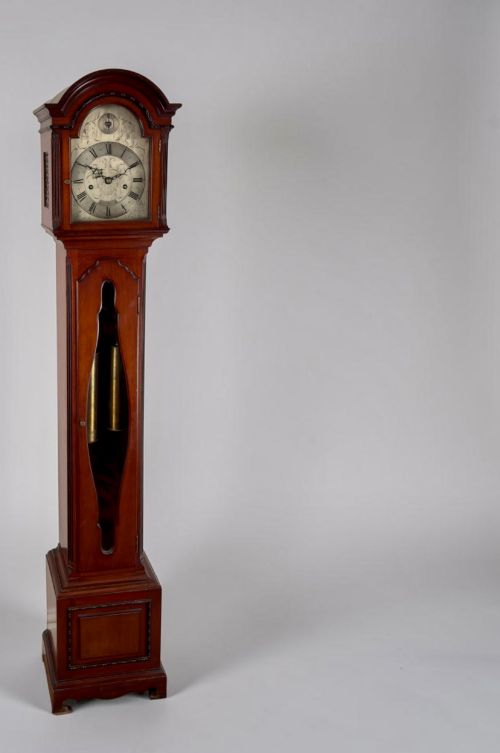
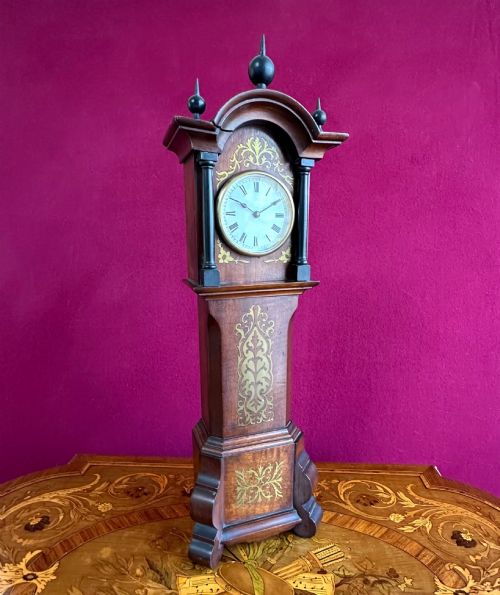
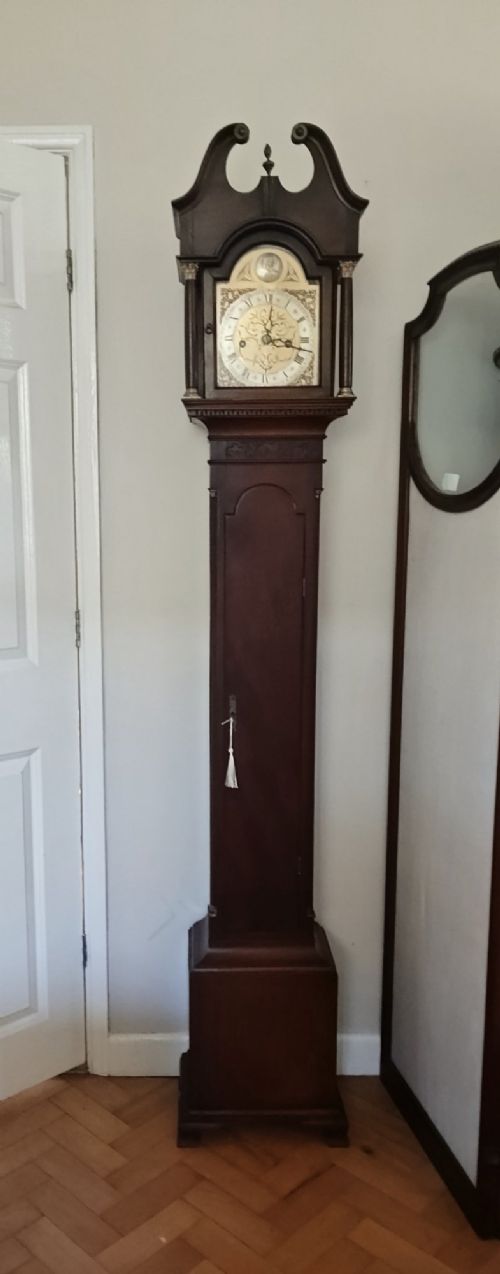
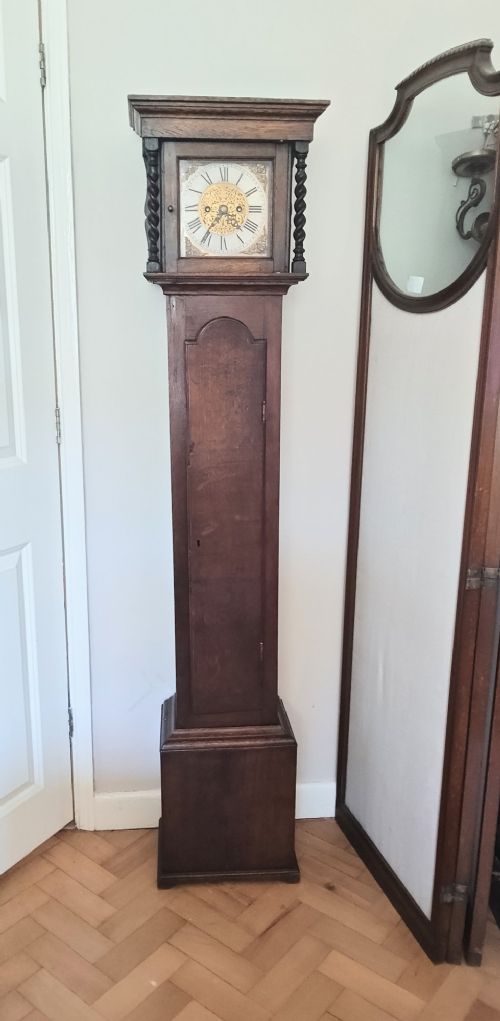
These grandmother tall case clock examples are scaled-down floor clocks offering full mechanical presence in modest proportions.
Grandmother Tall Case Clock
A grandmother tall case clock is a scaled-down version of the traditional longcase, typically standing significantly shorter than its larger counterpart. When you search for grandmother tall case clock, you find these compact floor-standing timepieces originating from periods such as the Edwardian era, the nineteenth century, and the 1920s or 1930s.
The pieces listed on this page appear in various styles, including Georgian Revival, Chinoiserie, Queen Anne Style, and Jacobean Revival. Buyers frequently encounter forms described as grandmother clocks, miniature grandfather clocks, or small longcase clocks.
The origins span Edwardian examples alongside pieces from 1870, 1900, 1910, 1920, and 1930. These compact floor clocks suit domestic spaces requiring the horological interest of a longcase without the towering height.
How they were made
Cases are constructed from woods such as mahogany, oak, walnut, and burr walnut, alongside decorative finishes including blue lacquer. Wood selection dictates the primary visual character of the cabinet work.
Mechanically, these clocks incorporate brass and steel components within movements capable of chiming functions, such as Westminster chimes. Glass is utilised in the door panels to protect the dial while allowing visibility of the face and pendulum.
Some miniature floor clocks even manage to squeeze Westminster chimes into their compact wooden chests.
What varies in quality
Quality separates simple timber cases from those featuring elaborate finishes like Chinoiserie lacquer or figured burr walnut veneers. The distinction lies in the depth of cabinet craftsmanship and the complexity of the internal movement.
Clocks equipped with multiple weights and complex chiming mechanisms, such as quarter-chiming systems by notable makers, represent a higher tier of production than standard eight-day time-only movements.
Gillett & Johnston of Croydon·Dent of London
The Grandmother Tall Case Clock Glossary
- Grandmother clock
- A floor-standing timepiece resembling a full-sized longcase clock but built to smaller proportions. These pieces generally stand lower to the ground while housing similar weight-driven or spring-driven movements.
- Chinoiserie
- A European decorative style emulating Chinese artistic traditions, frequently expressed through painted lacquer and gilt motifs on clock cases. This technique appears on specific decorative examples.
- Trimming
- The mechanical arrangement within a clock that produces musical notes or hour strikes on bells, gongs, or rods. Variations include Westminster chiming and quarter-chiming capabilities.
- Dial
- The visible face of the clock displaying the hours and minutes. Dials on these pieces are framed by brass and glass components within the hood.
Grandmother Tall Case Clock: Frequently Asked Questions
How tall is a grandmother clock?
These clocks are built to significantly smaller proportions than traditional grandfather clocks, making them suitable for rooms with lower ceilings.
They retain the classic floor-standing long case silhouette while occupying less vertical space in a domestic interior.
What is the difference between a grandmother clock and a grandfather clock?
The primary distinction lies in the overall height and scale of the wooden case. Grandmother clocks are the smaller variant of the traditional floor clock.
Despite the reduced proportions, they still house functional mechanical movements and pendulums.
How do I wind an eight day clock?
Eight day movements require winding via the dial face using a specific key at regular weekly intervals. This tensions the internal springs or lifts the driving weights.
Careful handling ensures the mechanism continues to keep accurate time and activate the chimes.
Where should I place a longcase clock?
These floor-standing pieces require a stable, level surface on an interior wall away from direct sunlight and major temperature fluctuations. Placing the case securely against a wall prevents vibrations from interfering with the pendulum swing.