


Gilt Lacquer Longcase Clock
A gilt lacquer longcase clock brings height, colour and narrative to a room through traditional japanned decoration.
Gilt Lacquer Longcase Clock
A gilt lacquer longcase clock combines tall wooden case construction with ornate chinoiserie decoration, originating primarily from the Georgian era and the 18th century. These floor-standing timepieces range from grand eight-day grandfather clocks to more compact grandmother clock variants produced in later revival periods.
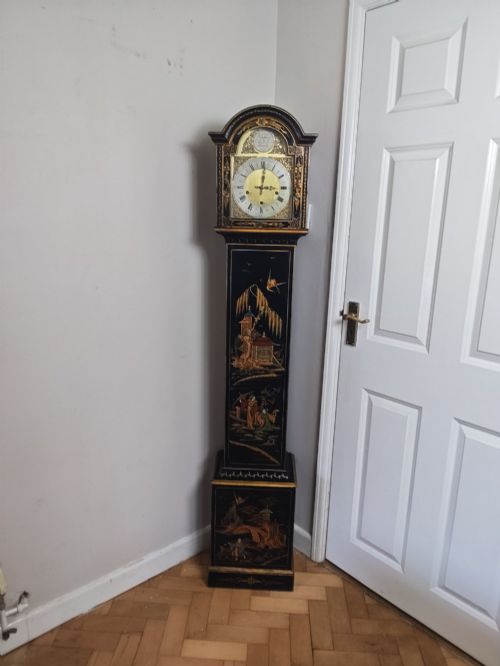
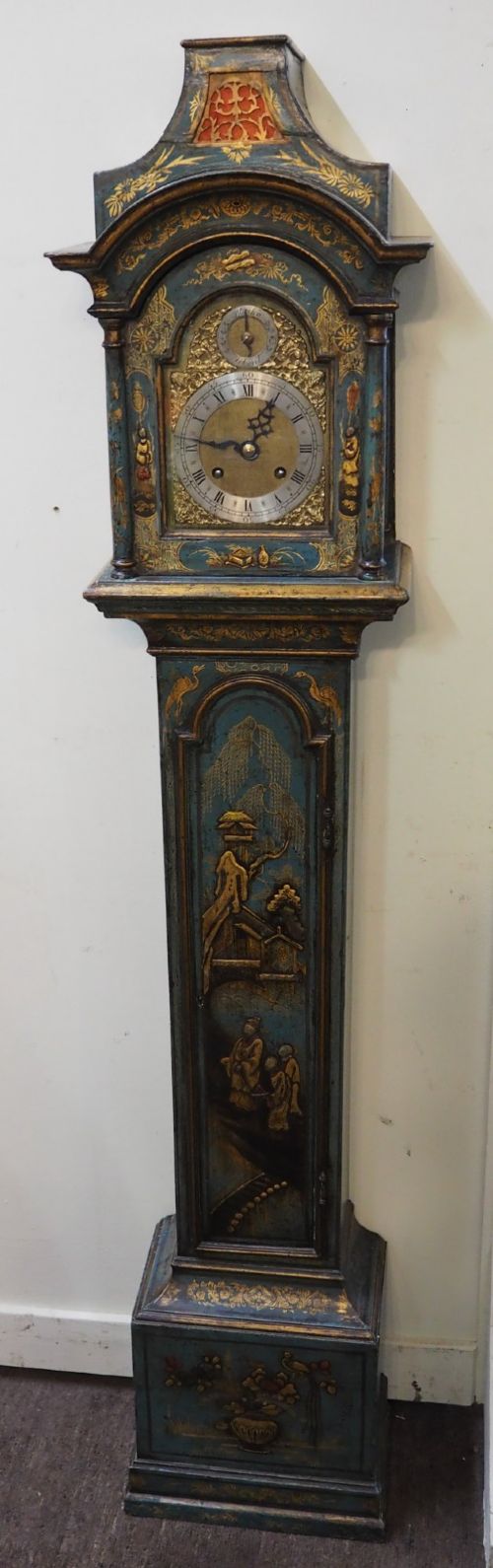
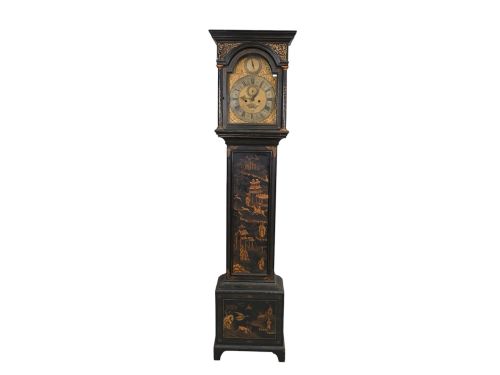
The decorative schemes draw heavily on Chinoiserie aesthetics, displaying painted figures, landscapes and gilt motifs against dark, blue or green lacquered backgrounds. Pieces on this page span early 18th-century examples by named makers to 20th-century revival items.
Grandfather and grandmother forms dominate the selection, housing brass dial movements inside tall wooden cases. Buyers encounter both traditional eight-day weight-driven mechanisms and smaller musical or chiming movements from the 1920s and 1930s.
How they were made
Cabinetmakers built the tall wooden cases using native timbers before applying layers of lacquer to create a smooth canvas for decoration. Artisans then built up raised designs in relief paste before applying gold leaf and gilt paint to the intricate scenes.
Movements utilise brass for the gear trains, dials and bezels, housed securely behind protective glass doors in the hood. Craftsmen combined these mechanical elements with specialised lacquering techniques, sometimes incorporating automaton or musical mechanisms within the trunk.
Listings on this page span the early Georgian period through to the 1930s, showcasing both antique japanned pieces and 20th-century Chinoiserie revival work.
What varies in quality
The distinction between tiers rests upon the depth of the japanning and the sophistication of the painted gilt detail across the case. Finer examples display crisp, multi-layered relief work and balanced pictorial compositions rather than flat, simplistic surface painting.
Movement execution and maker attribution also shape the character of each piece, with signed brass dials from London or provincial makers indicating higher workshop standing. Case proportions, original surface patination and the integration of hood mouldings distinguish standard production from exceptional works.
William Kipling London·Wise of Reading·Gardner of London·Robert Berry
The Gilt Lacquer Longcase Clock Glossary
- Japanned Wood
- European wood finished with resinous varnishes to imitate East Asian lacquerwork. This technique created the dark, glossy backgrounds typical of Chinoiserie clock cases.
- Chinoiserie
- The European interpretation of Chinese and East Asian artistic traditions, popular in furniture and clock decoration during the 18th century. It manifests as fantastical landscapes, pagodas and figures rendered in gilt.
- Grandmother Clock
- A smaller, more slender version of the traditional longcase clock, typically manufactured during the 20th century. These pieces occupy less floor space while retaining similar dial and movement layouts.
- Automaton Clock
- A timekeeper featuring moving figures or mechanical scenes integrated into the dial. These mechanical additions animate the clock face alongside the standard hands.
- Eight-Day Movement
- A clock mechanism that requires winding once a week to maintain operation. This movement type uses heavy weights suspended on cords or chains inside the trunk.
Gilt Lacquer Longcase Clock: Frequently Asked Questions
How do I date a lacquer longcase clock?
Dating relies on stylistic clues in the brass dial, movement architecture and the specific motifs used in the japanned decoration. Early 18th-century pieces often feature square brass dials with spandrels, while later Georgian and revival versions show distinct decorative shifts.
Examining the construction methods inside the wooden trunk and the signatures of makers inscribed on the dial plate helps narrow the period of origin.
What is the difference between grandfather and grandmother clocks?
Grandfather clocks are full-sized longcase timepieces, generally standing over six feet tall and housing standard eight-day weight-driven movements. Grandmother clocks are noticeably shorter and narrower versions produced primarily in the 20th century.
Both styles utilise similar gilt lacquer and chinoiserie decoration, but the smaller grandmother clocks suit more compact modern room proportions.
Where should I place a longcase clock at home?
These tall floor-standing clocks require stable, level flooring away from direct sunlight and fluctuating heat sources to protect the wooden case and lacquer finish. Hallways, landings and principal reception rooms provide traditional settings where the height and decorated surface can be appreciated.
Sufficient vertical clearance is essential, as the hood must be accessible for periodic winding and movement adjustment.
What maintenance do lacquered clock cases need?
Lacquered wooden surfaces require minimal intervention, benefiting mainly from dusting with a soft, dry cloth to prevent particulate buildup. Avoiding moisture, harsh cleaning agents and sudden temperature changes preserves the integrity of the gold leaf and varnish.
Mechanical movements require professional servicing every few years to ensure the brass gear trains and weights continue operating smoothly.