


Lacquered Floor Clock
A lacquered floor clock brings remarkable height, rich painted surface and disciplined brass movement into a room.
Lacquered Floor Clock
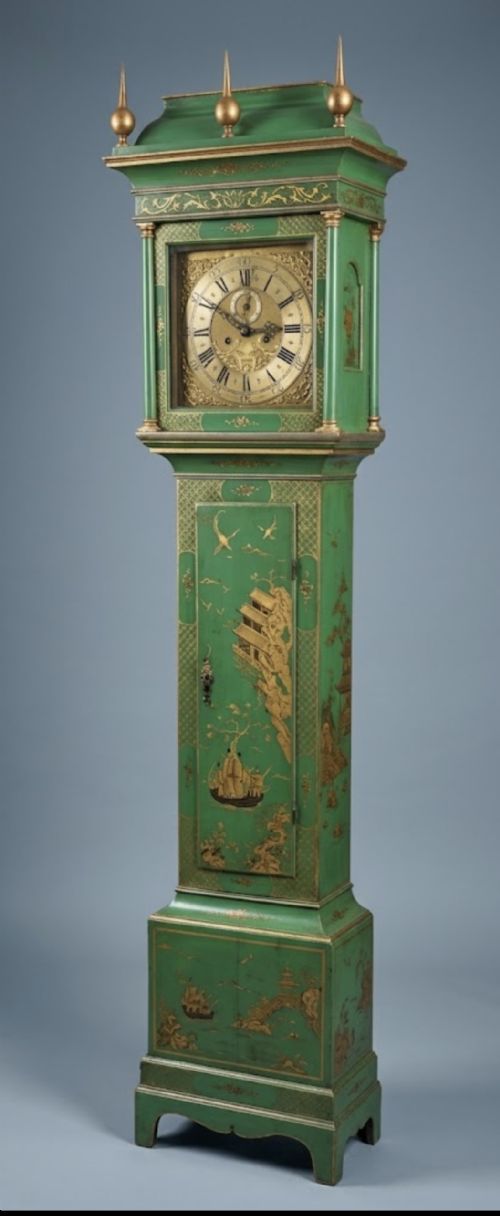
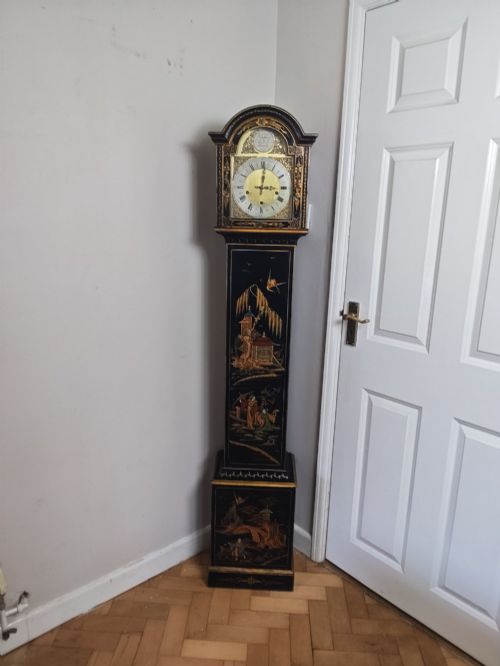
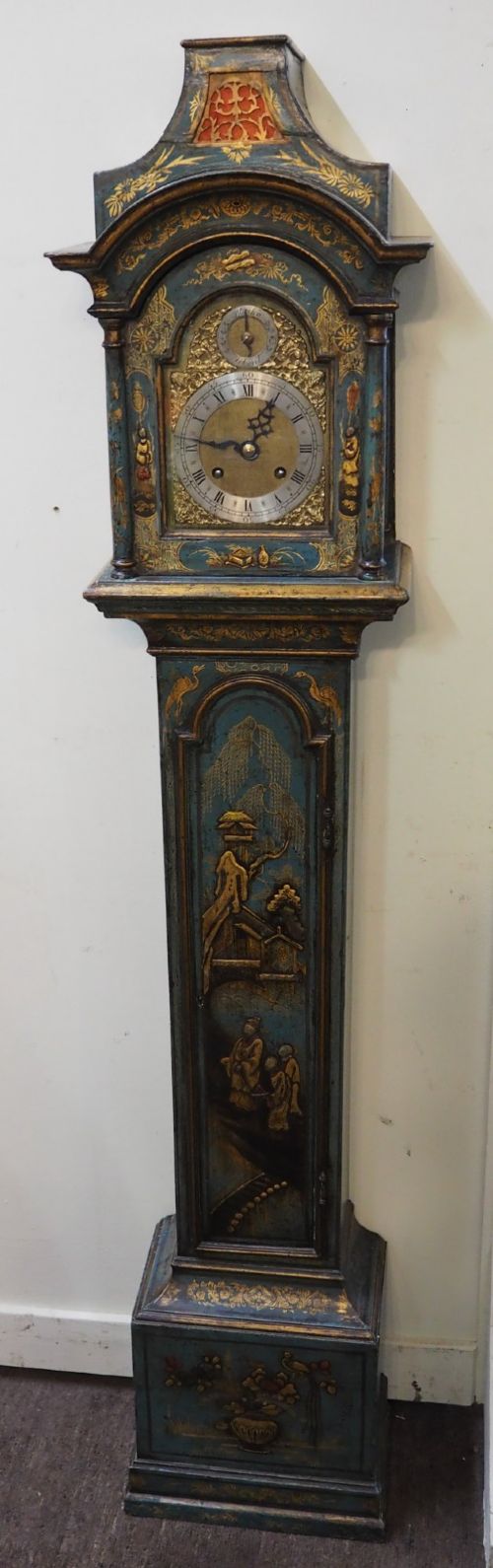
A lacquered floor clock stands tall in a room, combining a fitted wooden case with a brass movement and dial. When you search for a lacquered floor clock, you encounter grand architectural forms alongside more compact scales.
The selections span distinct periods, stretching from early Georgian and George III origins through to later 20th century interpretations. Alongside full-sized grandfather clocks, smaller grandmother clocks appear in various painted finishes.
Most examples display ornamental surface decoration in the Chinoiserie taste, utilising distinct hues like green, blue and cream. These tall timepieces function as both reliable chronometers and prominent decorative fixtures.
Materials and Construction
These clocks are constructed from wood and lacquered wood, providing a stable vertical chassis for the complex interior mechanics. Surface schemes frequently incorporate applied gilt, gold leaf and detailed painted Chinoiserie motifs.
The mechanical heart relies upon durable brass for movements, gears and engraved dials, protected behind fitted glass panes. Artisans built these tall cases to house swinging pendulums and weight-driven mechanisms securely.
The listings span 18th century Georgian origins alongside 1920 and 1930 revivals, utilising brass, glass, gold leaf and lacquered wood.
Elements of Distinction
The success of a piece rests heavily upon the crispness of the painted surface and the depth of the Chinoiserie imagery. Superior examples exhibit intricate pictorial scenes and harmonious proportions across the hood, trunk and base.
Signatures upon the dial from recognised makers elevate the standing of the work significantly. The sophistication of the internal movement, whether standard timekeeping, musical output or automaton figures, defines the upper tier.
John Fielder of Alton·William Kipling London·Wise of Reading·Thomas Utting of Yarmouth·Gardner of London·Robert Berry
The Lacquered Floor Clock Glossary
- Chinoiserie
- European decorative style reflecting Chinese artistic traditions, employing figures, landscapes and pagodas painted onto lacquered surfaces.
- Longcase clock
- Tall pendulum clock housed in a wooden floor-standing case, commonly termed a grandfather clock.
- Grandmother clock
- A scaled-down version of the traditional longcase clock, popular in 20th century revivals.
- Automaton
- Moving mechanical figures integrated into the clock dial, such as a rocking Father Time.
- Movement
- The internal brass gear train and mechanism that drives the hands and strikes the time.
Lacquered Floor Clock: Frequently Asked Questions
What is a grandmother clock?
A grandmother clock is a smaller, more slender variant of the traditional longcase floor clock.
These compact timepieces suit rooms with lower ceilings while retaining similar decorative painted finishes and mechanical movements.
How do I identify a Chinoiserie case?
Chinoiserie cases display distinct painted or raised decorations inspired by traditional East Asian art.
Expect to see figurative scenes, pavilions and landscapes rendered in gold leaf and vibrant pigments upon a lacquered background.
Where should I place a floor clock?
Floor clocks require a stable, level surface against a solid wall to ensure the pendulum swings evenly.
Keep them away from direct sunlight and strong temperature fluctuations to protect the painted lacquer and wood.
How do I tell early clocks from later revivals?
Early Georgian examples from the 18th century display period joinery methods and hand-engraved brass dial signatures.
Twentieth-century revivals often incorporate modern chimes like Westminster movements while adopting older aesthetic styles.