

Queen Anne Chest of Drawers
A queen anne chest of drawers brings understated elegance to a room with its rich walnut timber and disciplined proportions.
Queen Anne Chest of Drawers
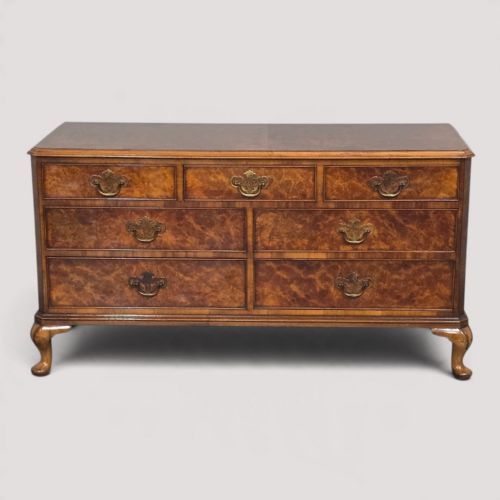
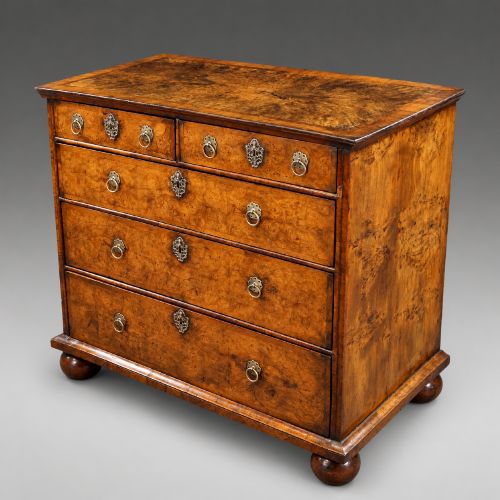
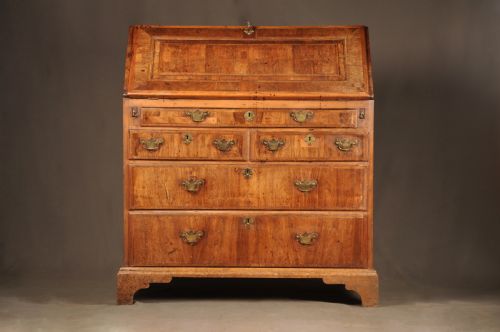
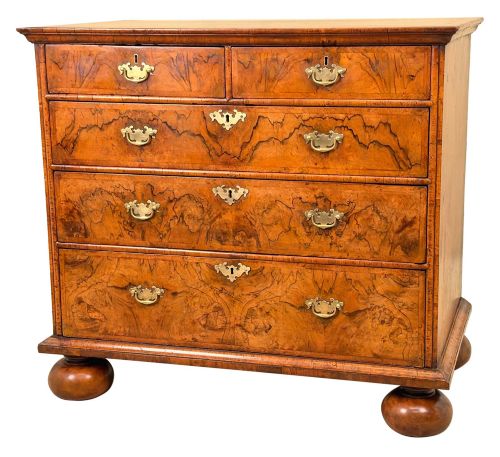
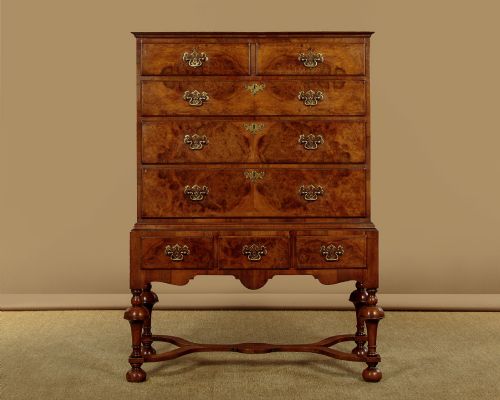
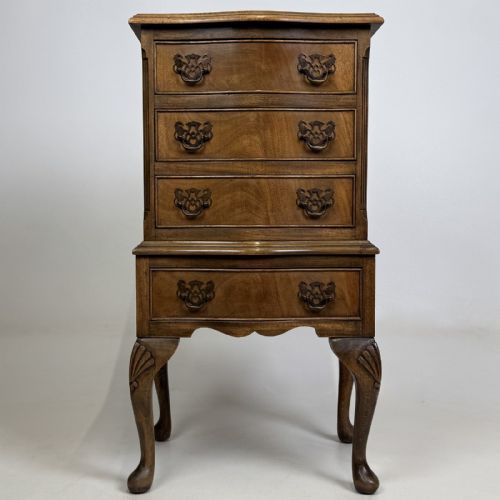
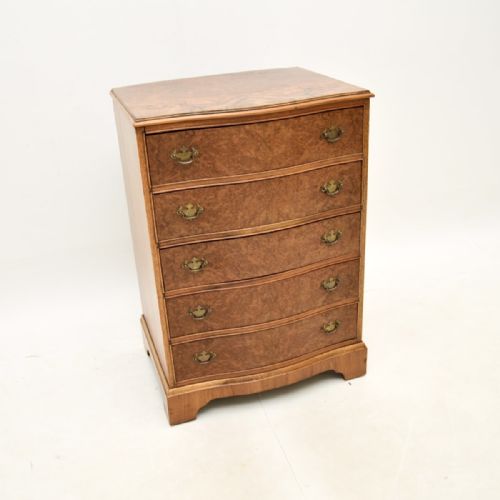
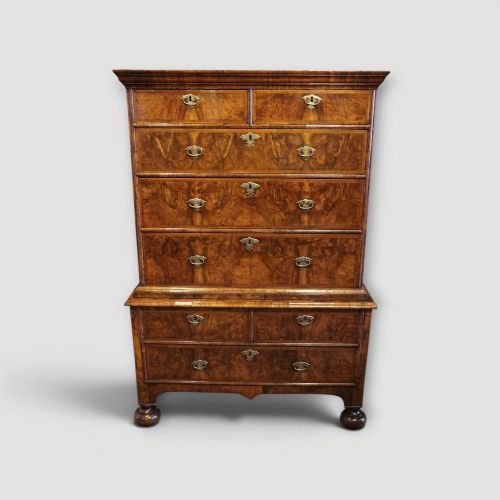
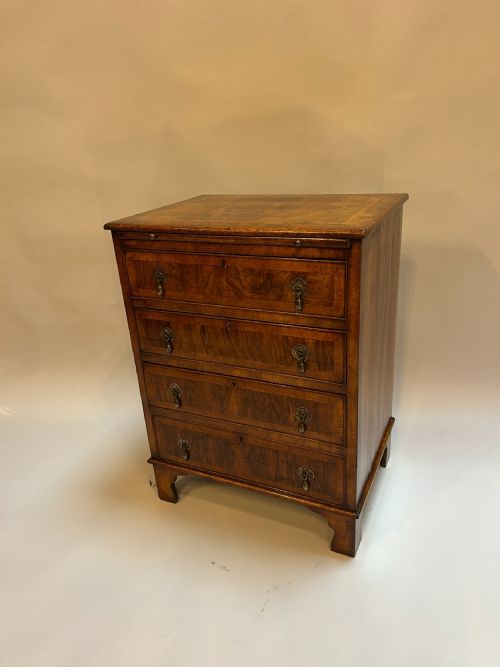
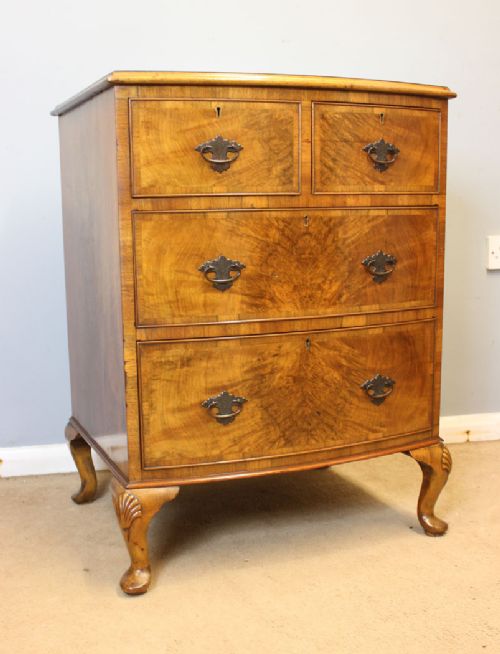
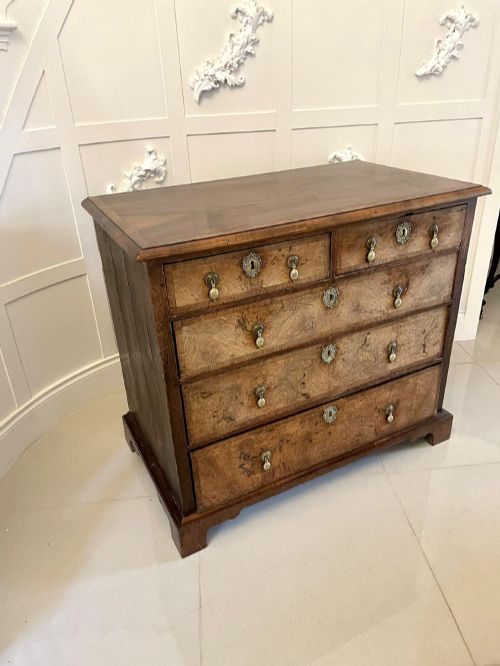
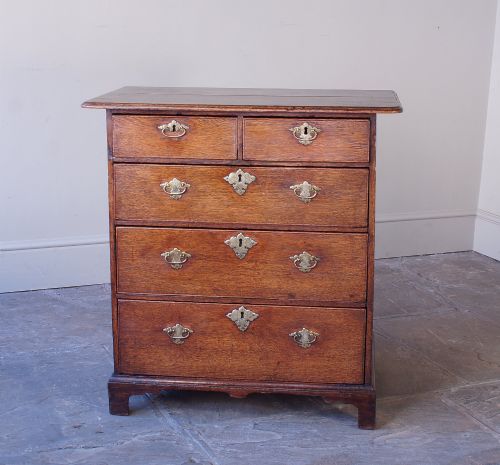
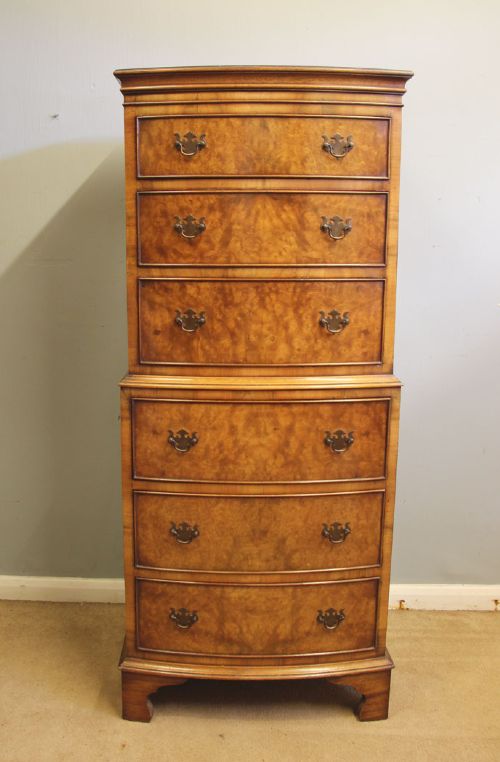
A queen anne chest of drawers represents a refined evolution in British furniture design, moving away from heavy oak toward lighter, more decorative forms. These pieces often feature graduated horizontal drawers, sometimes elevated on raised stands, or constructed as vertical tallboys and bureaus.
While surviving examples date back to the early eighteenth century, many pieces encountered on this page reflect later revivals from the Edwardian era and the early twentieth century. These later interpretations adopt the distinct walnut veneers and stylistic cues of the original period.
The primary form remains the low chest of drawers, though variants such as miniature chests, writing desks, and chests on stands frequently appear in walnut, oak, and elm.
How They Were Made
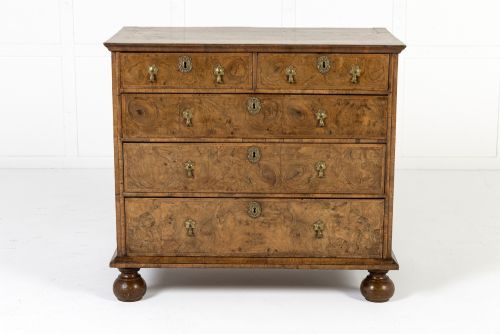
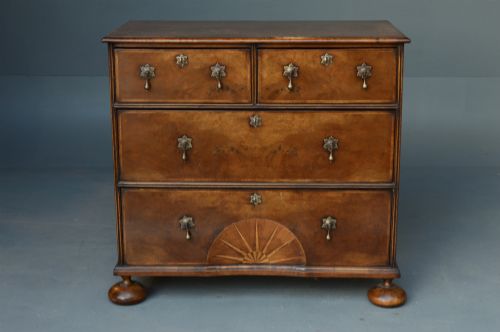
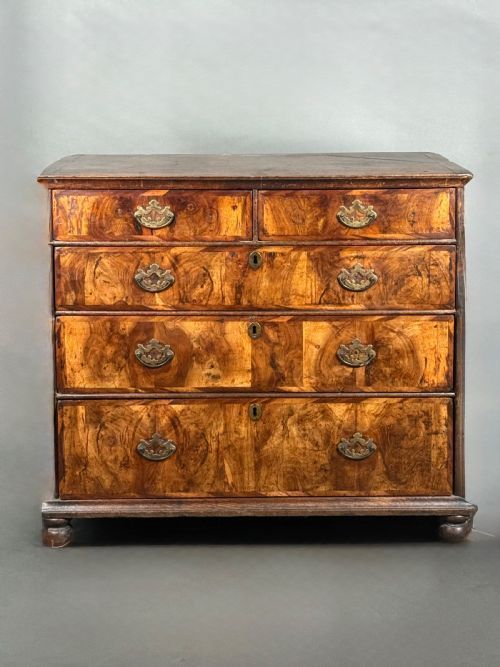
Cabinet makers relied heavily on walnut during this era, selecting burr, figured, and veneered cuts to create richly patterned drawer fronts and tops. Secondary timbers like oak and pine provided sturdy internal framing and drawer linings.
Decorative techniques such as crossbanding, featherbanding, and herringbone inlay framed the drawer perimeters to highlight the grain of the wood. Brass drop handles and escutcheons completed the construction, securing the functional facade.
Queen Anne Chest of Drawers Retail Price Guide 2026
Typical asking prices for queen anne chest of drawers among the pieces listed under this phrase on Sellingantiques today, from the lower quarter to the upper quarter. They describe what is for sale here now, not the wider market.
The archive includes early eighteenth-century examples alongside Edwardian and 1920s revival pieces.
What Varies in Quality
Quality rests significantly on the choice of timber figure, where deeply patterned burr walnut commands greater visual depth than plain veneers. The precision of the inlay work and the subtlety of the banded borders also separate standard pieces from finer examples.
Proportion and surface preservation dictate the standing of a piece, with untouched patination and original brass hardware offering a more cohesive historical statement.
Waring and Gillow
The Queen Anne Chest of Drawers Glossary
- Crossbanding
- A strip of veneer laid perpendicularly to the surrounding grain, forming a decorative border around drawer fronts. This technique frames the primary timber panel.
- Herringbone inlay
- Fine strips of veneer arranged in a repeating V-shape pattern resembling a fish skeleton. It provides a crisp linear contrast to figured walnut.
- Tallboy
- A tall chest of drawers constructed in two stacked sections, often combining a chest with a wardrobe or additional smaller drawers above. It maximises vertical storage space.
- Chest on stand
- A drawer section elevated on a separate frame with legs, lifting the storage capacity off the floor. This form frequently dates to the earliest part of the eighteenth century.
- Veneer
- A thin layer of highly figured wood applied over a more stable secondary timber base. It allowed cabinet makers to display expensive grains economically.
Queen Anne Chest of Drawers: Frequently Asked Questions
How do I spot a reproduction?
Look closely at the construction methods, timber selection, and secondary woods used inside the drawers. Modern machine cuts and contemporary fixings generally signal a twentieth-century revival piece rather than an eighteenth-century original.
Examine the uniformity of the veneers and the wear patterns on the feet and handles. Eighteenth-century pieces exhibit natural oxidation and hand-cut joinery that modern reproductions rarely replicate accurately.
Can I use one in a modern bedroom?
These chests integrate smoothly into contemporary interiors due to their warm timber tones and restrained proportions. Their drawers offer practical storage for clothing or linens while serving as a strong focal point.
Keep them away from direct heat sources and strong sunlight to protect the fragile walnut veneers from drying out or splitting. Regular waxing maintains the natural lustre of the timber.
Why is walnut the dominant timber?
Walnut replaced oak as the preferred cabinet wood because its dense grain accepted intricate veneers and decorative bandings. This shift allowed makers to produce visually striking surfaces with varied patterns.
Burr and figured cuts provided rich visual texture that suited the understated forms of the period. Oak and pine remained in use primarily for internal drawer construction.