
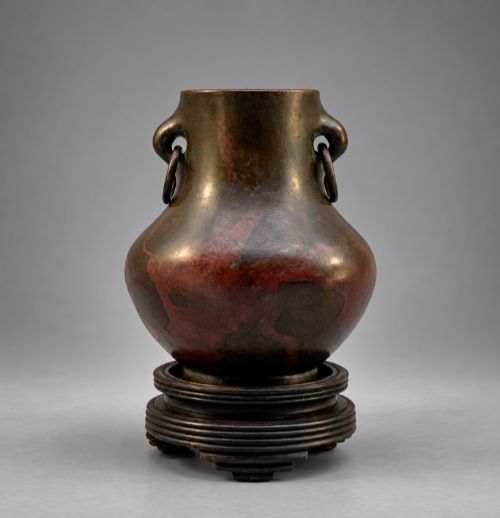
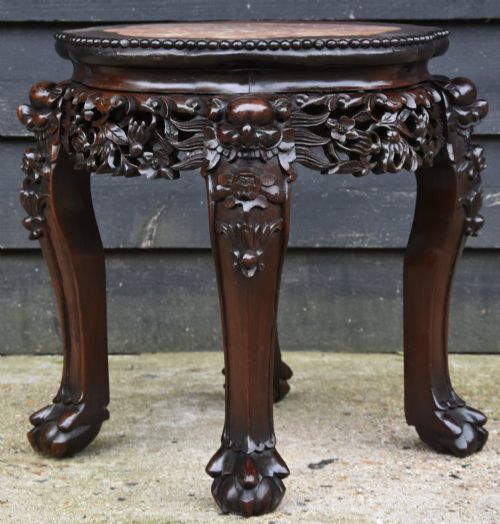
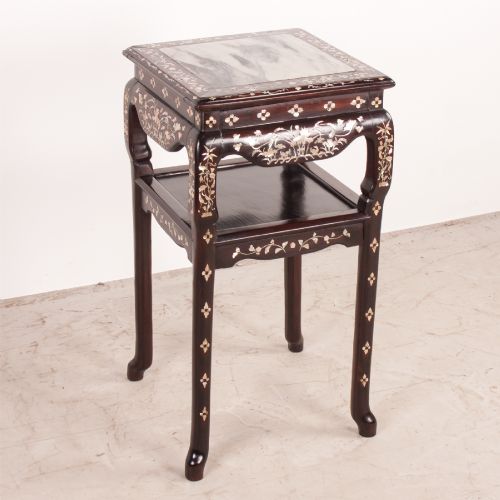
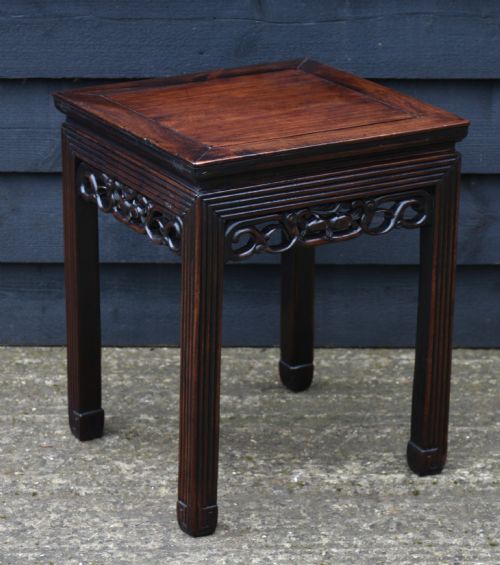

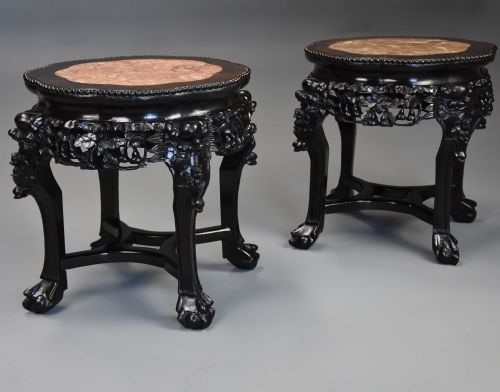

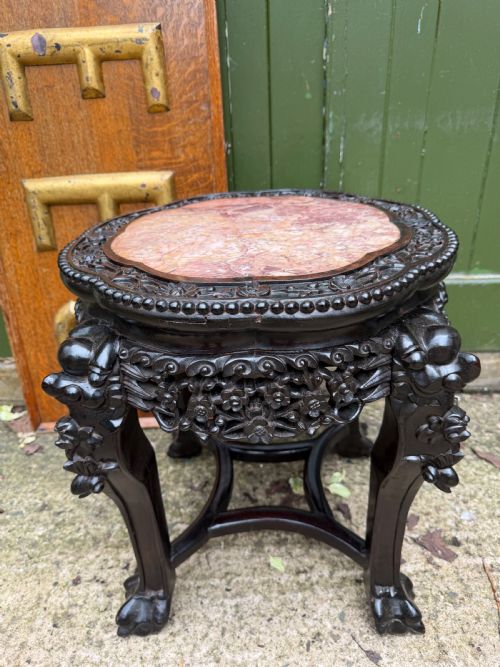
Qing Dynasty Urn Stand
These carved timber supports elevate vessels and planters, bringing dense grain and stone into rooms that need a steady surface for display.
Qing Dynasty Urn Stand
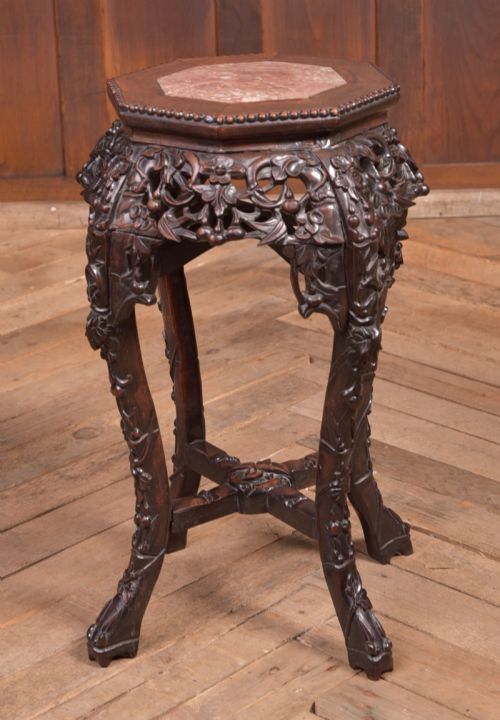
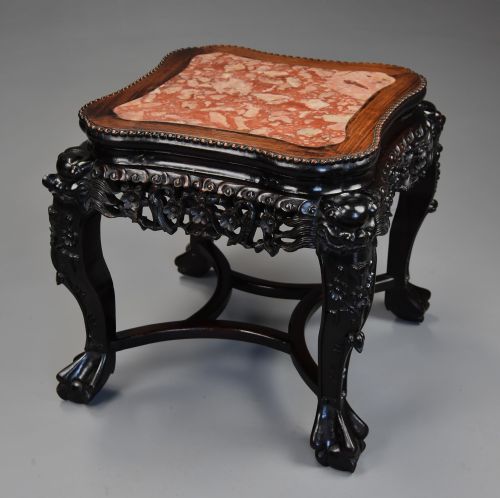
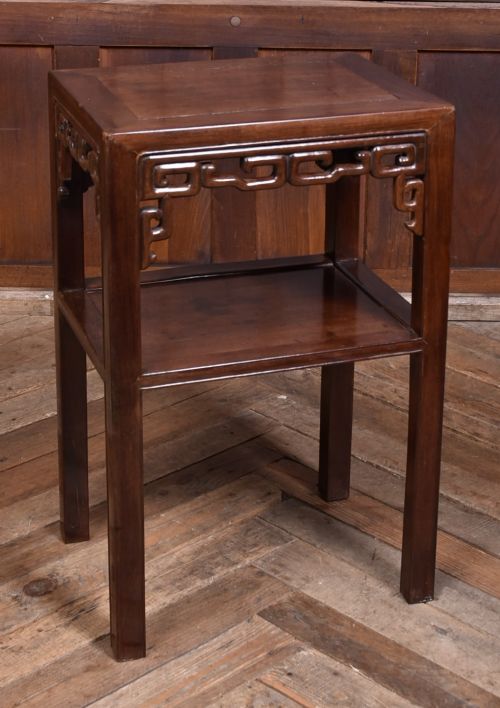
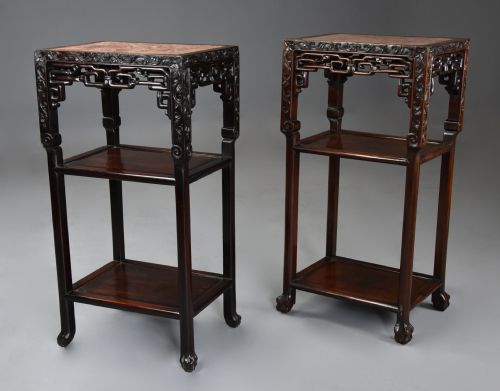
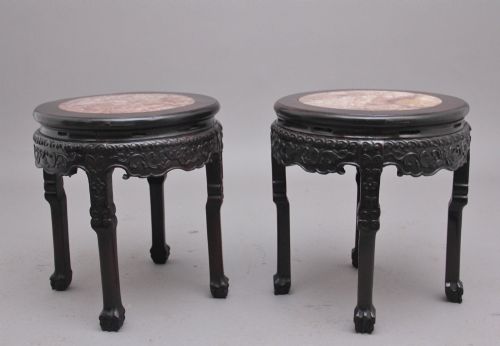
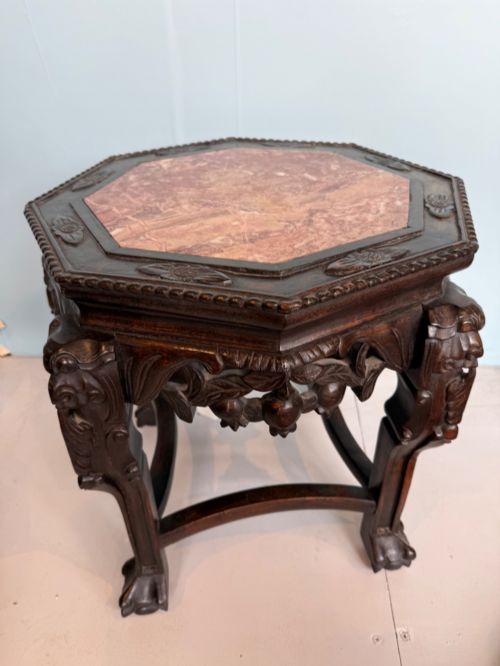
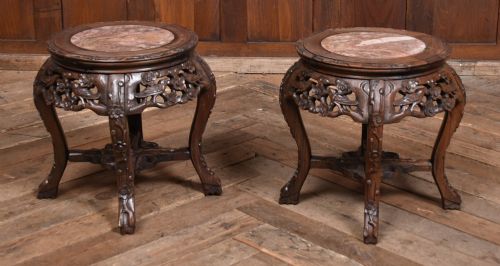
A qing dynasty urn stand serves to display heavy ceramic vessels, plants, and decorative pieces on elevated timber frames. The examples found here span the nineteenth century, including pieces dated across the eighteen-eighties, eighteen-nineties, and nineteen-hundreds, alongside Victorian and Edwardian catalogued items.
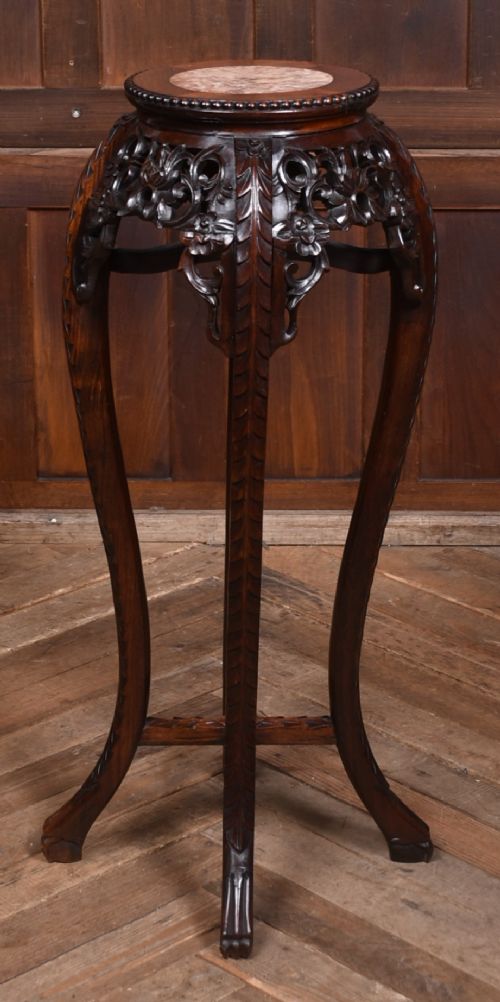
Most pieces function equally as plant stands, vase tables, jardiniere stands, and occasional low tables. The shapes range from low rectangular frames to tall pedestals and torchere supports designed to hold single decorative objects.
Origins tie directly to traditional Chinese craftsmanship, export pieces, and late nineteenth century workshops that produced dense timber furnishings for Western and domestic markets.
Materials and construction
Workshops relied heavily on dense exotic timbers including rosewood, padouk, hongmu, and huali, selected for weight and deep natural colour. These woods were carved with intricate motifs and joined using traditional techniques capable of supporting heavy loads.
Many examples incorporate inset marble panels, specifically rouge or variegated stone, fitted flush into the timber top to provide a cool, flat surface resistant to moisture from plant pots.
Selected pieces integrate subsidiary materials like mother of pearl inlay, enamel, and gold leaf, adding reflective detail to dark timber frames.
Listings demonstrate a strong preference for rosewood and padouk timbers fitted with inset marble panels across the nineteenth century.
Distinctions in construction and material
Execution of the carving separates standard production from finer pieces, with superior examples displaying deep relief work, crisp undercutting, and smooth symmetry in the floral or dragon motifs. The choice of timber also dictates quality, as heavy dense rosewoods and hongmu demand greater skill to shape than softer or more uniform woods.
The integration of the inset marble top defines the grade of the piece, with better stands utilising thick, richly veined stone fitted precisely into the timber rebate without movement or excessive filler.
The Qing Dynasty Urn Stand Glossary
- Hongmu
- A traditional Chinese term for dense tropical hardwoods, often translated as red wood. It encompasses heavy, dark timbers used for high-status furniture.
- Jardiniere
- A large ornamental pot or container for plants, which sits upon these stands. The stands themselves are often designated specifically for this vessel type.
- Padouk
- A heavy, durable tropical hardwood with a fine grain and reddish tone. It provides the rigid structural integrity needed for carved pedestals.
- Torchere
- A tall stand designed to support a lamp or vase. These vertical forms raise decorative objects to eye level.
- Rouge marble
- A type of deep red or variegated decorative stone. It provides a cool, moisture-resistant surface inset into the timber tops.
Qing Dynasty Urn Stand: Frequently Asked Questions
What were these stands originally used for?
These pieces held heavy porcelain urns, bronze vessels, and large plant pots inside traditional interiors. They lifted decorative objects away from damp floors and placed them in prominent positions.
Over time, Western interiors adopted them as lamp tables, side tables, and display surfaces for decorative arts.
How do I identify a nineteenth century piece?
Nineteenth century examples show distinct timber shrinkage, hand-cut joinery marks beneath the frame, and heavy dense hardwoods like rosewood and padouk. The carving techniques reflect traditional hand tools rather than modern machinery.
Weight serves as a reliable indicator, as genuine period pieces utilise solid tropical timber rather than light veneers.
Are the marble tops original?
The inset marble panels are typically original to the timber frames, cut specifically to fit the individual rebate of each top. The stone surfaces provided a practical barrier against water damage from potted plants.
Variations in the veining and natural fissures confirm the age and authenticity of the stone insert.
How do I care for the timber surface?
These dense hardwoods benefit from occasional applications of natural wax to nourish the grain and protect against dryness. Avoid placing them in direct sunlight or near heat sources to prevent timber movement.
Using coasters or pads beneath heavy objects prevents scratching on both the timber and the inset marble.