

Qing Dynasty Porcelain Pair
When you handle a qing dynasty porcelain pair, you encounter coordinated symmetry designed for imperial halls, scholar tables, and export markets alike.
Qing Dynasty Porcelain Pair
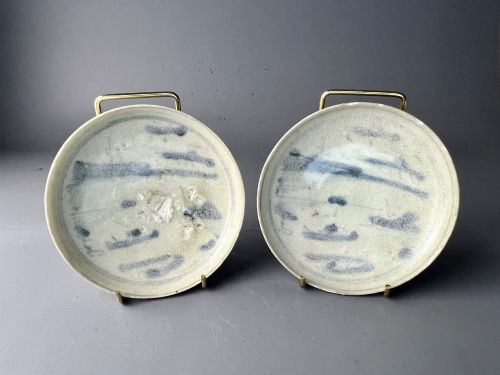
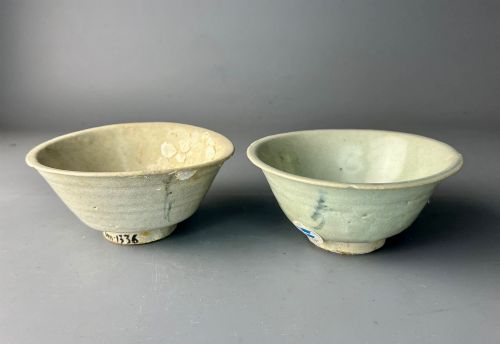
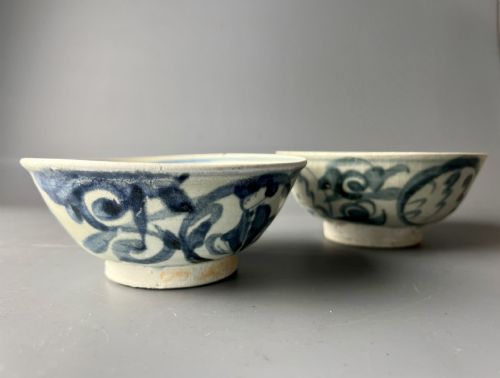
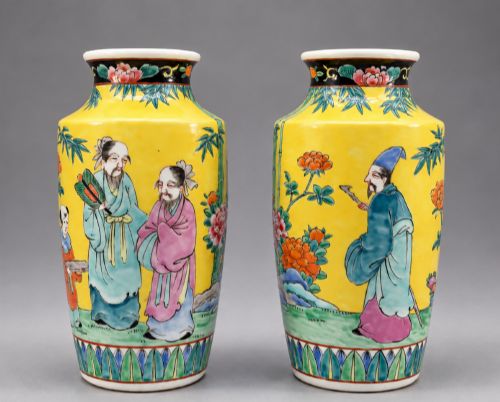
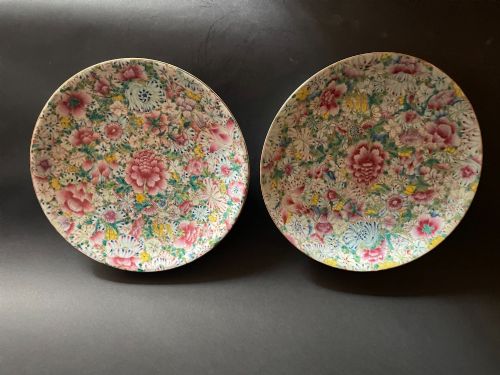
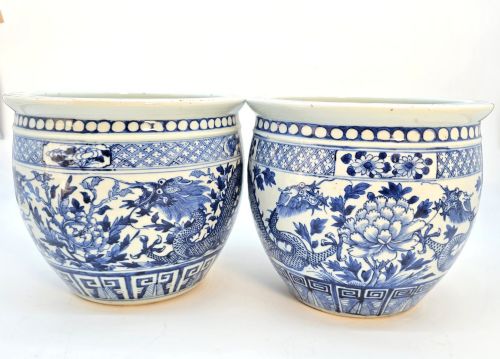
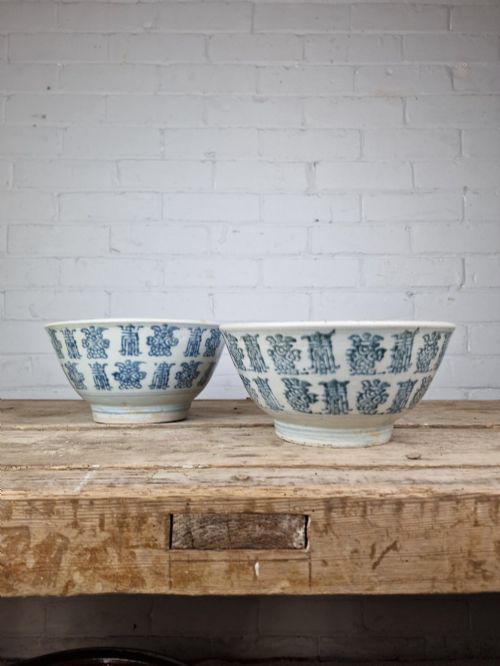
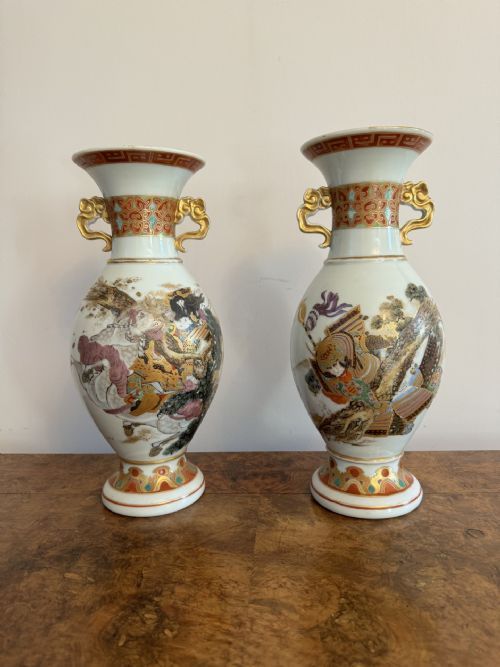
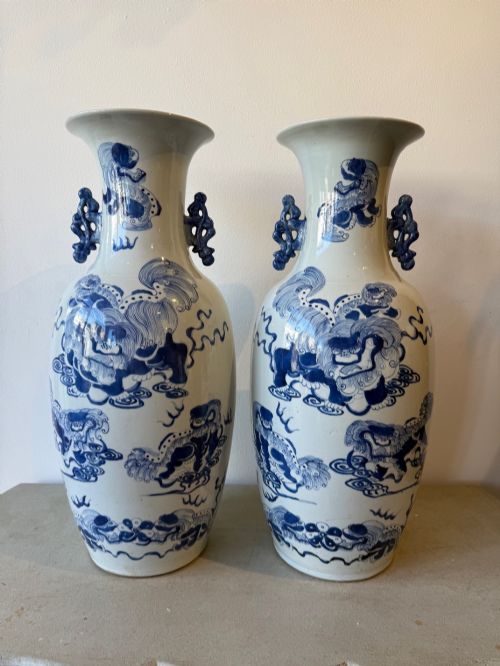
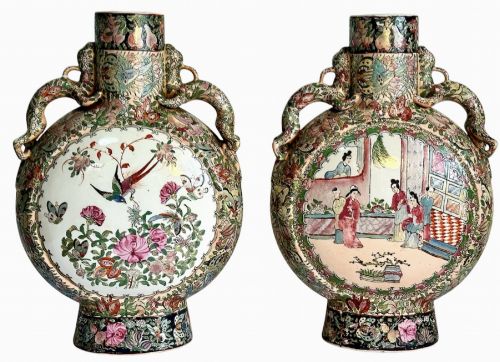
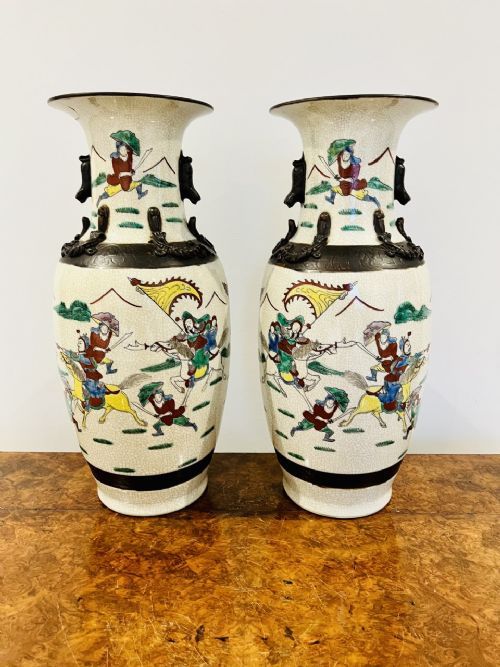
A qing dynasty porcelain pair comprises matching vessels, figures, or plates produced during the Manchu dynasty, predominantly originating from the nineteenth century alongside eighteenth-century examples. The selection spans utilitarian bowls and plates to monumental baluster vases, ginger jars, moon flasks, and figural groups such as immortals, cockerels, and elephants.
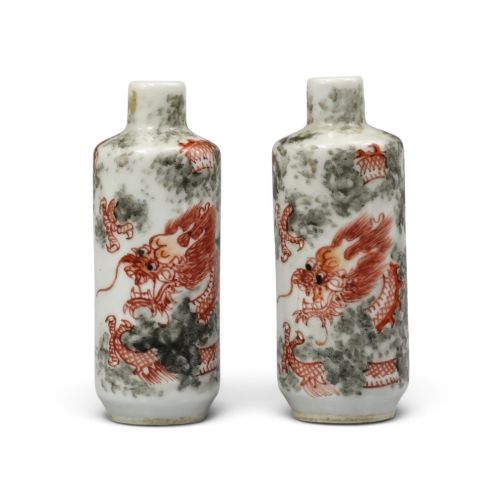
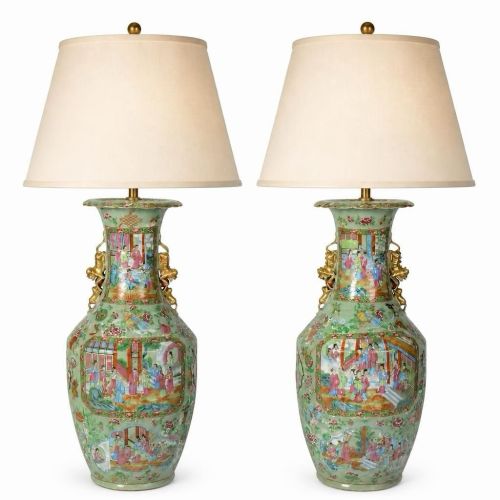
Buyers frequently encounter nineteenth-century Canton and Rose Medallion wares, alongside blue and white porcelain and monochrome tea dust glazes. Many tall vases and jars have been adapted into table lamps, while others remain preserved as cabinet dishes, jardinières, and matched snuff bottles.
How they were made
Potters shaped these objects from fine ceramic materials, applying mineral pigments such as iron-red, cobalt blue, and enamel overglazes before kiln firing. Certain pieces received applied ormolu mounts, wood stands, or brass and gold leaf details during later Western adaptations or original assembly.
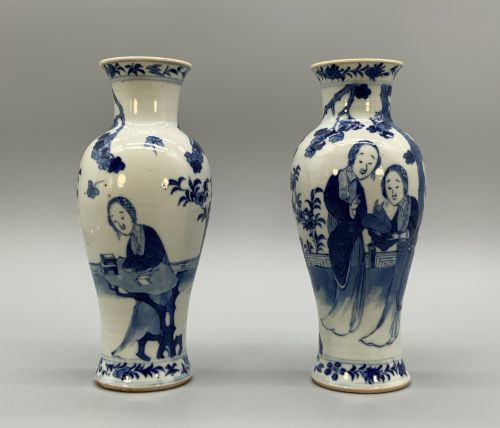
Surface decoration relied on meticulous hand-painting, combining detailed figural scenes, flora, and fauna with specialised glaze effects including cracked ice patterns, powder blue grounds, and delicate famille rose or famille verte palettes.
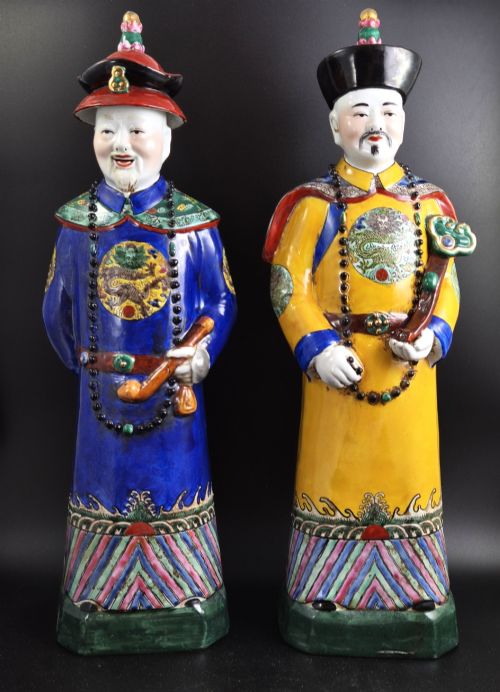
Among the ceramic menagerie, stern imperial figures share shelf space with hand-painted porcelain cockerels and hawks.
What varies in quality
The standard of a qing dynasty porcelain pair rests upon the precision and fluidity of the hand-painted brushwork, particularly in complex facial expressions on figures and detailed narrative scenes on vases. Superior examples display crisp cobalt tones, evenly saturated enamel palettes, and well-balanced forms that maintain strict symmetry between both items.
The refinement of the underlying porcelain body and the controlled application of glazes further distinguish high-grade items, where kiln faults are absent and marks indicating imperial periods or specific potteries reflect disciplined workshop execution.
Fujian Huiguan Mark·Guangxu Six-Character Mark
The Qing Dynasty Porcelain Pair Glossary
- Famille rose
- A major palette of opaque enamel colours dominated by pink or rose tones, introduced during the Qing dynasty. It allowed for delicate shading and intricate floral or figural compositions.
- Famille verte
- A vibrant green-dominant enamel palette utilised extensively on Qing porcelain, incorporating iron-red, yellow, and blue. This style produces bright, contrasting pictorial surfaces.
- Canton porcelain
- Wares decorated in Canton featuring crowded, colourful panels of figures, birds, and flowers, often framed in gilt. They were produced primarily for the Western export market.
- Crackleware
- Porcelain featuring a network of fine decorative cracks in the glaze, deliberately induced during cooling. It adds textural depth to monochrome and blue-and-white vessels.
- Moon flask
- A flattened circular flask with a short neck and two loop handles, derived from ancient leather prototypes. These symmetrical vessels are frequently painted with floral or symbolic motifs.
Qing Dynasty Porcelain Pair: Frequently Asked Questions
What is a qing dynasty porcelain pair?
A qing dynasty porcelain pair consists of two matching ceramic objects made during the Qing dynasty, designed to sit symmetrically on mantelpieces, altars, or tables.
These sets include vases, jars, bowls, and figures, created either for domestic Chinese use or export markets.
How were these porcelain pairs used?
Originally, these items served as ritual vessels, scholar desk ornaments, or decorative displays in elite households and imperial halls.
Many tall vases and jars were later converted into table lamps in Western homes while retaining their original hand-painted bodies.
How do you tell periods apart?
Periods are identified through stylistic shifts in enamel palettes, potting techniques, and reign marks stamped or written on the base.
Eighteenth-century pieces typically display finer potting and restrained palettes, whereas late nineteenth-century Canton and Guangxu wares often feature denser, brighter enamels.
How should I live with them?
Display matched pairs on stable surfaces away from direct sunlight to protect overglaze enamels and applied ormolu or wood components.
Dust them gently with a soft dry cloth and avoid harsh chemical cleaners that can damage historical surfaces.