




Pair Chinese Export Urns
Pair Chinese export urns bring vibrant hand-painted porcelain and striking lacquer into a room, offering symmetrical balance and rich historical character.
Pair Chinese Export Urns
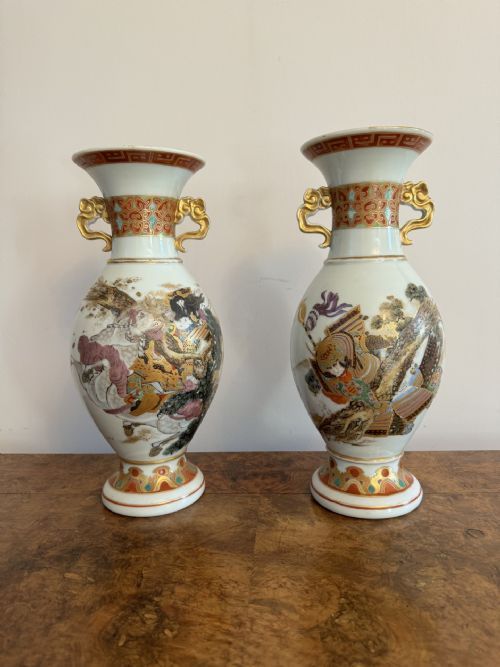
When you search for pair chinese export urns, you encounter substantial decorative vessels created in China for Western markets during the nineteenth century. These objects typically take the form of large vases, temple jars, and moon flasks originating from the Qing Dynasty and Victorian periods.
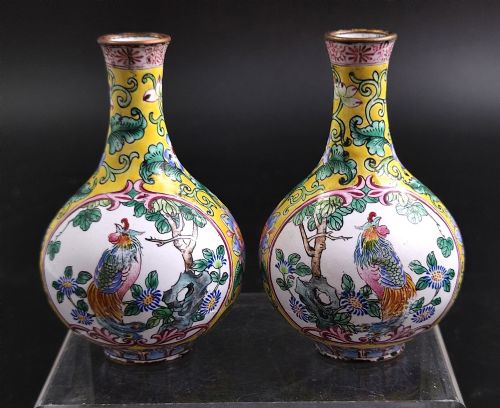
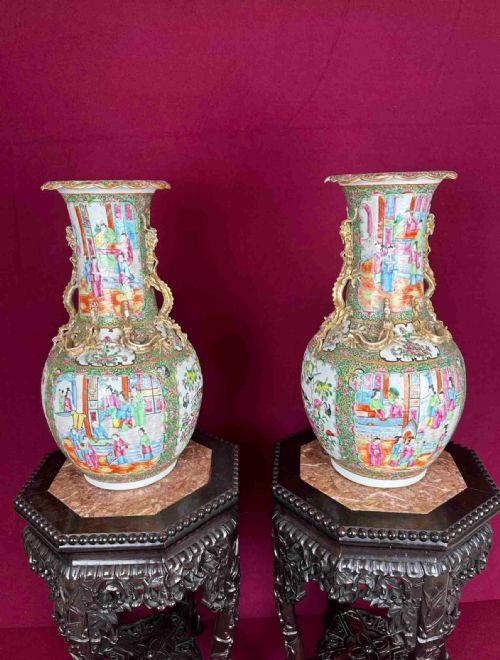
The version you are most likely to meet on this page is the Rose Medallion or Canton porcelain vase, often rendered in generous proportions. These examples frequently feature detailed hand-painted scenes and traditional motifs intended for display on tables, stands, or as converted table lamps.
How They Were Made
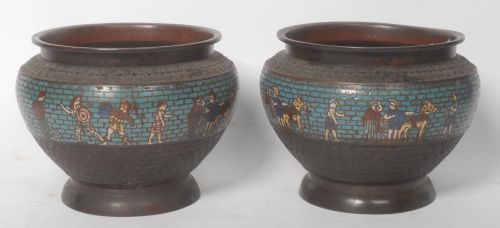
Artisans formed these vessels primarily from hard-paste porcelain, applying detailed polychrome enamels and gold leaf by hand. Certain pieces incorporate bronze champlevé enamel or carved wood elements to complement the ceramic bodies.
Makers utilised traditional firing techniques alongside intricate surface decoration, such as Chinoiserie lacquer applied to monumental temple vases. The resulting finishes combine durable ceramic structures with elaborate, multi-layered painted designs.
Some nineteenth-century temple vases arrive standing taller than a standard dining chair.
What Varies in Quality
The refinement of the hand-painted enamelwork distinguishes finer examples from simpler production. Superior pieces display precise brushwork, rich palettes of famille rose or celadon tones, and well-preserved gilding across the surface.
Scale and proportion also define the upper tier of these objects. Monumental sizing or specialised forms such as moon flasks and lacquered temple vases require greater skill to produce successfully than standard decorative vases.
The Pair Chinese Export Urns Glossary
- Canton Porcelain
- Ceramic wares decorated in Guangzhou, traditionally featuring panels of figures and birds surrounded by floral borders. This style dominated nineteenth-century export production.
- Famille Rose
- A palette of opaque pink and other soft enamel colours introduced to Chinese porcelain during the Qing Dynasty. It allows for subtle shading in painted floral and figural scenes.
- Celadon
- A pale green glaze applied to porcelain, prized for its jade-like appearance. It provides a quiet, monochrome surface alternative to brightly painted export wares.
- Moon Flask
- A flattened, circular flask with a short neck and two loop handles, often supported on a small base. These decorative vessels were widely produced for export.
- Champlevé
- An enamelling technique where troughs are carved into a bronze surface and filled with vitreous paste before firing. This method creates durable, colourful geometric or floral patterns.
Pair Chinese Export Urns: Frequently Asked Questions
How were pair chinese export urns used originally?
These vessels served primarily as decorative ornaments in grand nineteenth-century interiors, displayed prominently on mantelpieces, pedestals, or large tables. Their imposing scale and elaborate hand-painted surfaces reflected the owner's taste for imported goods.
Over time, many examples were adapted into table lamps while retaining their original ceramic bodies and painted panels. They continue to function as symmetrical focal points in traditional and eclectic room schemes.
What periods do these pieces date from?
The pieces available here predominantly date from the nineteenth century, encompassing Victorian eras and specific decades such as the eighteen-eighties and nineteen-twenties. These dates reflect the height of the export trade between China and Western markets.
Stylistic markers and manufacturing techniques align these objects with Qing Dynasty traditions and subsequent revival periods. Dating relies on the examination of glaze characteristics, enamel types, and decorative motifs.
Can these urns be used as lamps?
Many of the porcelain vases and temple jars listed here have been converted into table lamps during their history. This practical adaptation allows them to provide functional lighting while preserving the antique painted decoration.
Buyers often encounter wiring configurations added in later decades without altering the underlying ceramic structure. This dual purpose makes them versatile additions to living spaces and studies.
How do I identify Canton and Rose Medallion styles?
Canton and Rose Medallion wares are recognised by their densely painted panels depicting human figures, birds, and butterflies. These scenes are framed by intricate borders filled with green foliage and pink blossoms.
Distinguishing between specific nineteenth-century variants involves examining the complexity of the palette and the arrangement of the painted cartouches. Both styles showcase the prolific output of southern Chinese kilns for international buyers.