

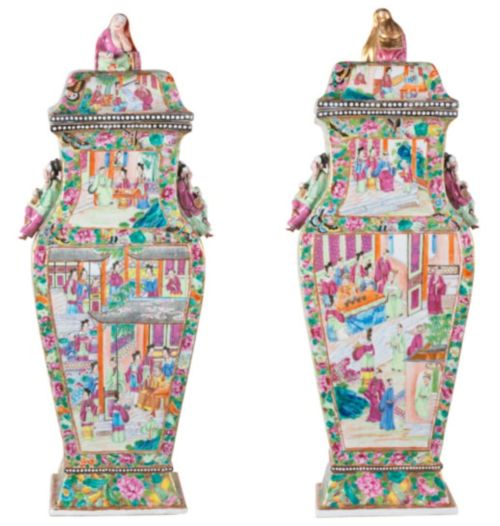



Qing Dynasty Decorative Jar
These qing dynasty decorative jar pieces bring porcelain, cloisonne and cinnabar lacquer into a room, offering colour and craft that elevate any interior space.
Qing Dynasty Decorative Jar
A qing dynasty decorative jar brings traditional Chinese forms like ginger jars, baluster vases and lidded vessels into domestic spaces. These pieces span the nineteenth century and the early twentieth century, showing sustained variety in decorative objects.
Buyers meet large pairs of famille rose and blue and white porcelain ginger jars alongside cloisonne and carved cinnabar lacquer vases. Many examples carry historic marks or specific nineteenth century dating, bridging export ware and traditional forms.
How they were made
Makers shaped porcelain, brass and copper bodies, applying enamel, glaze and cinnabar lacquer by hand. Artisans carved deep layers of red lacquer or hand-painted intricate famille rose, famille verte and blue and white designs onto the vessels.
Metalwork pieces utilise cloisonne techniques where wire partitions hold vibrant enamels before firing and polishing. Wood bases often accompany these jars, completing the construction of lidded vases and urns.
Qing Dynasty Decorative Jar Retail Price Guide 2026
Typical asking prices for qing dynasty decorative jar among the pieces listed under this phrase on Sellingantiques today, from the lower quarter to the upper quarter. They describe what is for sale here now, not the wider market.
Several large rose medallion vases double as lamps, proving that nineteenth century ginger jars are exceptionally adaptable housemates.
What varies in quality
The clarity and detail of hand-painted enamels or the depth of carved cinnabar lacquer set superior examples apart from simpler pieces. Precision in cloisonne wirework and the crispness of porcelain glazing indicate the level of workshop skill involved.
Size and symmetry, particularly in matched pairs of baluster vases or ginger jars, influence the visual impact and standing of the work. The presence of clear period characteristics or historic marks adds significant depth to a piece.
The Qing Dynasty Decorative Jar Glossary
- Famille rose
- A palette of opaque pink and other soft enamel colours introduced in Chinese porcelain decoration during the eighteenth century and continued into later periods. It allowed for subtle shading and detailed floral motifs.
- Cloisonne
- Enamelwork created by soldering metal wires onto a brass or copper base to form compartments filled with paste and fired. This technique produces intricate patterns with distinct metallic outlines.
- Cinnabar lacquer
- Layers of red lacquer built up on a wood or metal base and carved with deep decorative motifs. The process requires patience and precision to achieve sufficient depth for carving.
- Ginger jar
- A ceramic storage vessel featuring a broad shoulders and a domed lid, commonly adapted for decorative display. These jars remain a staple form in Chinese export and domestic wares.
- Baluster vase
- A tall vase with a rounded lower body, a narrow neck and a flared rim. This graceful silhouette appears frequently among nineteenth century decorative ceramics.
Qing Dynasty Decorative Jar: Frequently Asked Questions
What is a ginger jar?
A ginger jar is a high-shouldered ceramic vessel originally used to store spices and herbs. Over time, these jars evolved into purely decorative objects valued for their balanced proportions and painted surfaces.
Today, they serve as focal points on mantels or tables, often accompanied by matching covers that complete the traditional silhouette.
How do I identify a cloisonne vase?
Cloisonne vessels feature metal wire designs soldered onto a brass or copper body to create small cells filled with enamel paste. After firing, the surface is polished flat to reveal a smooth pattern of coloured fields separated by thin metal lines.
These pieces show distinct metallic grids under close inspection, distinguishing them from painted porcelain or lacquer wares.
Where were these jars made?
These decorative jars and vases originate from Chinese kilns and workshops, with many items produced for export to Western markets. Production centres utilised traditional techniques handed down through generations of skilled artisans.
Export pieces often reflect a blend of traditional Chinese forms and motifs tailored for European and British interiors.
How do I care for lacquer and enamel?
Cinnabar lacquer and cloisonne pieces require gentle dusting with a soft, dry cloth to protect their surfaces from moisture and abrasive materials. Keeping them out of direct sunlight prevents the fading of pigments and enamels over time.
Displaying them in stable environmental conditions ensures the wood, metal and lacquer components remain secure and intact.