
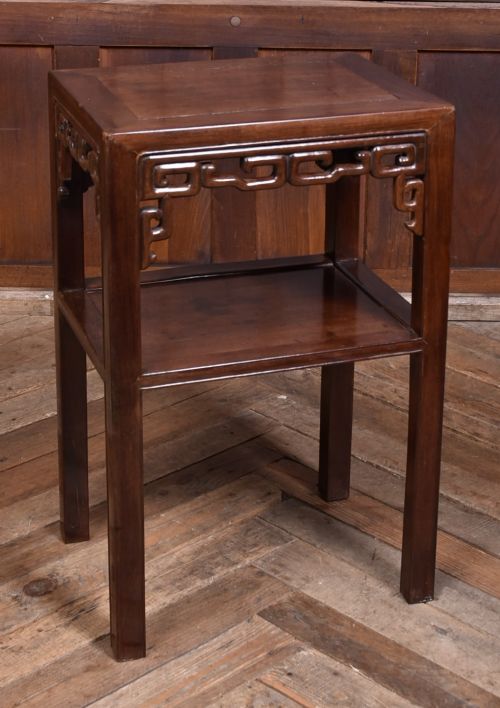
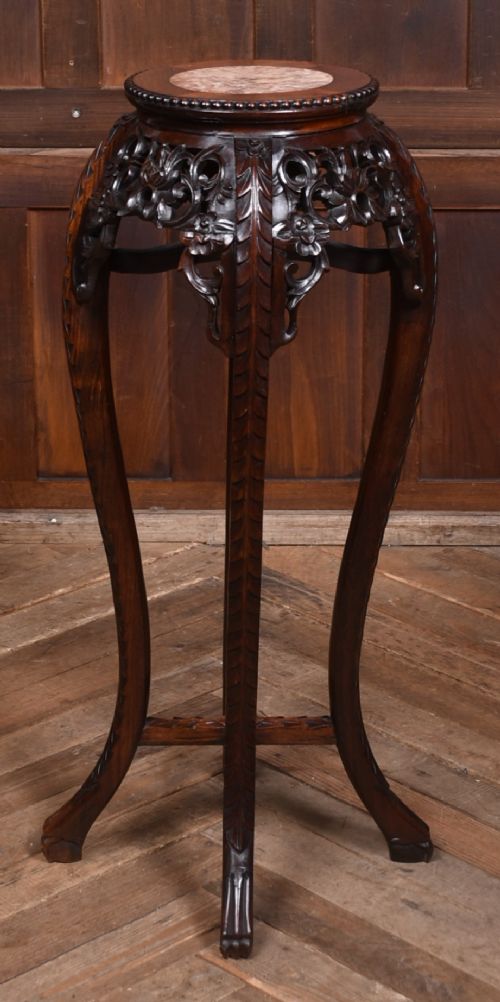


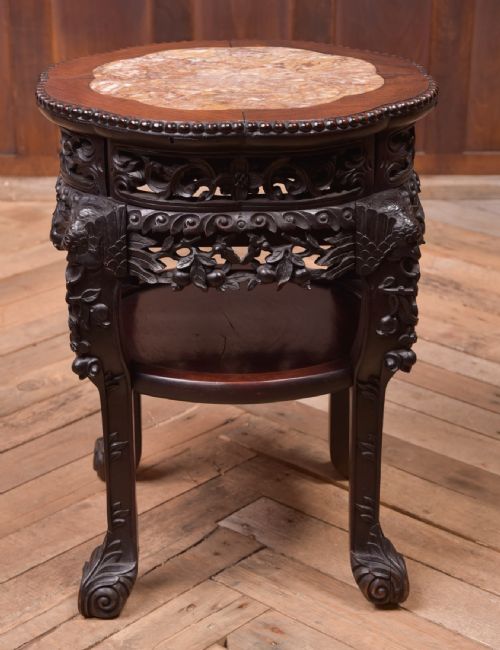
Carved Wooden Stand Vase
These carved wooden stand vase pieces bring structural elegance to display, offering sturdy timber and marble platforms for precious vessels.
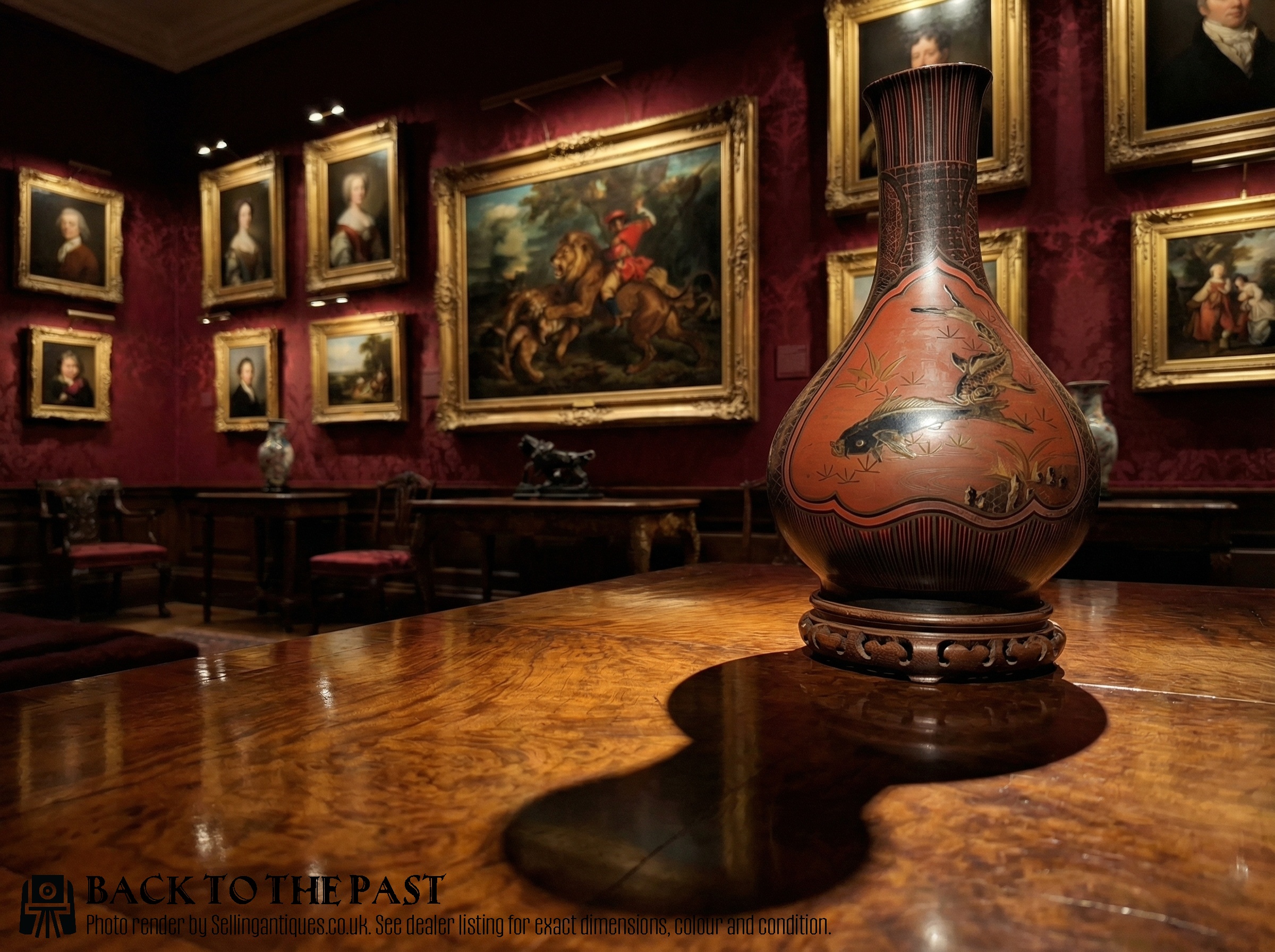
Carved Wooden Stand Vase
The most common forms on this page are sturdy timber tables and low stands, frequently featuring inset marble tops designed to support heavy porcelain or bronze vessels. These pieces draw from Qing Dynasty and Meiji Period aesthetics, often constructed from dense hardwoods like rosewood and hongmu.
Alongside dedicated furniture supports, the inventory includes standalone ceramic and lacquered vessels paired with wooden mounts. Buyers encounter both single items and matched pairs suitable for domestic display.
Construction and materials
The physical evidence points to the use of heavy hardwoods such as rosewood and ebonised timber, chosen for their capacity to bear weight without warping. These woods are shaped through intricate carving, producing pierced aprons and cabriole legs characteristic of Chinese export and traditional craftsmanship.
Marble inserts provide a cool, stable surface resistant to moisture from plants and vases, set flush into wooden frames. Lacquer over black paint and bronze mounts appear on specific vessels and stands, adding contrasting textures to the carved timber.
The listings span the nineteenth century through the 1930s, featuring hardwood, marble, and lacquer across traditional Chinese and Japanese styles.
Distinctions in quality
The upper tier of these objects is defined by the crispness of the woodcarving and the selection of dense, unblemished hardwood or properly fitted marble inserts. Lesser pieces show softer detail in the foliage and structural motifs, or rely on secondary timbers with heavier applied finishes.
Proportion and joinery dictate the longevity and visual balance of each stand. Superior examples maintain tight joints and substantial weight, whereas lower quality items may exhibit looser tolerances in the assembly of legs and tops.
Takaaki
The Carved Wooden Stand Vase Glossary
- Jardiniere
- A large ceramic or metal pot for holding plants or flowers. It sits upon the stands frequently listed in this category.
- Hongmu
- A dense, dark Chinese hardwood prized for furniture and display pieces. It translates literally as red wood and provides exceptional structural strength.
- Meiji Period
- The era in Japanese history spanning from 1868 to 1912, noted here in decorative works and lacquer applications. Items from this time often display refined surface decoration.
- Cloisonne
- An enamelwork technique where metal wire forms compartments on a vessel body. These cells are filled with coloured paste and fired.
- Ebonised
- Wood treated to resemble ebony through staining or painting. This finish creates a dark, uniform surface visible on several listed items.
Carved Wooden Stand Vase: Frequently Asked Questions
What is a carved wooden stand vase?
A carved wooden stand vase refers either to a distinct support table designed for display or to a vessel presented with an integrated wooden base. These objects function together to elevate plants, urns, and decorative ceramics.
Most examples in the current selection date from the nineteenth century and reflect traditional Asian craftsmanship, combining heavy timbers with stone or lacquer elements.
How were these stands used historically?
Historically, these stands placed heavy jardinieres, bronze vessels, and porcelain vases at a deliberate viewing height within elite interiors. The solid hardwood and marble surfaces protected underlying furniture from damp soil and water rings.
They served both domestic and export markets, functioning as architectural anchors for floral arrangements and prized decorative objects.
How do I care for a marble top stand?
Marble top stands require gentle dusting and occasional cleaning with a damp cloth, avoiding harsh chemical cleaners that might etch the stone. The surrounding hardwood benefits from regular waxing or oiling to prevent the timber from drying out.
Care should be taken to lift rather than drag heavy items across the marble surface to avoid scratching.
How can I tell the period of a stand?
Dating relies upon observing the density of the wood, the depth of the hand-carved motifs, and the construction methods used in the joinery. Nineteenth-century pieces typically display heavier timbers and more rigorous hand-tool marks than later reproductions.
Stylistic cues such as Qing Dynasty forms or Meiji Period lacquer work provide further chronological markers.