


Chinese Export Porcelain Urns
Chinese export porcelain urns bring painted colour and ceramic weight into a room, spanning the eighteenth and nineteenth centuries.
Chinese Export Porcelain Urns
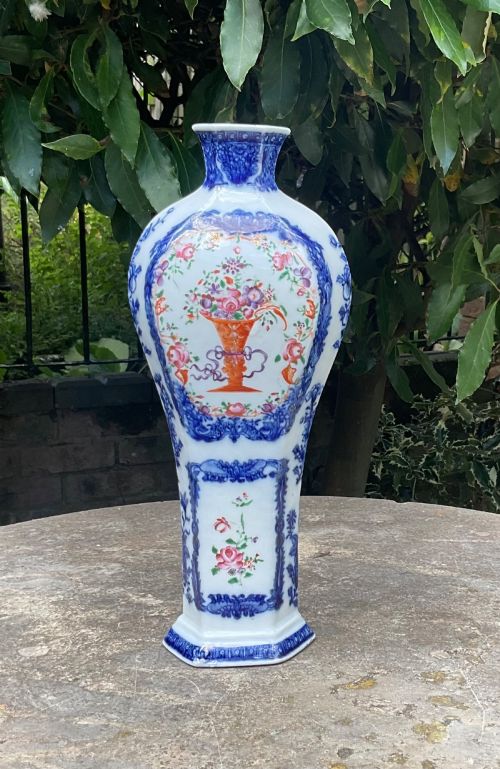
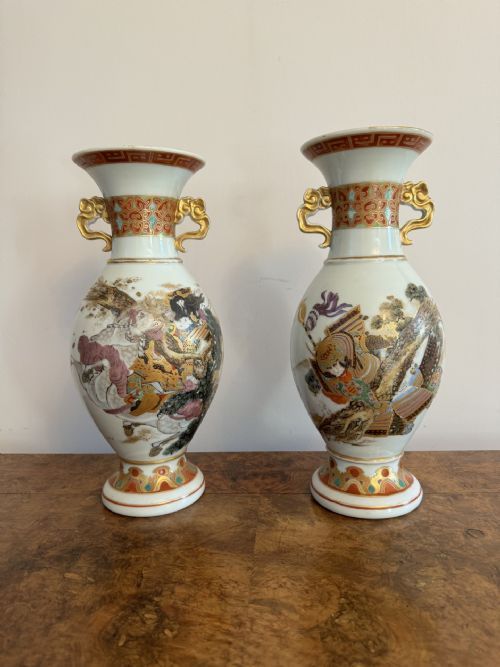
Chinese export porcelain urns encompass lidded vessels, vases, and moon flasks created for international markets during the eighteenth and nineteenth centuries. Collectors searching for chinese export porcelain urns frequently encounter Canton, Rose Medallion, and blue and white styles from the Victorian era and the Qing dynasty.
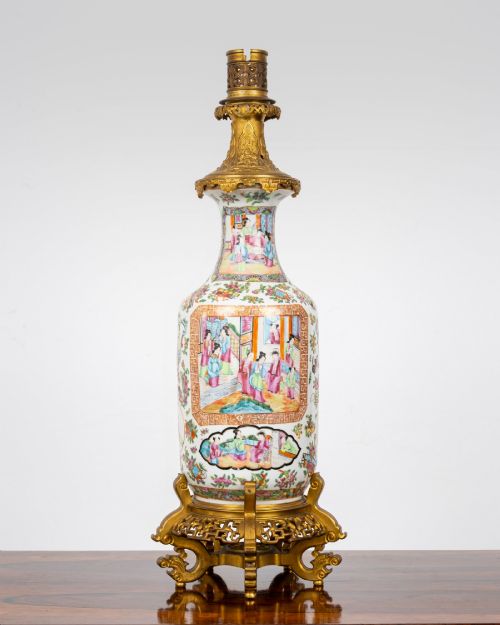
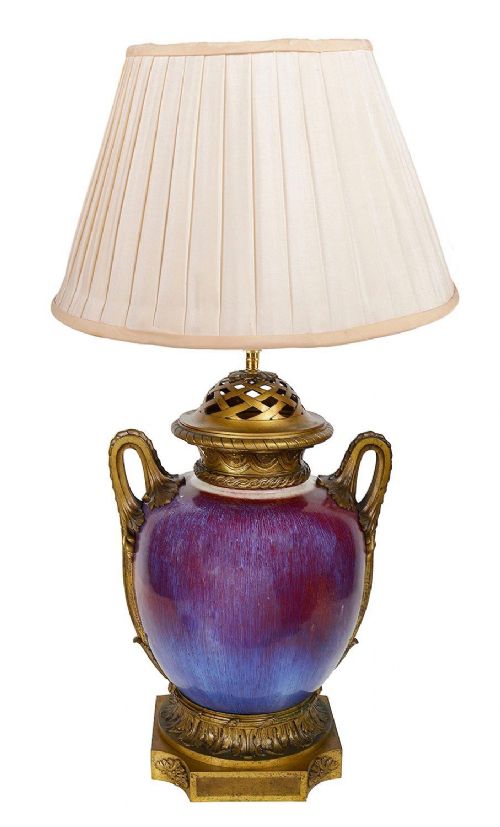
The selection ranges from tall nineteenth-century pairs to single eighteenth-century specimens, often adapted over time into table lamps with gilt bronze mounts. Forms vary from bottle vases with flaring necks to large lidded vessels resting on wooden stands.
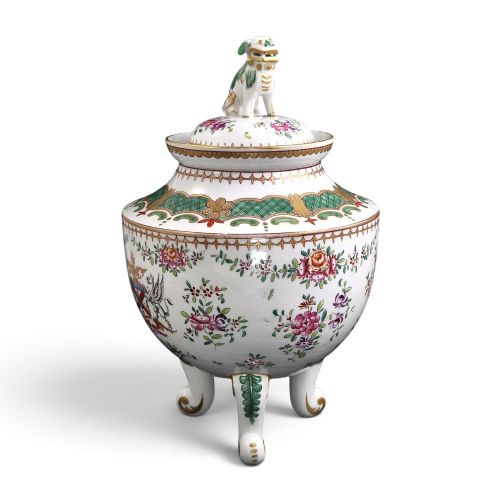
Originating largely from Chinese kilns or nineteenth-century European revival workshops like Samson in Paris, these objects bridge eastern ceramic traditions and western decorative tastes.
What varies in quality
The precision and detail of the hand-painted enamel work dictate the visual impact of each vessel, separating standard production from finer output. Richness in gilding and the crispness of moulded floral or figurative motifs distinguish superior examples.
The presence of original matching covers, period stands, or integrated gilt bronze mounts alters the overall integrity of the piece. Craftsmanship in later European adaptations also influences how successfully a converted lamp honours the original ceramic form.
Listings feature porcelain, enamel, gold leaf, gilt bronze, fabric, wood, silk, and brass across nineteenth-century and eighteenth-century periods.
Samson Paris
The Chinese Export Porcelain Urns Glossary
- Famille rose
- A palette of opaque enamel colours dominated by pink or rose tones, introduced during the Qing dynasty. This palette defines many nineteenth-century export pieces.
- Rose Medallion
- A distinct pattern featuring panels of figures alternating with birds, flowers, and butterflies. These compositions are densely filled with colourful enamel details.
- Canton
- A style of Chinese porcelain decorated in port cities using vibrant famille rose enamels. Much of this production dates to the nineteenth century.
- Celadon
- A pale green jade-like glaze applied directly to porcelain bodies. It creates a subtle monochromatic surface texture on select vessels.
- Moon flask
- A flattened circular ceramic flask supported by a small base and fitted with twin side handles. These vessels derive ancient bronze shapes into porcelain.
Chinese Export Porcelain Urns: Frequently Asked Questions
How do I spot Canton porcelain?
Canton porcelain displays hand-painted enamel scenes, often featuring people, birds, and flowers arranged within distinct panels. The palette relies heavily on greens and pinks.
These pieces emerged from Chinese kilns during the nineteenth century specifically for export to western markets, bringing bright decorative patterns to domestic interiors.
Are these urns actually lamps?
Many pieces began as lidded vases or urns before being converted into table lamps during the nineteenth or twentieth centuries. This conversion frequently involved adding gilt bronze mounts or drilling the ceramic base.
Buyers find both original lidded vessels and converted lamp forms in current selections, reflecting historical interior design trends.
What is Rose Medallion?
Rose Medallion is a specific decorative style featuring a central medallion surrounded by alternating panels of figures and natural motifs. The surfaces are densely covered in enamel colours.
This aesthetic dominated nineteenth-century exports from China, creating highly recognisable matching pairs and single vessels.
How do I date these ceramics?
Dating relies on stylistic markers, enamel types, and manufacturing characteristics associated with the Qing dynasty and the Victorian period. Eighteenth-century pieces typically show different potting weights compared to nineteenth-century export ware.
Associated wooden stands, brass fittings, and wiring styles also offer clues regarding when a vessel was imported or adapted.