





Famille Rose Floor Urns
Famille rose floor urns are large porcelain vessels painted in enamels, bringing grand decorative presence to a room.
Famille Rose Floor Urns
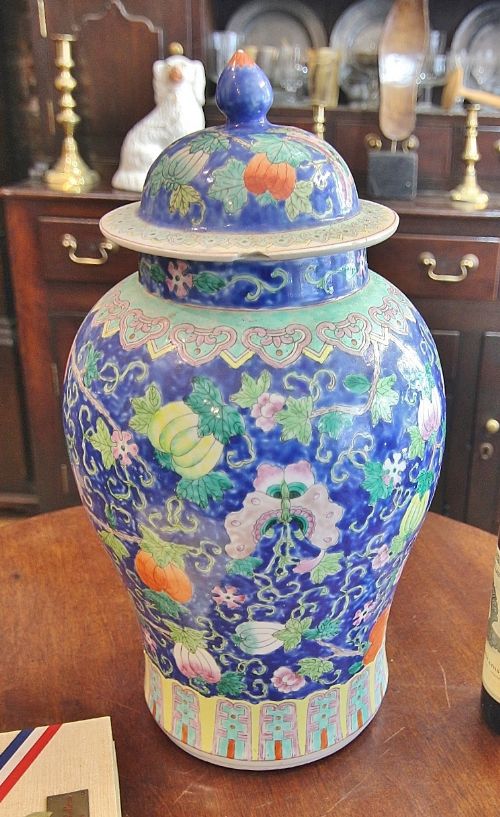
Famille rose floor urns are large ceramic vessels designed for substantial interior spaces, often appearing as monumental vases or baluster forms. When searching for famille rose floor urns, buyers encounter pieces primarily originating from the nineteenth century, including Qing Dynasty and Victorian periods. Chinese export porcelain and Cantonese styles dominate the selections, frequently featuring hand-painted enamel decoration.
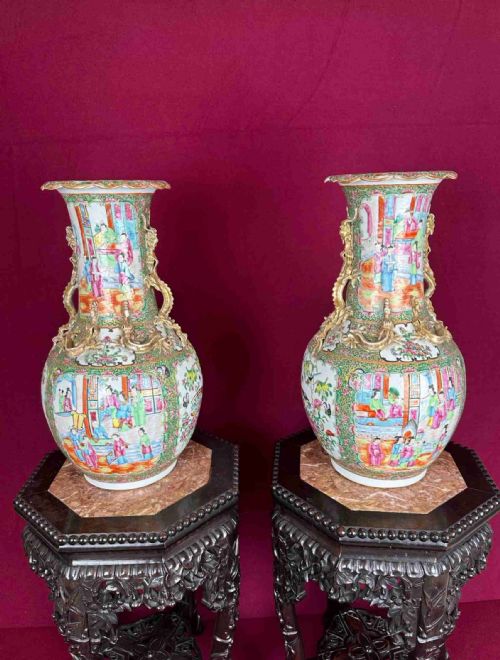
The objects frequently measure to impressive heights, such as ninety-two centimetres, and often include wooden stands or giltwood supports. Many examples arrive as matched pairs, displaying elaborate figural and floral scenes typical of Cantonese artistry. The physical presence of these vases suits placement directly on the floor rather than on furniture.
Materials and construction
These urns utilise porcelain as the primary body, shaped into large baluster and vase forms before firing. Enamel colours provide the distinctive palette, applied by hand alongside glaze and occasional gold leaf or gold gilt details. Wooden stands, sometimes finished in giltwood, support the heavier ceramic bodies.
The decorative technique relies heavily on hand-painting, producing complex motifs associated with Rose Medallion and Cantonese traditions. Artisans combined underglaze techniques with overglaze enamel work, securing the pigments to the porcelain surface through kiln firing.
Famille Rose Floor Urns Retail Price Guide 2026
Typical asking prices for famille rose floor urns among the pieces listed under this phrase on Sellingantiques today, from the lower quarter to the upper quarter. They describe what is for sale here now, not the wider market.
Object forms include large baluster vases and urns, frequently accompanied by wooden stands.
Judgements of quality
The refinement of the hand-painted enamelwork distinguishes finer examples, particularly in the precision of figural and floral details. Completeness also influences the piece, especially when original wooden stands accompany the porcelain vases. Pairs matching in size, shape, and enamel palette hold greater visual harmony than single vessels or mismatched groupings.
The clarity of the glaze and the richness of the gold leaf or gold gilt accents contribute to the overall visual impact. Monumental scale combined with intricate Qing Dynasty or nineteenth-century Cantonese decoration marks the higher tier of these works.
The Famille Rose Floor Urns Glossary
- Famille rose
- A palette of opaque enamel colours dominated by pink, introduced to Chinese porcelain in the Qing Dynasty. This colouring technique allows for delicate shading in floral and figural motifs.
- Canton
- A major port and manufacturing centre in China for export porcelain during the nineteenth century. Wares from this region often feature dense panelled decoration containing figures and birds.
- Rose medallion
- A specific style of Chinese export porcelain featuring divided panels filled with alternating scenes of people, flowers, birds, and butterflies. The design is unified by intricate borders and generous use of enamel colours.
- Baluster
- A tall vase form characterised by a rounded body that tapers toward the base and flares slightly at the neck. This silhouette provides stability for large floor pieces.
- Giltwood
- Wood that has been coated with gold leaf or gold paint to simulate solid gold. It is commonly found on the stands supporting nineteenth-century floor vases.
Famille Rose Floor Urns: Frequently Asked Questions
Where should I place a floor urn?
These large vases suit open floor spaces, hallways, or reception rooms where their height and painted details can be viewed without obstruction. Their substantial size allows them to act as focal points in a room.
Pair arrangements work well flanking doorways, fireplaces, or large pieces of furniture. Placing them on their designated wooden stands helps elevate the ceramic body and protects the base.
How do I care for antique porcelain?
Dust the porcelain and enamel surfaces gently with a soft, dry cloth to prevent the accumulation of dirt. Avoid using chemical cleaners or abrasive materials that might damage the overglaze enamels or gold leaf.
Keep the vases away from direct sunlight and areas of high humidity to protect the pigments. If the piece includes a wooden stand, treat the wood according to its specific finish rather than applying polish to the ceramic.
Are these vases always sold in pairs?
Many nineteenth-century Cantonese and Rose Medallion vessels survive as matched pairs, though individual pieces also appear. Pairs offer symmetry for interior decoration and are generally sought after by collectors.
Single vases provide an alternative for smaller spaces or specific corner placements. Each listing specifies whether the item is offered individually or as part of a pair.
How do I identify a Qing Dynasty piece?
Nineteenth-century pieces often display characteristics of the Qing Dynasty, such as hand-painted enamel motifs and traditional export porcelain forms. Stylistic markers include panelled Rose Medallion designs and dense floral borders.
Consulting the specific period details in each listing helps confirm the era of manufacture. Victorian-era imports from the same period share similar stylistic traits due to trade patterns.