



Chinese Famille Rose Urns
Chinese famille rose urns bring together intricate enameled palettes and classic porcelain forms, offering a decorative focal point for traditional interiors.
Chinese Famille Rose Urns
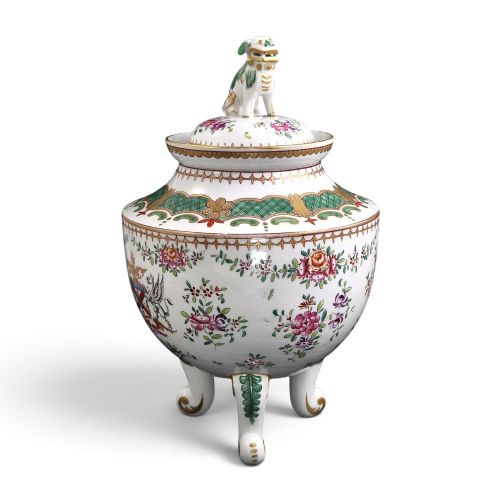
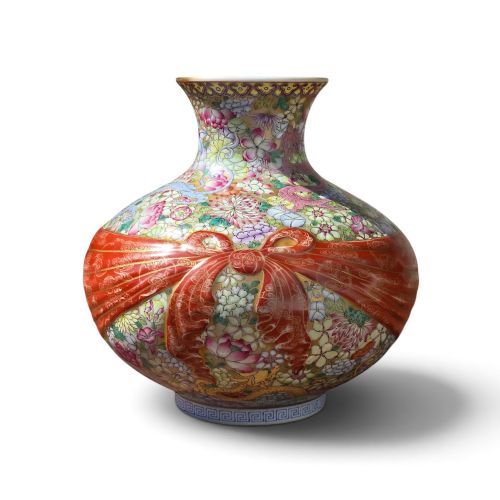
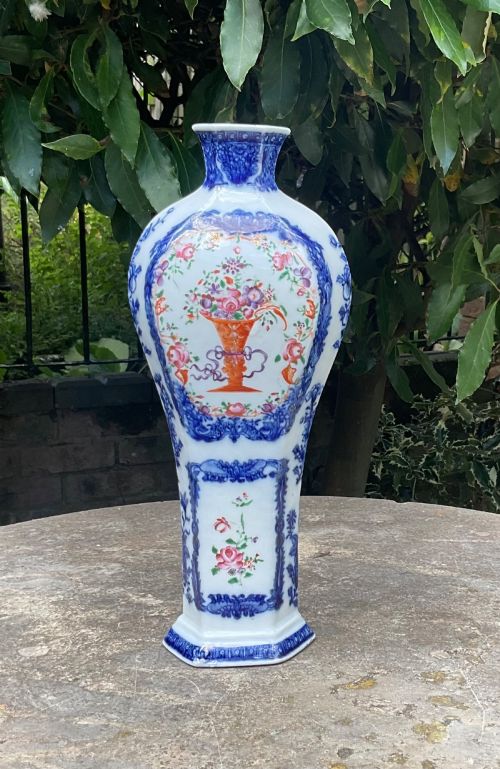
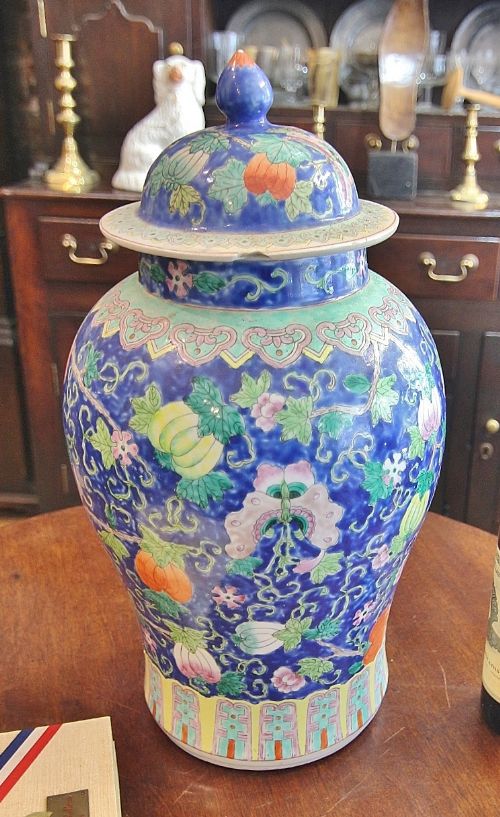
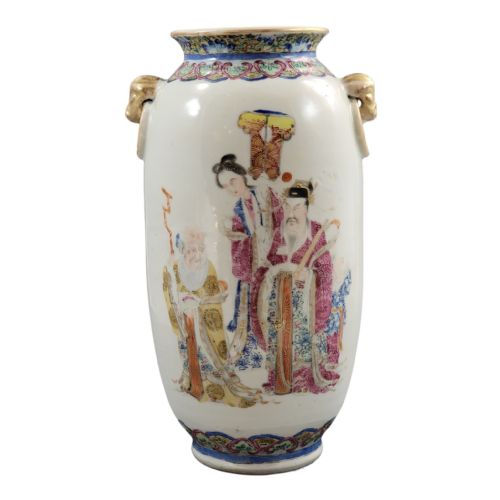
Chinese famille rose urns encompass a variety of hand-painted porcelain vessels, including lidded jars, baluster vases, and moon flasks. These pieces often arrive from the nineteenth century, spanning the Qing Dynasty, Late Qing to Early Republic, and Republic periods.
How they were made
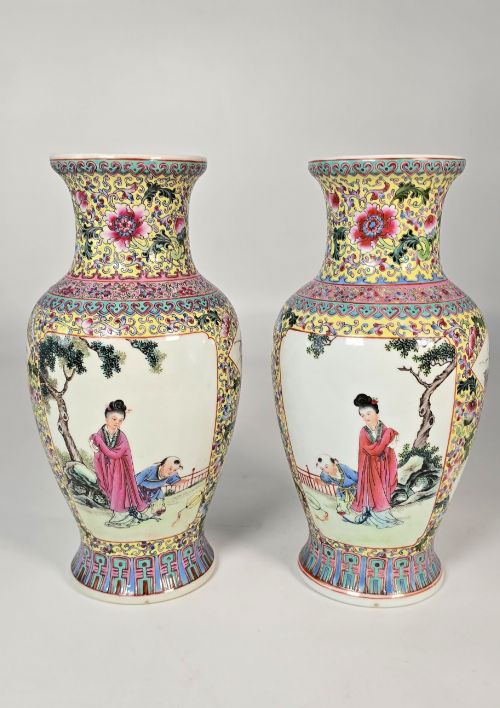
Potters shaped high-fired porcelain bodies before applying opaque pink enamel alongside a broader palette of mineral colours. Artisans added hand-painted details depicting birds, flowers, and figural scenes, sometimes incorporating gold leaf or gilt highlights.
Many items underwent subsequent adaptation, with certain vases fitted as lamps using fabric shades or mounted onto padouk wood and brass stands. European makers also produced porcelain bodies utilising similar enamel glaze techniques to emulate traditional Chinese export ware.
Listings feature porcelain forms spanning the eighteenth century through the twentieth century, including Victorian imports and Chinese Republic Period vessels.
What varies in quality
The standard of a piece rests largely on the precision of the hand-painted brushwork and the complexity of the enamel palette. Pieces featuring finely delineated figural scenes, such as immortals or deities, display greater artistic merit than simpler repetitive patterns.
Condition and completeness also govern the hierarchy, particularly regarding matching pairs and original covers or lids. Vases retaining crisp gilding and undamaged enamel glazes sit distinctly above heavily worn or later adapted examples.
Samson Paris·Gao Hengsheng·Jingdezhen
The Chinese Famille Rose Urns Glossary
- Famille Rose
- A grouping of Chinese porcelain defined by an opaque pink enamel introduced during the Qing Dynasty. This palette allowed for nuanced shading and detailed pictorial compositions.
- Canton
- A style of Chinese export porcelain decorated with dense panels of figures, birds, and flowers, produced primarily for Western markets. These items often feature vibrant greens and pinks.
- Rose Medallion
- A specific pattern of Canton porcelain characterised by alternating medallions filled with figures and birds, arranged symmetrically around a central motif. It became popular during the nineteenth century.
- Moon Flask
- A flattened, circular pilgrim flask resting on a small base, fitted with two loop handles connecting the neck to the shoulders. This traditional vessel shape provides a broad canvas for painted decoration.
- Baluster
- A vase form with a rounded body that tapers toward the base and swells outward before narrowing into a distinct neck. It serves as a standard silhouette for Chinese export ceramics.
Chinese Famille Rose Urns: Frequently Asked Questions
How do I identify a true nineteenth century piece?
Examine the weight of the porcelain, the hand-painted brushwork, and the wear patterns on the base. Nineteenth-century examples often display subtle irregularities in the glaze and organic pigment variations.
Compare the style of the figures and floral panels against documented pieces from the Daoguang or Guangxu periods. Period markings can offer guidance, though export items frequently carry apocryphal reigns.
Were these urns made for export?
The majority of these vessels were produced in China specifically for Western markets, blending traditional forms with motifs tailored to European tastes. Export workshops in Canton fulfilled large commercial orders for overseas buyers.
European factories also manufactured their own versions, such as Samson Paris porcelain, imitating the Chinese export aesthetic for domestic interiors.
Can I safely use these vases as table lamps?
Many antique examples arrive already converted into lamps, having been mounted on wood or brass bases with electrical wiring installed. This practice has a long history among collectors adapting large porcelain vessels for modern living.
When purchasing a converted lamp, check whether the original drilling compromises the base or if the mounting can be reversed without damaging the porcelain body.
What is the difference between Canton and Rose Medallion?
Canton porcelain is a broad term for export wares decorated with varied panels of figures, birds, and butterflies. The style encompasses multiple layout designs produced in the Guangdong province.
Rose Medallion is a specific subcategory within Canton ware, defined by distinct geometric and pictorial medallions arranged in repeating patterns around a focal point.