

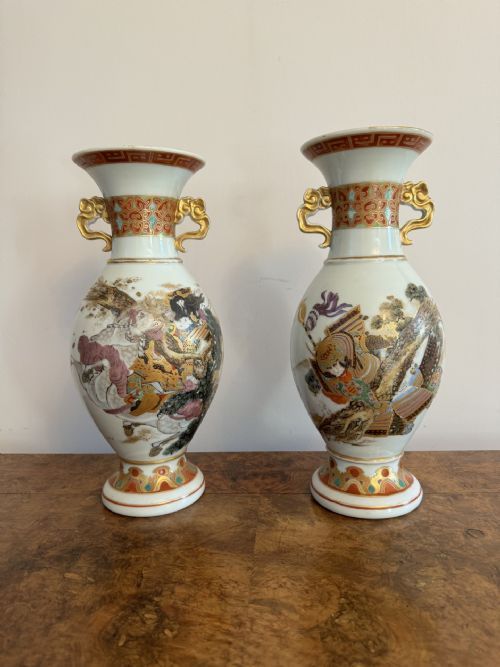
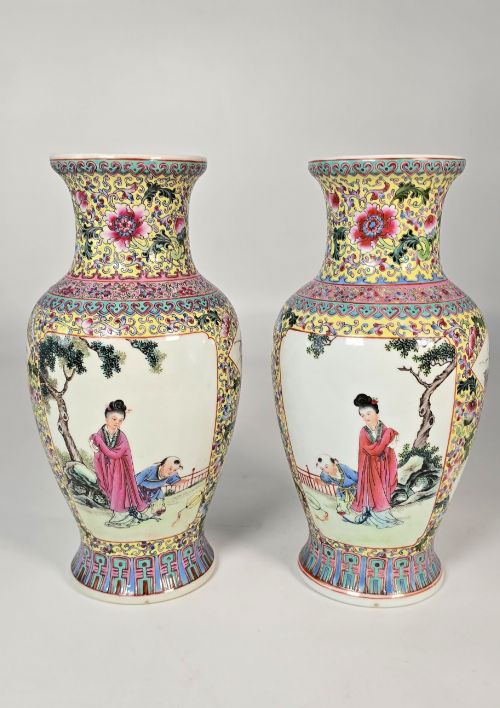
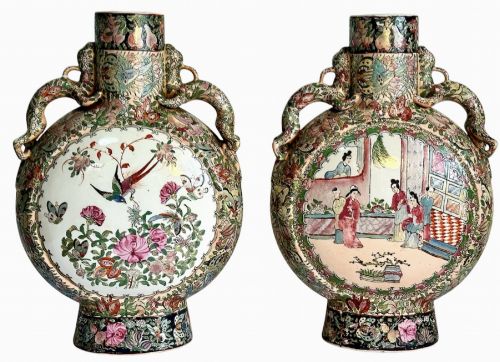
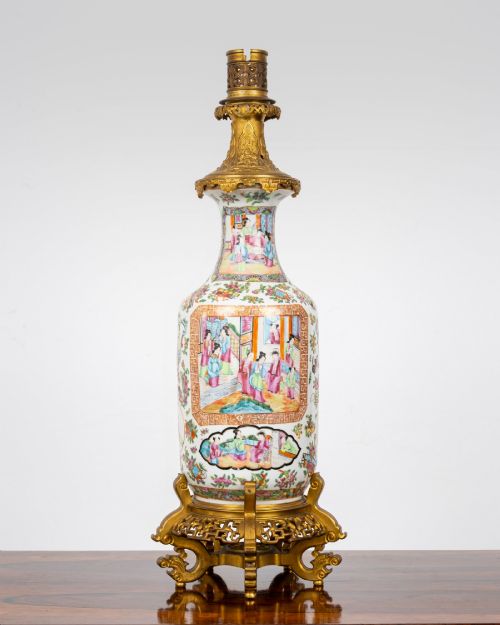

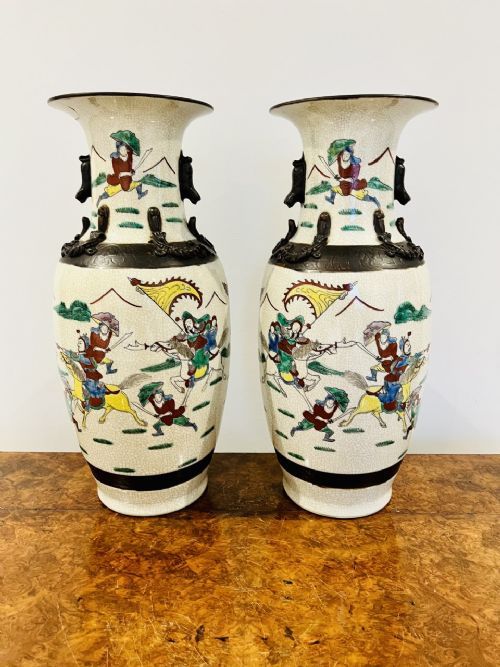
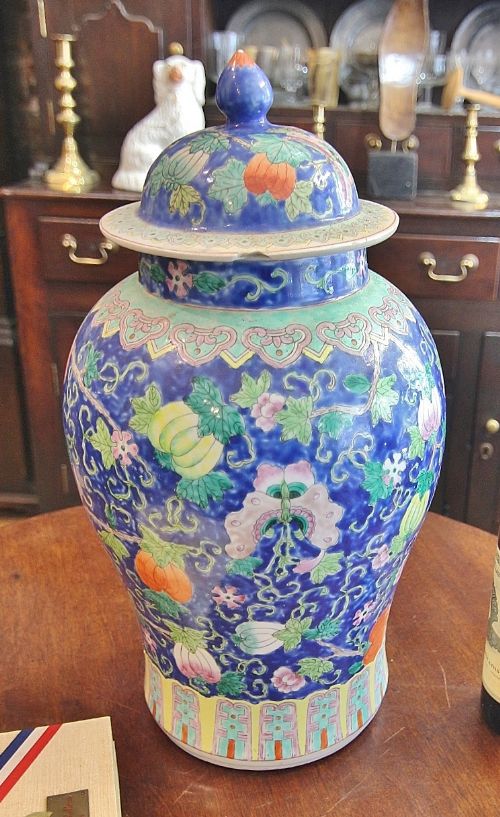


Polychrome Chinese Porcelain Vases
These polychrome chinese porcelain vases carry rich overglaze enamel palettes from the Qing Dynasty and later periods.
Polychrome Chinese Porcelain Vases
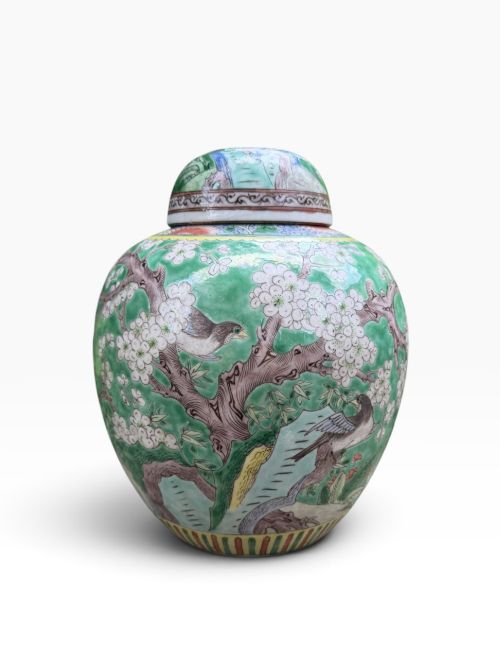
Polychrome chinese porcelain vases encompass a vibrant range of hand-painted vessels, including baluster shapes, moon flasks, ginger jars, and umbrella stands. The listings on this page are dominated by nineteenth-century examples, particularly nineteenth-century Famille Rose and Rose Medallion pieces originating from Canton. Buyers will also encounter later items from the Republic period and the early twentieth century.
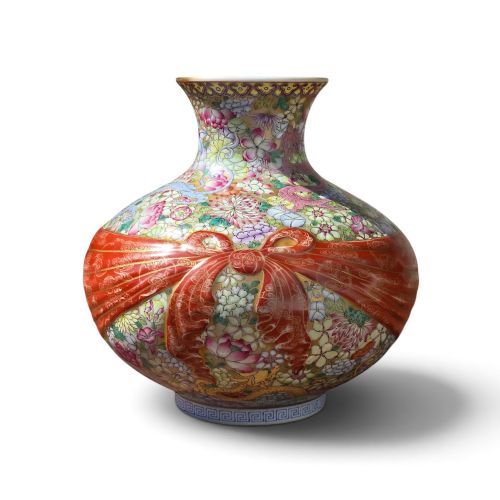
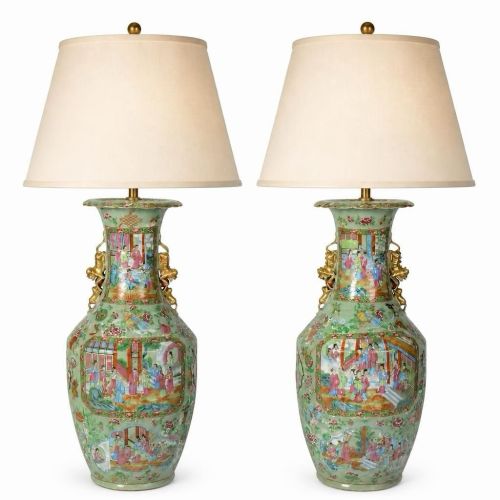
Alongside standard decorative floor and table vases, many items have been adapted into table lamps using brass, wood, or gilt bronze mounts. Forms such as brush pots and lidded jars also appear frequently among the selection. These vessels showcase traditional motifs ranging from court scenes and immortals to intricate birds, flowers, and millefleurs patterns.
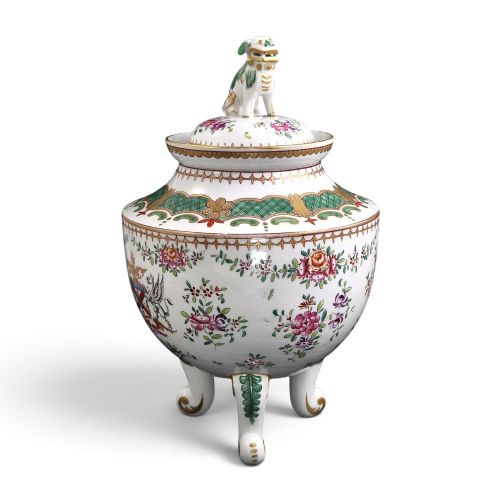
The aesthetic bridges traditional Qing styles with nineteenth-century export production destined for Western markets. Certain pieces carry marks or styles referencing earlier imperial reigns, while others reflect European interpretations such as Samson of Paris copies. This mix provides a comprehensive view of polychrome porcelain production across multiple generations.
How they were made
The foundational bodies are shaped from white porcelain clay and fired at high temperatures to achieve a vitrified structure. Artisans then apply detailed overglaze enamel decorations by hand, utilising distinct mineral pigments such as iron red, green, and pink. Many vessels integrate gilt highlights and underglaze blue elements beneath the colourful enamel layers.
Canton and Jingdezhen workshops employed specialist painters who executed complex scenes freehand before secondary low-temperature firings fixed the pigments. Certain forms incorporate moulded relief details, cracked ice glazes, or biscuit-fired surfaces. Completed vases were occasionally paired with custom wooden stands or metal mounts during later export preparation.
Current listings feature porcelain, enamel, brass, and gilt bronze across nineteenth-century and twentieth-century periods.
What varies in quality
The skill of the brushwork and the precision of the enamel application define the upper tier of these pieces. Superior examples display finely rendered facial expressions, crisp detailing in drapery and foliage, and balanced compositions across complex geometric or pictorial grounds.
The richness and stability of the enamel palette also distinguish finer production, avoiding muddy colour blending or excessive pitting in the glaze. Monumental scale and the survival of matching covers or original mounts add significantly to a piece's visual impact.
Gao Hengsheng·Samson Paris
The Polychrome Chinese Porcelain Vases Glossary
- Famille Rose
- A major palette of Chinese porcelain characterised by opaque pink enamels introduced during the Qing Dynasty. This colour scheme allowed for subtle shading and realistic depictions of florals and figures.
- Rose Medallion
- A distinct Canton export style featuring panelled designs alternating between figures in court settings and birds surrounded by flowers. The surfaces are densely filled with gilt and colourful borders.
- Wucai
- Meaning five colours, this technique combines underglaze blue with overglaze iron red, green, yellow, and eggplant purple. It developed significantly during the Ming and early Qing dynasties.
- Millefleurs
- A dense decorative pattern translating to thousand flowers, where the background is completely covered with intricately painted blossoms. Every available space on the porcelain surface is filled.
- Baluster
- A tall vase form featuring a rounded body that tapers toward the base and flares at the neck. This silhouette provides a stable canvas for narrative or botanical scenes.
- Bitong
- A cylindrical brush pot used by scholars in traditional China for holding writing brushes. They are frequently carved from porcelain, wood, or bamboo with figural or landscape carvings.
Polychrome Chinese Porcelain Vases: Frequently Asked Questions
How do I date these vases?
Dating relies on examining the painting style, enamel texture, and overall potting characteristics. Reign marks can offer clues, though many are retrospective tributes rather than strict indicators of age.
Contextual evidence such as nineteenth-century export mounts or Victorian collector labels also helps establish a reliable timeline for each piece.
Were these made for export?
A substantial portion of nineteenth-century polychrome porcelain was manufactured specifically for Western markets in Europe and America. Workshops in Canton tailored their decorative schemes to suit Western tastes.
At the same time, domestic production continued alongside export wares, creating crossover styles that circulated both within China and abroad.
Can I use these vases as lamps?
Many nineteenth-century vases found today were converted into table lamps during the Victorian era or later periods. This adaptation preserved decorative vessels by giving them a practical function in domestic interiors.
Buyers should inspect the mounting method to ensure the porcelain body was not severely altered during the wiring process.
What is the difference between Canton and other wares?
Canton porcelain is typically characterised by vibrant export-oriented palettes like Rose Medallion and Rose Mandarin, often produced in southern workshops. Other wares from centres like Jingdezhen focused on imperial or domestic scholarly tastes.
Examining the density of the border decoration and the style of figures helps distinguish regional production origins.