
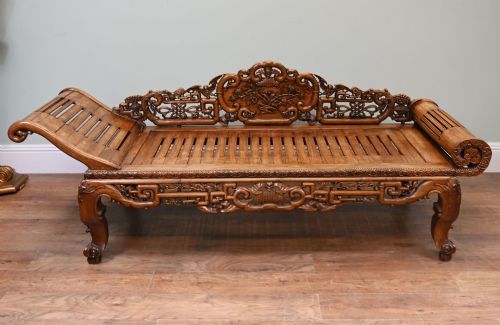
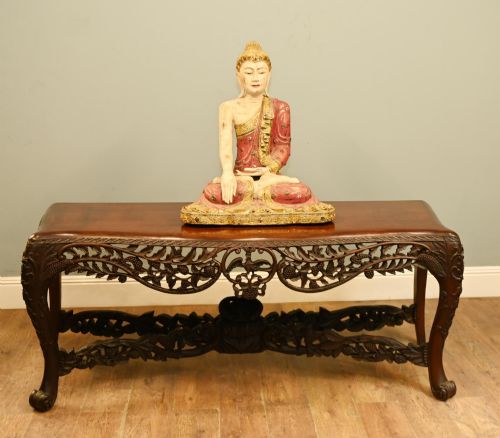
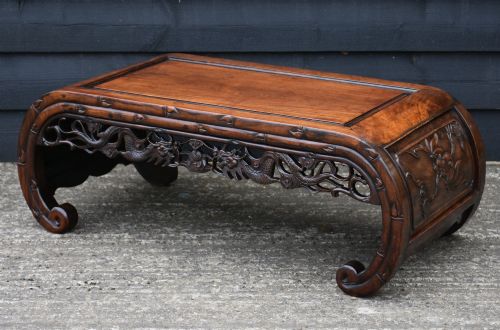
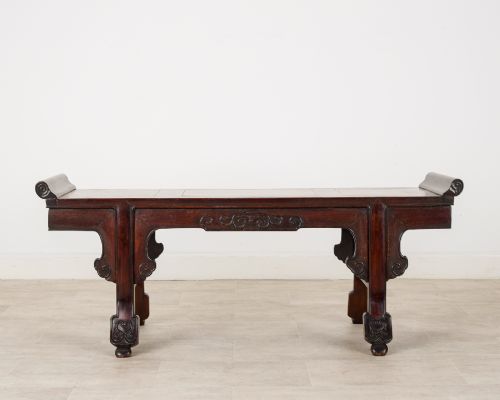
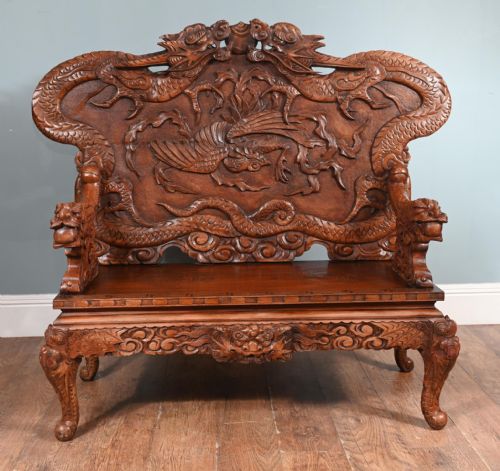

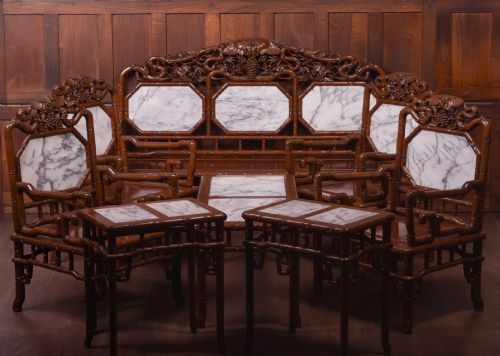


Qing Dynasty Carved Bench
A qing dynasty carved bench brings heavy timber and deep relief into a room, offering the solid presence of traditional seating.
Qing Dynasty Carved Bench
When you search for a qing dynasty carved bench, you are looking at substantial seating pieces shaped from dense Asian timbers during the nineteenth and early twentieth centuries. These forms encompass long hall benches, window seats, and settles carrying ornate traditional motifs.
The versions most commonly met here span the nineteenth century through the early twentieth century, reflecting classic Chinese export and traditional styles. Many examples feature detailed dragon carvings across the timber or incorporate inset marble panels within the seat.
Makers produced these seating items for formal halls and domestic spaces, utilising robust construction methods that allowed heavy woods to support intricate surface decoration. Their forms range from simple low benches to expansive hall settles designed for prominent placement.
Materials and construction methods
Craftsmen built these benches using dense timbers such as rosewood, hongmu, and elm, selecting each log for its weight and grain. These hard woods allowed carvers to execute deep relief work without compromising the structural integrity of the frame.
Surface ornamentation often involved intricate hand carving depicting dragons, foliage, and geometric patterns directly into the hardwood. Selected pieces also integrated cinnabar lacquer, mother of pearl inlay, or cool marble inserts to contrast against the dark timber.
Distinctions in quality and execution
The distinction between standard examples and the finest pieces rests upon the crispness of the hand carving and the selection of the timber. Deeply undercut dragon details and heavy, unblemished rosewood or hongmu indicate superior workshop standards.
Proportion and joinery integrity further define the standing of a bench, as master craftsmen ensured that complex frames remained rigid without relying on visible metal fasteners. Pieces featuring elaborate mother of pearl inlay or well-matched marble panels generally represent more ambitious workshop production.
The Qing Dynasty Carved Bench Glossary
- Hongmu
- A dense tropical hardwood favoured by traditional Chinese cabinetmakers for its dark colour and heavy weight. It provides a stable base for intricate relief carving.
- Cinnabar lacquer
- A traditional coating built up in multiple layers using the red mineral cinnabar, which artisans then carve with detailed motifs once hardened.
- Kang table
- A low platform table traditionally used on heated brick beds in northern China, often sharing similar decorative motifs with contemporary seating.
- Settle
- A high-backed wooden bench with solid arms and an enclosed base designed to block drafts in large rooms.
Qing Dynasty Carved Bench: Frequently Asked Questions
How were these benches used?
These benches served as primary seating within formal halls, domestic rooms, and along window spaces in traditional Chinese interiors. Their sturdy construction supported daily use while displaying the social standing of the household through elaborate carving.
Larger settles and hall benches also functioned to divide interior spaces or provide secure seating near entrances. Lower variants found placement near living areas for resting or serving tea.
How do I care for hardwood furniture?
Maintain hardwood surfaces by keeping them away from direct heat sources and sudden humidity changes to prevent the timber from splitting. Regular dusting with a soft, dry cloth preserves the natural sheen of the polished wood.
Avoid using silicone-based polishes or harsh chemical cleaners that can degrade traditional finishes. Occasional application of a suitable wax helps nourish dense woods like rosewood and hongmu.
How are different periods identified?
Dating relies upon examining the tooling marks left by hand chisels, the choice of timber, and the style of the relief decoration. Nineteenth-century examples often display deeper, more vigorous carving compared to later twentieth-century interpretations.
Structural assembly techniques and the wear patterns on high-contact areas also offer clues to age. Comparing specific dragon motifs against documented dynastic styles helps narrow down the period of production.
Where should I place a bench?
Position a long hall bench against a blank wall in a hallway or landing to make the most of its carved backrest and substantial proportions. Window seats suit natural light placements where the detailed timber work remains visible.
Ensure the selected spot has stable environmental conditions away from radiators or damp exterior walls. Allowing sufficient clearance around the piece lets the carved details be appreciated without obstruction.