




Carved Chinese Dragon Bench
A carved chinese dragon bench brings striking timber work and traditional motifs into a room, offering both robust seating and distinct character.
Carved Chinese Dragon Bench
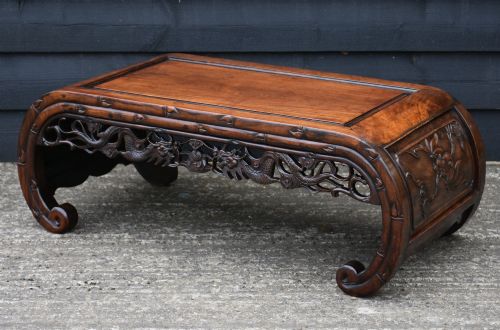
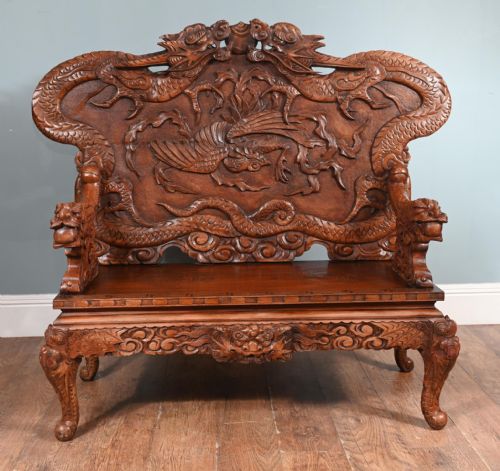
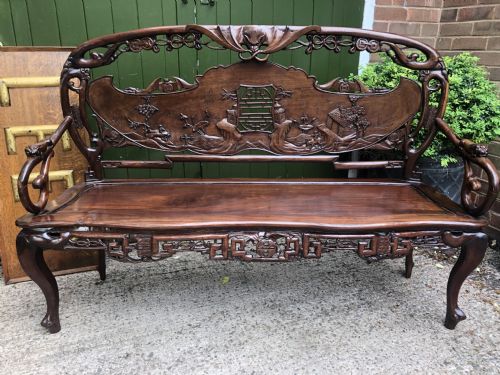
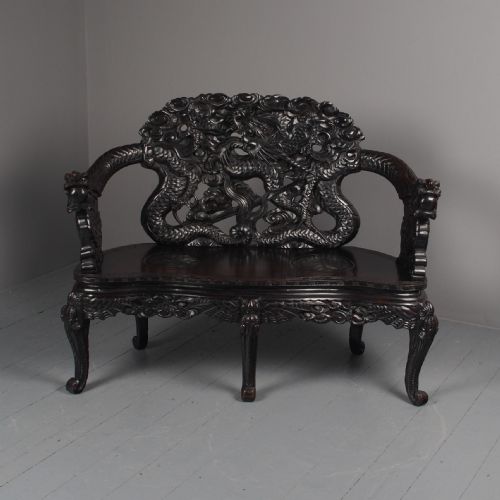
When you search for a carved chinese dragon bench, you encounter substantial seating options fashioned primarily during the nineteenth and early twentieth centuries. These pieces encompass various forms including hall benches, settles, corner seats, and low tables featuring dragon motifs.
The selections span traditional Chinese designs and Qing Dynasty styles, utilising dense timbers like rosewood and hongmu. Many examples function as grand hall furniture, designed to anchor a large entryway or living space with traditional craftsmanship.
You will also find related seating formats such as settees and armchairs associated with dining suites, alongside occasional coffee tables. These items reflect both domestic utility and elaborate decorative carving traditions from China.
How they were made
Maker construction relies heavily on dense hardwoods, rosewood, ebonised timber, and hongmu, often shaped with deep relief carvings of dragons. Some variations incorporate cinnabar lacquer surfaces or contrasting bone inlay to highlight intricate surface patterns.
Joinery techniques focus on sturdy frame construction suitable for heavy seating furniture, frequently paired with carved wooden seats or inset marble panels. The application of red lacquer and polished hardwood finishes provides both protection and visual depth to the timber.
Materials across the selection range from plain hardwood and marble to bone inlay and red cinnabar lacquer.
What varies in quality
The depth, sharpness, and fluidity of the dragon carvings determine the visual merit of the piece. Crisp detailing across the timber or lacquer indicates superior artisan skill compared to softer, shallower relief work.
The choice of material heavily influences the calibre of the item, with dense rosewood and hongmu commanding greater presence than standard hardwood. Intricate supplementary elements like bone inlay or well-preserved cinnabar lacquer further elevate the standing of the work.
The Carved Chinese Dragon Bench Glossary
- Hongmu
- A dense tropical hardwood prized in Chinese furniture making for its deep colour and heavy weight. It is often translated simply as red wood.
- Cinnabar lacquer
- A traditional technique involving successive layers of coloured resin carved with intricate patterns. This finish creates a rich, textured surface on wooden objects.
- Settle
- A wooden bench featuring a high back and solid arms designed to block draughts in hallways. These pieces often incorporate storage or extensive relief carving.
- Qing Dynasty
- The final imperial dynasty of China, spanning the mid-seventeenth to early twentieth century. Furniture from this era frequently displays formal symbolism and elaborate dragon motifs.
- Bone inlay
- A decorative method where small pieces of bone are set flush into timber surfaces to create contrasting patterns. It appears on select oriental seating and tables.
Carved Chinese Dragon Bench: Frequently Asked Questions
Where should I place a hall bench?
These long wooden seats suit large entrance halls, landings, or spacious living rooms where their carved details can be appreciated. Their high backs and solid construction provide a strong architectural presence against a wall.
Ensure there is enough floor space around the piece to allow safe passage, as nineteenth-century dimensions can be quite deep and heavy.
How do I care for rosewood furniture?
Maintain polished hardwood and rosewood surfaces by dusting regularly with a soft, dry cloth. Avoid placing timber furniture near direct heat sources or in strong sunlight to prevent splitting.
Applying a suitable wax occasionally helps nourish the wood grain without building up a sticky residue on the carved dragon details.
How do I identify a Qing Dynasty piece?
Qing Dynasty items often display traditional imperial symbols, notably carved dragons, alongside dense hardwoods like rosewood and hongmu. Construction dates generally span the nineteenth and early twentieth centuries.
Examine the joinery methods and the crispness of the relief carving to understand the age and origin of the timber work.