




Chinese Hall Seat
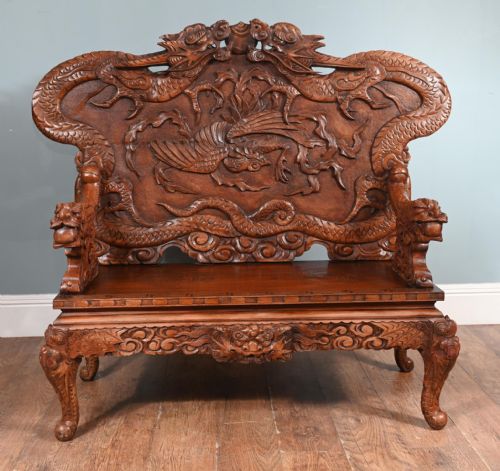
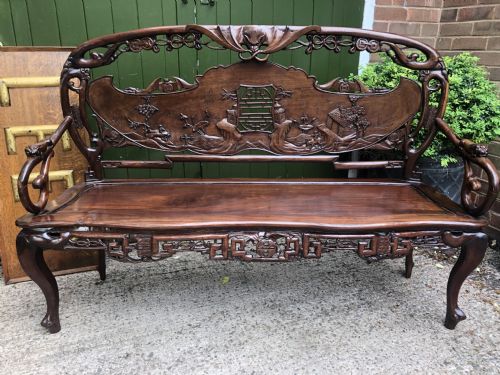
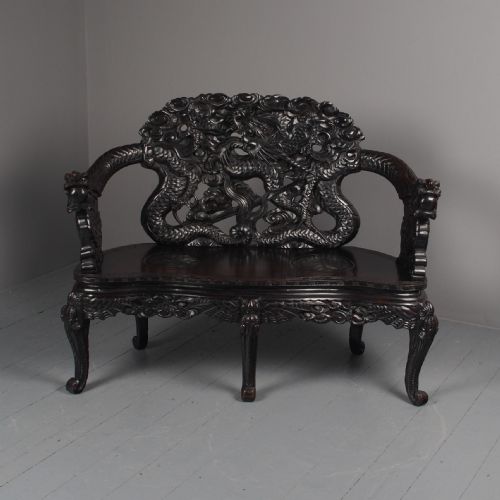
These Chinese hall seat options are substantial hardwood benches, settles and chairs designed to anchor a grand entryway.
Chinese Hall Seat
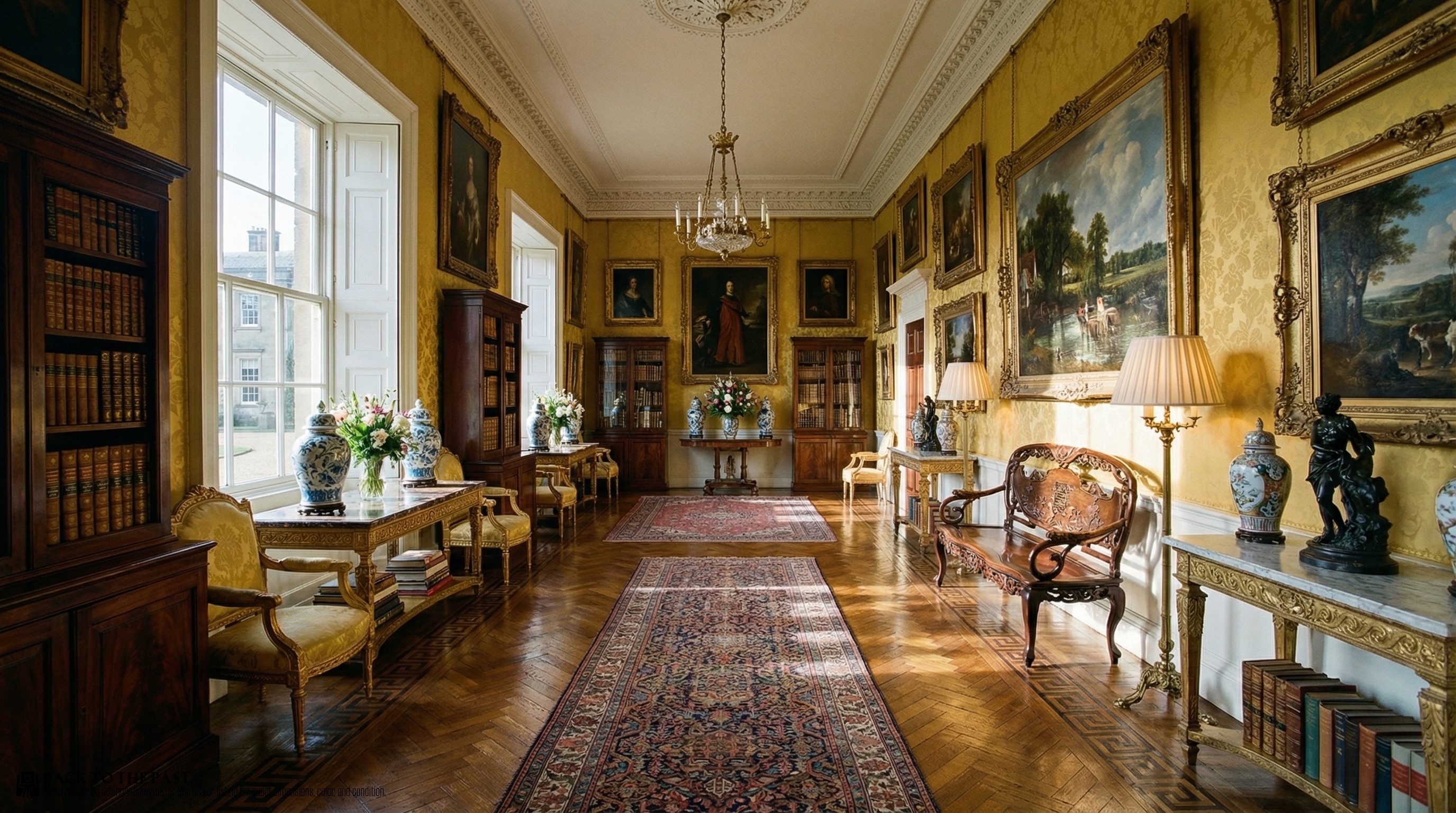
A chinese hall seat encompasses substantial hardwood benches, settles and chairs originating from the nineteenth and early twentieth centuries. These pieces serve as striking architectural seating for entryways and reception spaces, drawing on traditional forms.
Most entries belong to the Qing dynasty or later nineteenth century periods, displaying traditional craftsmanship such as Chinese export and Qing dynasty styles. Buyers will find both individual chairs and long benches built for grand hallways.
Materials and Techniques
Constructed primarily from dense timbers such as rosewood, teak, hardwood, and blonde wood, these pieces rely on traditional joinery to support heavy use. Master carpenters shaped these stubborn materials using deep relief carving to depict dragons, horses, and intricate motifs.
Surface finishes include polished hardwood, cinnabar lacquer, and occasional bone inlay or fabric elements to accent the structure. The combination of structural timber and lacquered detail defines the physical presence of each item.
Object forms range from single hall chairs and corner benches to expansive dining suites and dragon-carved settles.
What Varies in Quality
Depth and crispness of the hand carving separate standard seating from exceptional examples, particularly in figures such as dragons or horses. Sharp, deep relief indicates superior workshop execution compared to shallow, soft detailing.
The choice of primary timber influences both the weight and the visual depth of the grain, with dense rosewood and teak commanding higher regard than simpler blonde wood. Preservation of original lacquer surfaces also marks the distinction between ordinary and finer items.
The Chinese Hall Seat Glossary
- Cinnabar lacquer
- A traditional layered red coating carved with intricate designs before hardening. It requires patient craftsmanship and adds rich colour to the timber.
- Rosewood
- A dense, heavy tropical hardwood prized for its deep natural grain and durability. It provides a robust structural foundation for ornate carved seating.
- Settle
- A wooden bench with a high back, solid arms, and often a storage box beneath the seat. It was designed to block drafts in large hallways.
- Qing Dynasty
- The final imperial dynasty of China, spanning from sixteen forty-four to nineteen twelve. Pieces from this era often feature formal, symbolic ornamentation.
- Chinese Export
- Objects manufactured in China specifically for Western markets and tastes during the nineteenth and early twentieth centuries. They blend traditional domestic forms with stylistic preferences from abroad.
Chinese Hall Seat: Frequently Asked Questions
Where should I place a Chinese hall seat?
These substantial pieces work best in spacious entryways, large hallways, or reception rooms where their depth and high backs can be fully appreciated.
Because many include intricate carvings of dragons or horses, positioning them away from heavy foot traffic protects the projecting wooden details.
How do I care for carved hardwood furniture?
Maintain the timber by dusting regularly with a soft, dry cloth and avoiding direct sunlight that can dry out dense woods like teak and rosewood.
Keep lacquered or polished surfaces away from excessive moisture and sudden temperature changes to preserve the finish.
How can I tell the period of a carved seat?
Dating relies on examining the density of the hardwood, the style of the relief carving, and the characteristics of any applied lacquer finish.
Nineteenth-century examples often display deep, hand-chiselled motifs associated with Qing dynasty production.