




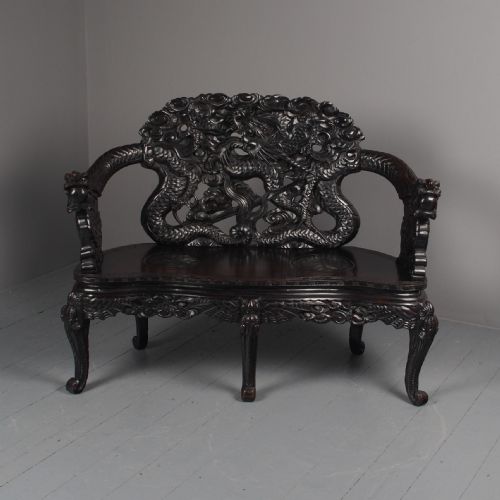


Antique Oriental Settle
These antique oriental settle pieces bring substantial carved timber and rich decorative traditions straight into a hallway.
Antique Oriental Settle
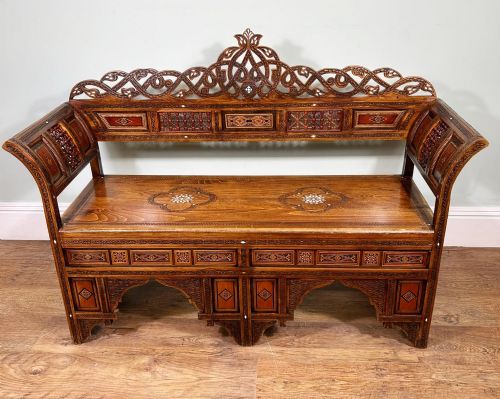
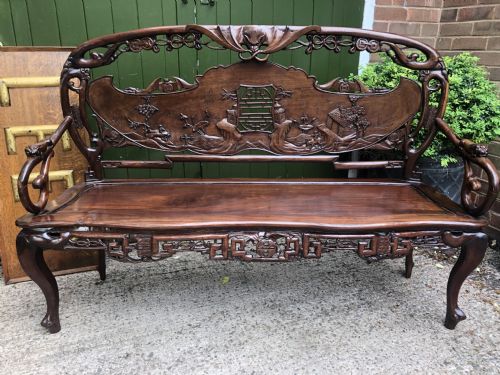
An antique oriental settle offers deep seating and high backrests, functioning traditionally as grand hallway benches or corner seats. The examples found here span the nineteenth century through to the early twentieth century, capturing distinct periods such as the Qing dynasty alongside Chinese export items.
Most pieces on this page are constructed as substantial wooden benches and hall seats, frequently detailed with intricate carvings. Buyers encounter traditional Chinese forms, including horseshoe hall benches and corner benches designed for specific interior layouts.
Materials and construction methods
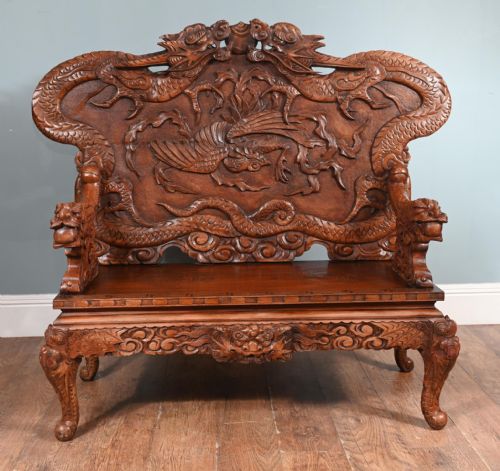
These items rely on dense timbers like rosewood and polished hardwood, providing the structural weight necessary for large seating furniture. Artisans carved intricate dragon motifs and floral patterns directly into the wood grain.
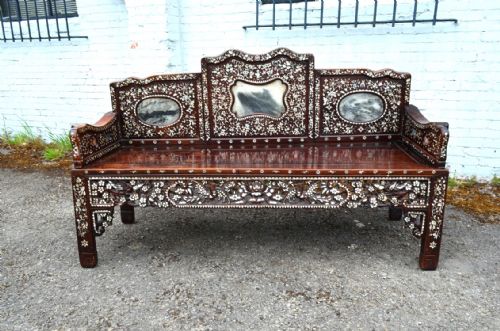
Surface decoration frequently incorporates cinnabar lacquer alongside detailed bone inlay and mother of pearl. These contrasting materials highlight specific focal points across the backrests and seats.
Listings feature items spanning the nineteenth century up to 1930, utilising rosewood, ebonised hardwood, and mother of pearl.
Assessing craftsmanship and finish
The distinction between standard examples and exceptional pieces rests in the depth and complexity of the wood carving. Fine work displays crisp, three-dimensional relief on dragons and structural elements rather than shallow surface scoring.
The preservation of delicate decorative elements, such as inlaid mother of pearl or smooth lacquer coatings, determines the overall refinement of the seating. Heavy wear on intricate joints or obscured details separates simpler functional benches from superior collector examples.
The Antique Oriental Settle Glossary
- Settle
- A wooden bench featuring high backrests and solid arms, designed historically to block draughts in large rooms. These pieces provide substantial seating with architectural presence.
- Cinnabar lacquer
- A traditional decorative coating built from multiple layers of coloured resin derived from tree sap. Artisans carve intricate patterns directly into the hardened layers.
- Chinese Export
- Items produced specifically for Western markets during the nineteenth and early twentieth centuries. These objects often combine traditional domestic motifs with foreign aesthetic preferences.
- Mother of pearl
- The iridescent internal layer of mollusc shells utilised for decorative inlay. Small cut sections are embedded into wooden channels to create shimmering patterns.
Antique Oriental Settle: Frequently Asked Questions
How were these settles used?
These large benches served primarily as formal seating in entrance halls and reception spaces. Their high backs provided shelter from draughts in traditional interiors.
Today, they function well in wide hallways or large living areas as statement seating. They offer practical utility alongside strong decorative presence.
Where should I place a settle?
A hallway or large foyer provides the ideal setting for a high-backed wooden bench. Placing the piece against a plain wall allows the intricate carving to stand out.
Corner benches suit awkward architectural spaces or larger dining areas. Ensure the surrounding floor space accommodates the substantial depth of the seating.
How do I date these pieces?
Dating relies on examining the timber types, joinery methods, and the style of the carved motifs. Pieces from the nineteenth century typically exhibit denser hardwoods and hand-cut joinery.
Later items from the early twentieth century often display transitional Chinese export styles. Comparing the wear on the lacquer and inlay also helps confirm the period.
What is lacquer work?
Lacquer is a durable natural coating applied in numerous thin layers over a wooden base. Each layer dries completely before the next is added and polished.
This technique creates a smooth, lustrous finish that protects the timber underneath. Carved lacquer pieces allow artisans to reveal different underlying strata.