



Chinese Carved Throne Seat
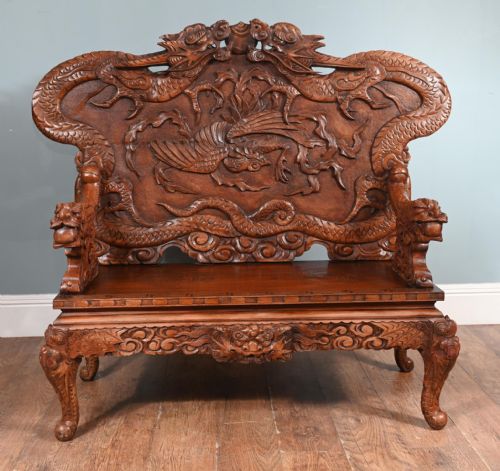
A chinese carved throne seat anchors a room with dense regional carving and dense dark woods, prized for monumental presence and intricate dragon detail.
Chinese Carved Throne Seat
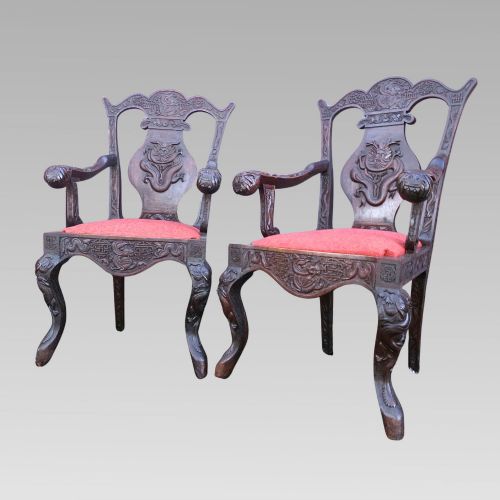
When you search for a chinese carved throne seat, you are looking at substantial seating designed with high backs and heavy frames. The examples seen on this page span the nineteenth century through the early twentieth century, showing styles rooted in the Qing dynasty and Chinese export traditions. These heavy timber forms range from single armchairs and pairs of throne chairs to benches, settles, and complete hall furniture sets.
The versions you are most likely to meet on this page are constructed from dense timbers like hongmu, rosewood, and elm. Many incorporate decorative details such as cinnabar lacquer or bone inlay, while some incorporate marble panels into the design. They function equally well as striking focal points in large hallways or as statement armchairs in a reception room.
Materials and construction methods
Makers utilised heavy tropical hardwoods including rosewood, hongmu, dark hardwood, and elm to build these sturdy frames. These dense timbers allowed artisans to carve deep relief scenes of dragons and traditional motifs directly into the structural wood without compromising the integrity of the seat.
Surface decoration involved meticulous techniques ranging from multi-layered cinnabar lacquer and delicate bone inlay to fitted marble inserts. Upholstery also appears on select pieces, adding a textural contrast to the intricately carved wooden armchairs and benches.
Several dragons peer fiercely from the woodwork, guarding the seat against poor posture.
What separates the finest examples
The distinction between standard seating and the top of the range rests entirely on the depth and clarity of the carving. Crisp, undercut relief work depicting dragons and swirling motifs requires exceptional skill from the carver, whereas shallower cutting lacks the same dramatic shadow and presence.
Material selection and completeness also dictate the standing of a piece. Dense, heavy hongmu or rosewood timbers paired with intact cinnabar lacquer, bone inlay, or inset marble panels represent the upper tier of craftsmanship on these historic seats.
The Chinese Carved Throne Seat Glossary
- Hongmu
- A dense, heavy tropical hardwood traditionally used for fine Chinese furniture. It polishes to a dark, rich finish and holds intricate carved details exceptionally well.
- Cinnabar lacquer
- A decorative technique involving numerous layers of red lacquer applied to a base and subsequently carved with intricate designs. This method produces a vibrant, tactile surface.
- Settle
- A wooden bench featuring a high back to block draughts and solid arms. In this context, it refers to large, monumental seating pieces designed for halls.
- Qing Dynasty
- The final imperial dynasty of China, lasting from the mid-seventeenth century until nineteen twelve. Furniture from this era is celebrated for elaborate carving and formal symmetry.
- Bone inlay
- A decorative method where small pieces of bone are set flush into recesses within the wood. It creates pale, contrasting geometric or figurative patterns against dark timbers.
Chinese Carved Throne Seat: Frequently Asked Questions
How do I care for a chinese carved throne seat?
Keep the wood conditioned with appropriate natural wax and avoid placing the timber near direct heat sources or in fluctuating humidity.
Dust the deep relief carvings regularly with a soft brush to prevent dirt accumulation in the recessed areas.
Were these seats used daily?
Many examples served ceremonial or formal functions in grand halls rather than casual everyday seating. Their monumental scale and heavy construction reflect a status associated with reception rooms.
Over time, some pieces transitioned into domestic hall furniture or display seating within Western export markets.
How can I tell the period?
Dating relies on timber density, tool marks left by the carver, and stylistic cues associated with the Qing dynasty or export periods. Nineteenth-century examples often display heavier rosewood and hongmu construction with deep, unhurried carving.
Later pieces from the early twentieth century may show slight shifts in proportion or assembly methods while retaining traditional motifs.
What is the difference between an armchair and a throne chair?
Throne chairs generally feature grander proportions, higher panelled backs, and heavier framing designed to command authority in a room. Standard armchairs are slightly more restrained in scale while still featuring substantial carved elements.
Both forms frequently incorporate dragon motifs and dense tropical hardwoods.