




Hardwood Dragon Carved Bench
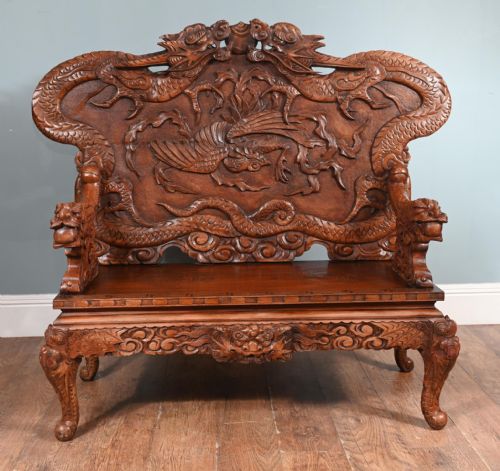
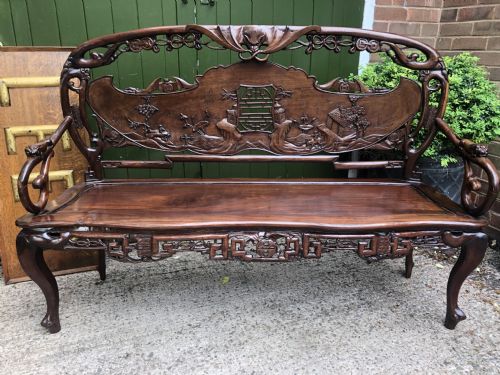
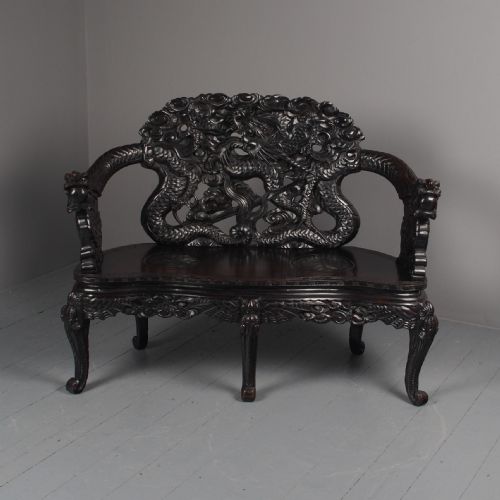
These hardwood dragon carved bench examples are substantial seating pieces bearing intricate traditional carving, offering collectors striking centrepieces for hallway or reception spaces.
Hardwood Dragon Carved Bench
A hardwood dragon carved bench is a substantial seating form designed primarily as a hall bench, settle, or corner seat originating from traditional Chinese workshops. These pieces frequently surface from the nineteenth century, including specific dates such as 1860, 1890, and 1900, alongside later interpretations from around 1930.
The prevailing styles span Qing Dynasty productions, Chinese export items, and traditional Chinese aesthetics. Many examples function independently or form part of larger dining suites and seating sets alongside matching armchairs.
Buyers encountering this selection will find robust forms designated variously as settees, hall seats, and sofas. The construction consistently reflects classical Asian cabinet-making traditions adapted for domestic reception spaces.
Materials and construction methods
Makers utilised dense timbers including rosewood, hongmu, and polished or ebonised hardwood to construct these heavy frameworks. These resilient materials provided the ideal rigid base for deep, sculptural relief work.
Surface decoration frequently incorporates cinnabar lacquer, pigment, and occasionally inset marble panels to contrast with the dark wood. Artisans carved intricate dragon motifs directly into the timber structure, often combining relief carving with lacquered finishes.
Some nineteenth century makers even offered matching horseshoe chairs so the dragon could truly command the whole room.
Evaluating the craftsmanship
The distinction between standard examples and superior pieces rests upon the crispness and depth of the dragon carving. Master carvers achieved high relief with distinct musculature and scale detail, whereas lesser items rely on shallow, repetitive surface incisions.
The selection of timber significantly influences the overall character, with dense rosewood and hongmu yielding a finer natural grain than ebonised or pigmented substitutes. Furthermore, the integrity of integrated lacquer work and fitted marble elements dictates the visual coherence of the finished seat.
The Hardwood Dragon Carved Bench Glossary
- Hongmu
- A dense tropical hardwood frequently utilised in traditional Chinese furniture making. It translates literally to red wood and provides a heavy, durable structure for carved decoration.
- Cinnabar lacquer
- A traditional decorative coating made from the sap of the lacquer tree mixed with mercuric sulphide to produce a rich red pigment. Artisans built up multiple layers before carving detailed designs into the surface.
- Settle
- A wooden bench featuring a high back to block draughts, solid arms, and often a storage compartment beneath the seat. These forms were adapted within Chinese export workshops for grand hallway placements.
- Qing Dynasty
- The final imperial dynasty of China, lasting from 1644 until 1912. Furniture from this era is celebrated for its ornate carving and adherence to traditional symbolic motifs.
Hardwood Dragon Carved Bench: Frequently Asked Questions
Where were these benches placed originally?
These seating forms typically stood in grand reception halls, entranceways, or reception rooms of traditional residences. They provided both functional seating and an immediate visual statement for arriving visitors.
In western homes, they continue to serve similar roles in hallways or large living spaces, functioning as striking focal points.
How do I care for hardwood and lacquer?
Maintenance requires keeping the timber away from direct heat sources and sudden temperature fluctuations to prevent wood movement. Gentle dusting with a dry, soft cloth preserves the polished surface without damaging delicate carved areas.
Avoid commercial polishes containing silicone, which can penetrate porous lacquered or unsealed wooden surfaces over time.
Are these benches comfortable for daily use?
These pieces were built primarily with upright wooden seats designed for formal posture rather than lounging. Many owners add custom cushions to soften the rigid wooden or lacquered seating platform for everyday relaxation.
The sturdy construction nonetheless provides a stable and reliable seat for daily hallway usage.
How are different periods identified?
Dating relies on assessing the density of the hardwood, the style of the carved dragon motifs, and the application of lacquered or pigmented finishes. Pieces associated with the nineteenth century often exhibit heavier timber gauges and hand-chiselled detailing.
Later twentieth-century iterations sometimes demonstrate variations in proportion and machine-assisted finishing techniques alongside traditional hand assembly.