




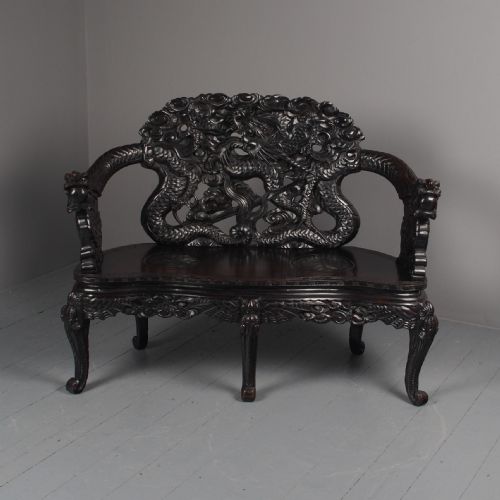


Oriental Carved Settle
An oriental carved settle brings heavy timber relief and intricate joinery into a hallway, offering deep seating shaped by eastern export traditions.
Oriental Carved Settle
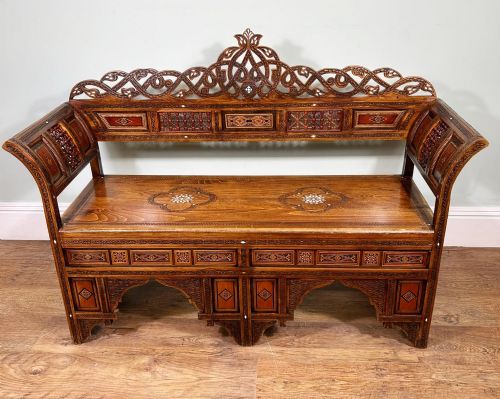
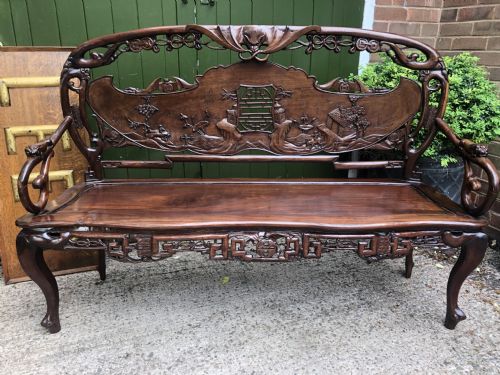
An oriental carved settle is a substantial wooden seat designed for halls and reception spaces, combining deep bench seating with elaborate backrests and arm panels. When you search for this phrase, you encounter heavy timber forms rooted in Chinese export and Qing Dynasty styles, alongside related regional interpretations.
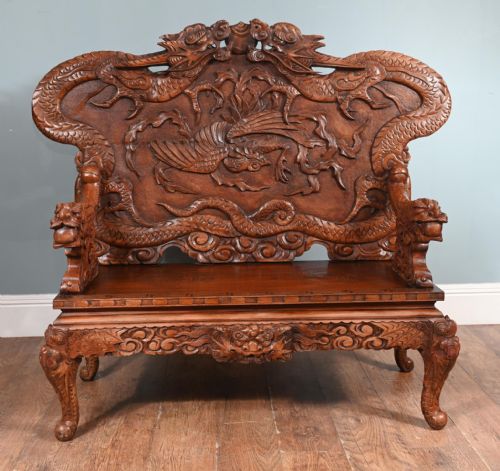
The pieces on this page span the nineteenth and early twentieth centuries, capturing periods from eighteen-sixty to nineteen-thirty. Forms range from straightforward hall benches to corner seats and larger dining suite benches featuring horseshoe contours and dragon motifs.
Makers drew on traditional Chinese craftsmanship and Moorish Revival influences, producing benches that function as primary architectural statements in a room. Hardwood construction dominates the selection, frequently enhanced by contrasting inlays and carved figural details.
Materials and construction methods
Makers utilised dense timbers such as rosewood and general polished hardwood to build these settles, ensuring structural stability for large seating frames. This heavy wood provides a stable canvas for deep relief carving depicting dragons, foliage, and traditional scenes.
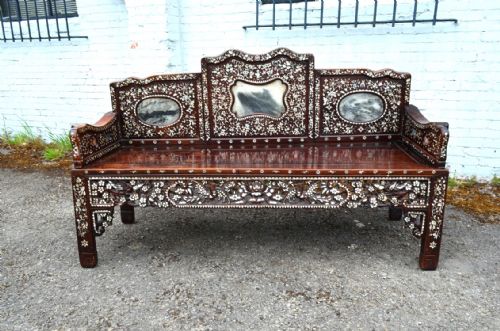
Surface decoration frequently incorporates cinnabar lacquer, bone inlay, and mother of pearl to create tonal and textural contrast against the dark timber. These decorative elements are carefully set into the wood, highlighting the arms, back panels, and seat rails.
Decorative techniques visible across the inventory include cinnabar lacquer, mother of pearl inlay, and bone inlay applied to traditional Chinese export forms.
Distinctions in quality
The depth and crispness of the wood carving separate standard production from finer examples, as skilled carvers achieved three-dimensional relief with clean edges. Dragon motifs and floral scrolls display varying degrees of hand execution, influencing the overall visual impact of the backrest.
The integration of decorative inlays such as mother of pearl and bone defines the upper tier of execution, requiring precise fitting into the hardwood base. Furthermore, the selection of timber, ranging from standard hardwood to figured rosewood, dictates the weight and richness of the finished settle.
The Oriental Carved Settle Glossary
- Cinnabar lacquer
- A decorative coating made from multiple layers of vermilion-coloured tree sap carved after hardening. It provides a rich red surface on select panels and frames.
- Chinese Export
- Objects manufactured in China specifically for western markets during the nineteenth and early twentieth centuries. These pieces often blend eastern joinery with forms suited to European homes.
- Qing Dynasty
- The final imperial dynasty of China, spanning from sixteen-forty-four to nineteen-twelve. Furniture from this period is known for robust hardwood construction and symbolic ornamentation.
- Mother of pearl
- The iridescent inner layer of mollusc shells utilised for flat inlays. Craftsmen cut small geometric or floral shapes to embed into dark wooden surfaces.
- Moorish Revival
- An architectural and decorative style popular in the nineteenth and early twentieth centuries. It draws inspiration from North American and Spanish Islamic design traditions.
Oriental Carved Settle: Frequently Asked Questions
Where should I place an oriental carved settle?
These substantial wooden benches suit wide hallways, large entryways, or spacious reception rooms where their deep profiles and carved backs remain visible.
Because they feature elaborate arm panels and high relief work, they function best against solid walls rather than crowded walkways.
How do I care for hardwood and lacquered surfaces?
Maintain the timber by dusting regularly with a soft cloth and applying appropriate wax polish sparingly to nourish the rosewood or polished hardwood.
Keep lacquered and inlaid sections away from direct sunlight and excessive heat fluctuations to prevent the wood from moving and the inlays from loosening.
How can I tell the period of a carved settle?
Examine the timber density, tool marks on the underside, and the style of the carving, noting that nineteenth-century pieces often display hand-chiseled depth.
Compare the decorative motifs, such as Qing Dynasty dragon panels or export styling, against documented examples from eighteen-sixty to nineteen-thirty.