



Dragon Carved Bench
A dragon carved bench brings striking detail and profound cultural heritage straight into a room.
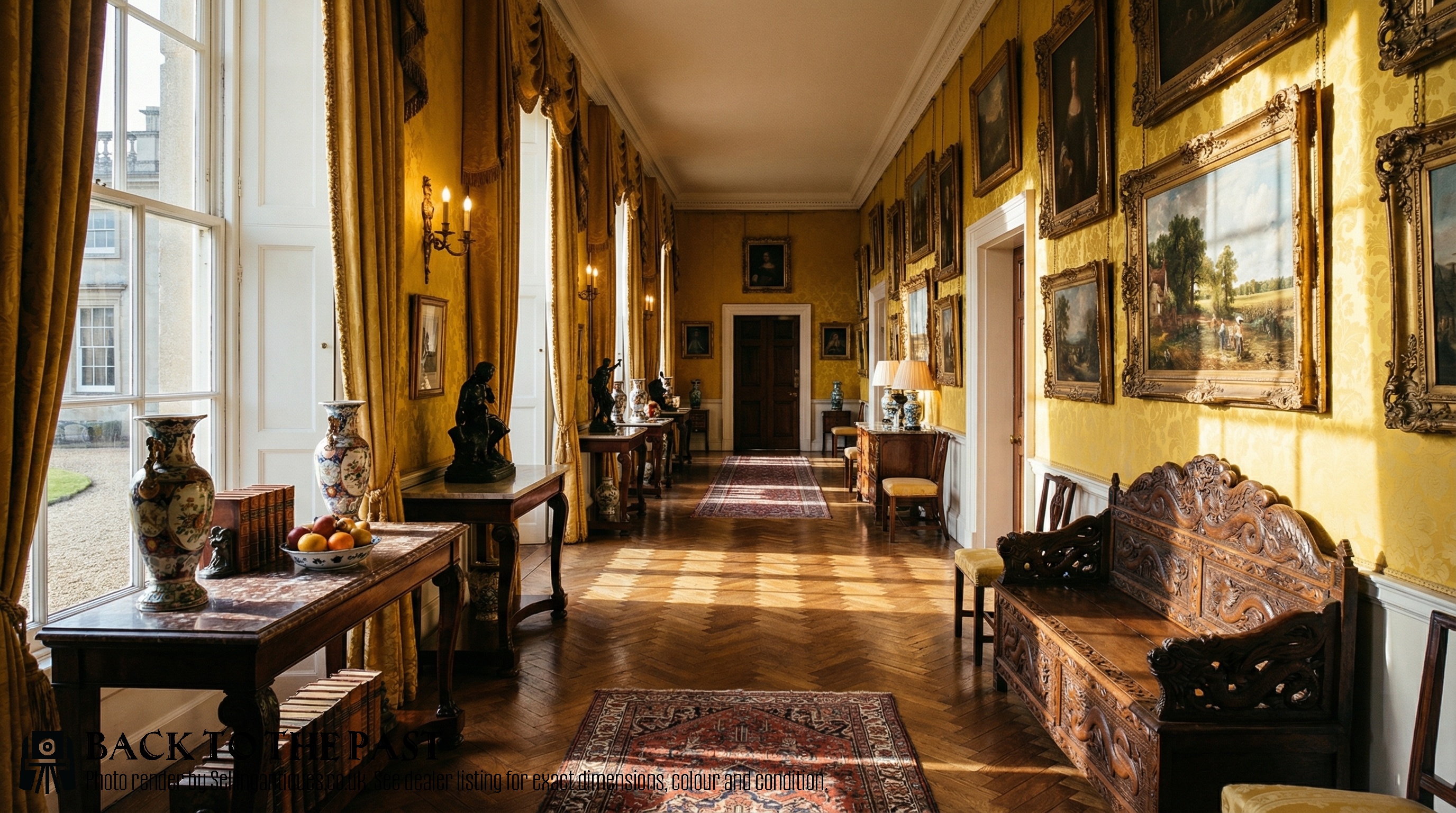
Dragon Carved Bench
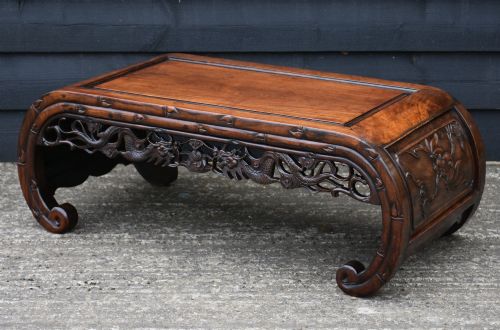
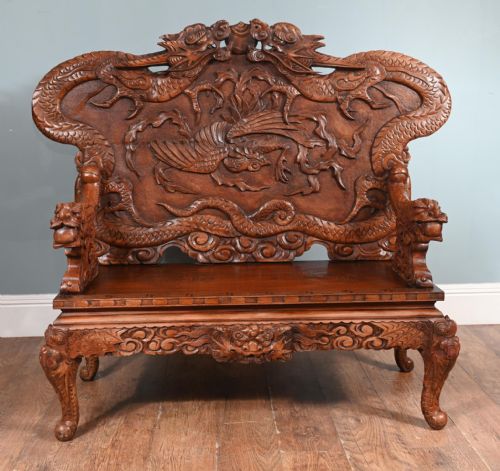
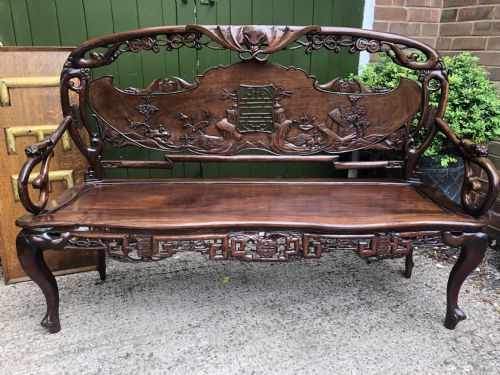
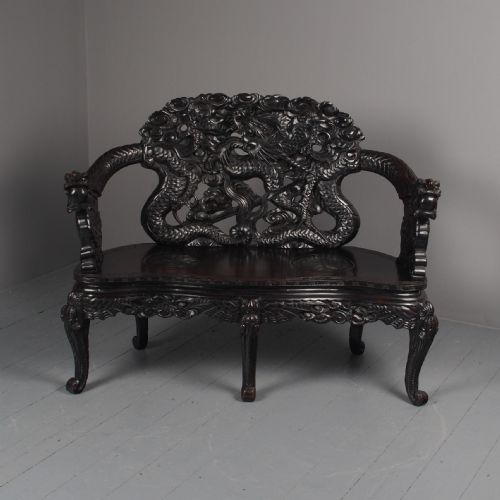
A dragon carved bench draws upon traditional Chinese aesthetics, appearing across various forms including hall benches, settees, and corner seats. The pieces on this page span the nineteenth century through to the early twentieth century, incorporating Qing Dynasty styles and Chinese Export influences.
Buyers will encounter several seating configurations, such as high-backed hall settles and low tables with dragon details. The inventory frequently includes robust hardwood examples alongside lacquer and bone inlay variations, often associated with broader dining or seating suites.
Materials and construction methods
Construction relies heavily on dense timbers such as rosewood, hongmu, and ebonised or polished hardwood, providing the structural strength needed for deep relief carving. Artisans also utilised cinnabar lacquer and bone inlay to enrich the surface texture of the wood.
The carving technique involves high-relief execution to render intricate dragon motifs across seat backs, panels, and aprons. Joinery is traditional, supporting substantial forms like settles, sofas, and corner benches without modern mechanical fasteners.
Dragon Carved Bench Retail Price Guide 2026
Typical asking prices for dragon carved bench among the pieces listed under this phrase on Sellingantiques today, from the lower quarter to the upper quarter. They describe what is for sale here now, not the wider market.
The listings on this site span the nineteenth century and the early decades of the twentieth century.
Assessing quality and craftsmanship
Quality reveals itself in the depth and clarity of the dragon carvings, where finer examples display muscular tension and scale definition rather than flat, repetitive tooling. The choice of timber also dictates quality, with dense rosewood and rich hongmu commanding greater appreciation than standard hardwoods.
The integration of decorative elements like cinnabar lacquer or bone inlay separates standard items from exceptional pieces. Superior execution in the joinery ensures the heavy wooden frames maintain stability and structural integrity over centuries.
The Dragon Carved Bench Glossary
- Hongmu
- A dense, dark tropical hardwood traditionally used in high-status Chinese furniture. It provides a heavy, durable foundation for intricate carving.
- Cinnabar lacquer
- A red lacquer built up in numerous layers on a wooden base before being carved. This technique creates a richly textured surface often seen on panels and seats.
- Settee
- A long upholstered or wooden seat for more than one person. In this context, it refers to substantial wooden seating with carved backrests.
- Qing Dynasty
- The last imperial dynasty of China, spanning from sixteen forty-four to nineteen twelve. Furniture from this period frequently influences the export styles found here.
Dragon Carved Bench: Frequently Asked Questions
What is a dragon carved bench?
A dragon carved bench is a traditional wooden seat featuring detailed relief carvings of dragons, originating primarily from nineteenth and early twentieth century China.
These pieces function as striking hall seating, settles, or sofas within a home.
How do I care for rosewood furniture?
Rosewood requires stable indoor humidity levels and protection from direct sunlight to prevent the timber from drying out or splitting.
Regular dusting with a dry cloth keeps the polished hardwood surface in good condition without damaging the finish.
Where were these benches made?
The pieces listed originate from China, encompassing traditional workshops and Chinese Export production destined for international markets.
Some items reflect Qing Dynasty styles adapted for both domestic use and Western buyers.
What materials are used?
Makers utilised dense timbers such as rosewood, hongmu, and ebonised hardwood to support deep sculptural work.
Additional materials include cinnabar lacquer and bone inlay to accentuate the decorative panels.