






Chinese Carved Bench
A chinese carved bench brings dense timber, intricate dragon motifs and centuries of regional craftsmanship straight into a hallway or living space.
Chinese Carved Bench
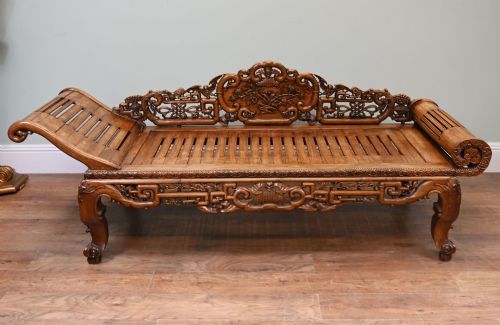
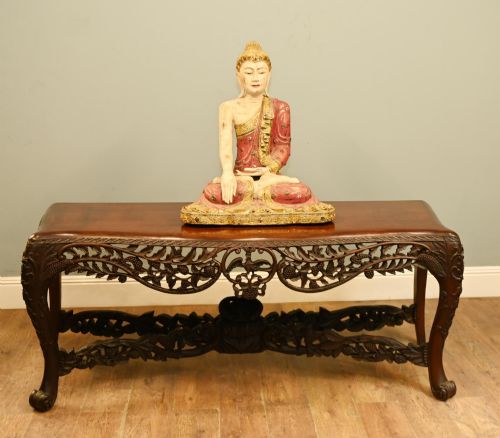
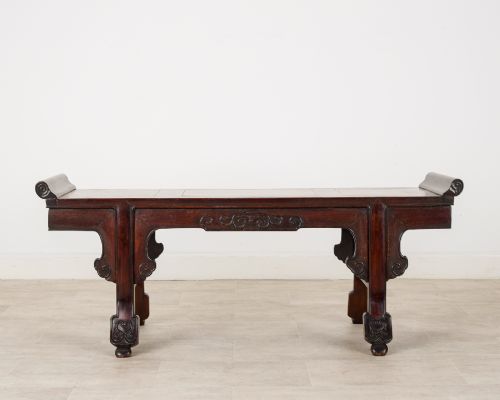
A chinese carved bench encompasses substantial hall seating, window seats, day beds and low altar forms shaped from dense timbers. These pieces emerge primarily from the nineteenth and early twentieth centuries, spanning regional workshops and Qing dynasty traditions.
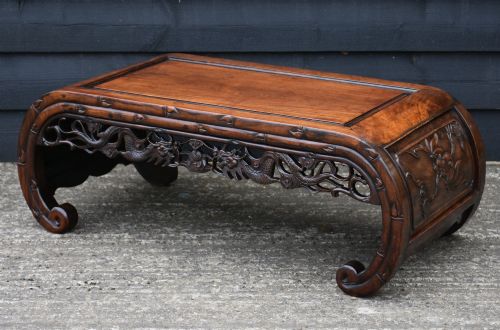
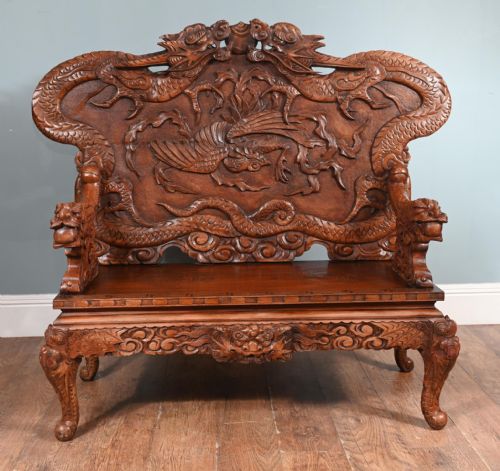
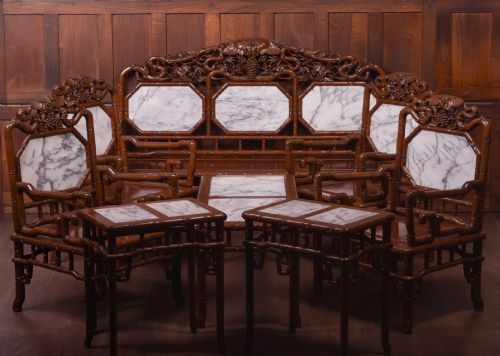
Buyers encounter long hall benches, settle configurations, and low kang or opium tables functioning as seating platforms. The forms incorporate carved dragon details, scroll ends, and fitted seating areas designed for traditional interiors.
Materials and construction
Workshops relied heavily on dense native timbers including rosewood, hongmu, huanghuali, elm, and ebonised hardwood to construct rigid frames. These heavy woods provided the stable foundation necessary for deep relief carving and structural longevity.
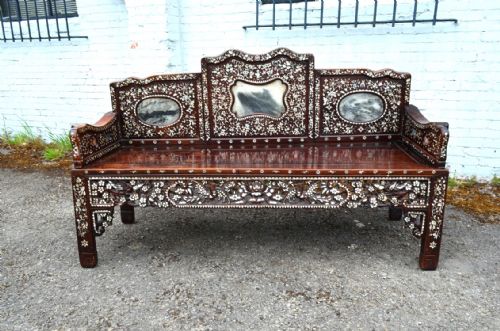
Surface decoration integrated cinnabar lacquer, gilding, and intricate mother of pearl inlay set directly into the timber. Joinery traditions bypassed visible metal fixings, utilising interlocking wooden joints to support heavy loads.
Several benches conceal intricate dragon carvings tucked away beneath armrests, waiting for curious fingers to discover them.
Variations in quality
Quality rests in the crispness of the dragon and floral relief carving, where sharp, deep hand-chiselling distinguishes superior examples from softer, shallower cutting. The selection of timber also dictates standard, with dense rosewood and huanghuali holding greater prestige than softer elm.
The integrity of the inlay work and the preservation of original lacquer surfaces determine visual success. Pieces retaining undisturbed patination and complete mother of pearl panels command higher regard among collectors.
The Chinese Carved Bench Glossary
- Hongmu
- A dense, heavy tropical hardwood used in traditional Chinese furniture making. It translates literally to red wood and develops a deep patina over time.
- Kang
- A heated brick platform in northern Chinese homes, for which low wooden tables and benches were specially designed. These low pieces sat directly on the sleeping or sitting surface.
- Cinnabar
- A bright scarlet mineral pigment used to create thick lacquer layers on carved wooden surfaces. Artisans carved intricate scenes directly into the hardened layers.
Chinese Carved Bench: Frequently Asked Questions
How do I use a chinese carved bench today?
These benches fit naturally in hallways, living rooms, or large bedrooms as statement seating or window seats. Their sturdy construction allows for daily sitting while providing a strong visual anchor.
Lower variants function effectively as coffee tables or low display surfaces in contemporary interiors. They pair well with minimalist surroundings that highlight their dense wood grain and intricate carvings.
What is the difference between an opium bench and a hall bench?
Opium benches, or kang tables, are built low to the ground and were traditionally used for sitting or resting upon elevated platforms. They emphasise compact proportions and flat surfaces.
Hall benches stand tall with backs and armrests designed for upright sitting in entryways. They often feature more elaborate crest rails and deep dragon carvings meant to impress visitors.
How do I care for antique hardwood furniture?
Keep wooden surfaces away from direct sunlight and heat sources to prevent timber splitting. Regular dusting with a soft, dry cloth preserves the natural sheen of the wax or polish.
Avoid liquid cleaners or silicone polishes which can penetrate open grain and degrade the antique finish. Maintain stable room humidity to protect delicate mother of pearl inlays.
How can I tell the age of these pieces?
Examine the timber shrinkage, surface wear, and construction methods to gauge antiquity. Nineteenth-century examples display hand-cut joinery and deep, oxidised patination acquired through decades of handling.
Later pieces from the early twentieth century often exhibit machine-assisted preparation while retaining traditional decorative motifs. Comparing the style of the carving helps align pieces with Qing dynasty traditions.