




Black Timber Seat
These black timber seat examples bring dark woods and robust frames into daily spaces, offering both sturdy function and deep sculptural presence.
Black Timber Seat
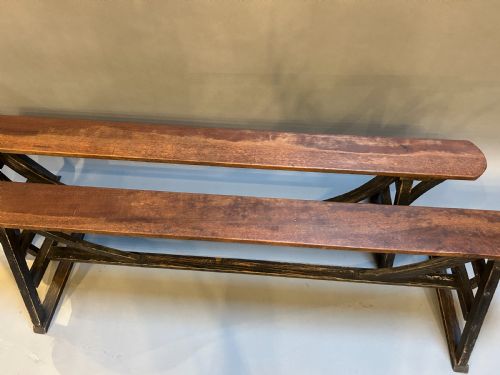
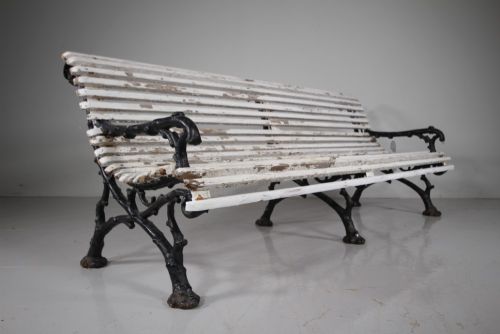
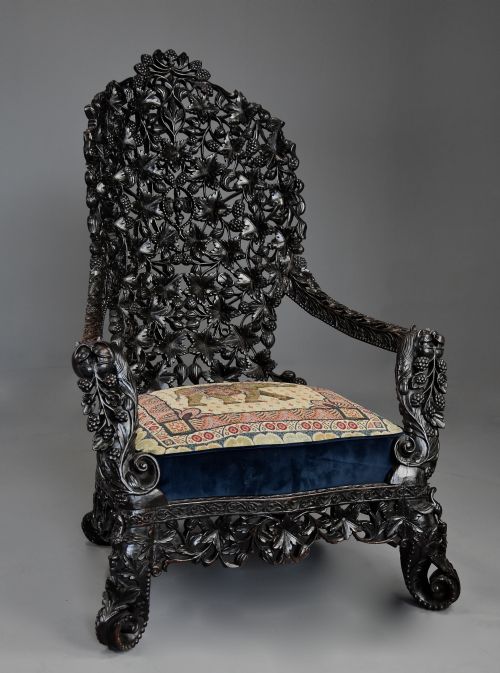
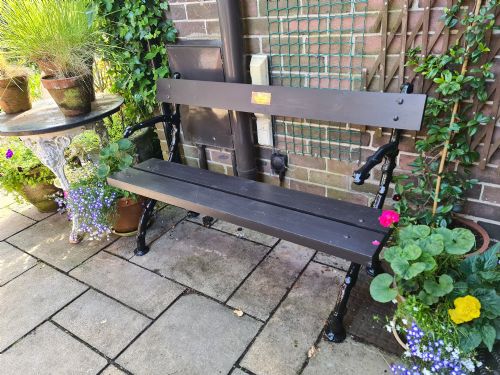
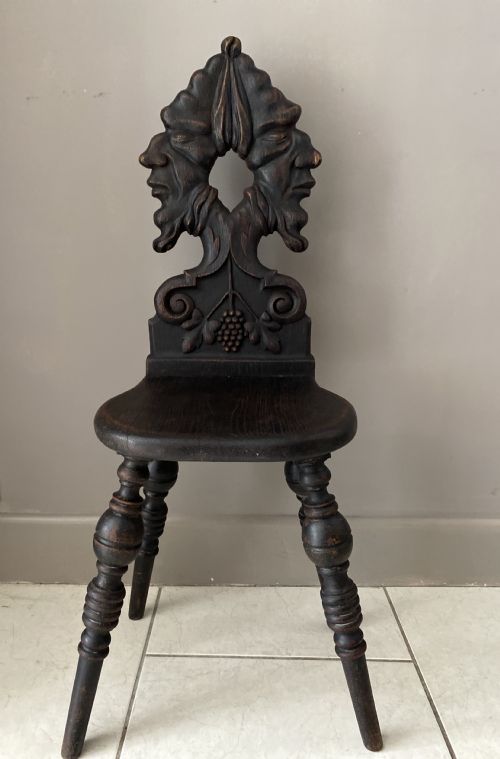
A black timber seat encompasses diverse forms ranging from 19th Century garden benches and hall chairs to armchairs, settles, and stools. These pieces draw from styles such as Black Forest, Victorian Rustic, Aesthetic Movement, Anglo-Indian, Chinese Export, African Tribal Art, and American Folk Art.
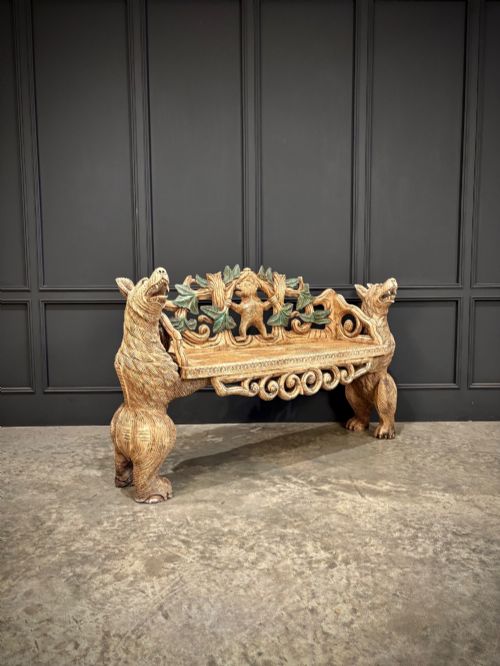
Buyers will encounter varied forms including rocking or nursing chairs, carved bear hall seats, and extensive garden benches. Each piece reflects distinct regional workshops and historical periods, uniting dark surfaces with functional seating.
Materials and construction methods
Construction relies heavily on solid hardwoods, elm, oak, and linden wood, shaped through traditional carving, joinery, and turnery. Artisans frequently integrated cast iron and brass for structural support or decorative hardware, particularly in garden benches and heavier seating.
Surface treatments involve ebonisation, dark painting, and natural polishing to achieve the characteristic dark timber aesthetic. Carving techniques range from intricate figural work seen in Black Forest and Chinese export pieces to rustic patterns and tribal motifs.
Listings span the 19th Century through 1920, utilising hardwoods, cast iron, brass, cane, and paint across diverse global styles.
Assessing quality and execution
Quality reveals itself in the crispness of hand carving and the structural integrity of the timber frame. Pieces featuring deeply detailed figural elements or precise joinery demonstrate superior craftsmanship compared to simpler, coarser variants.
The integration of secondary materials such as brass accents, cast iron frameworks, or cane panels also distinguishes higher execution. Well-preserved original surfaces and balanced proportions elevate the standing of any given example.
E W Godwin
The Black Timber Seat Glossary
- Ebonised
- Wood treated with stain or paint to imitate ebony. This finish gained popularity during the Aesthetic Movement to create a stark, dark visual profile.
- Settle
- A wooden bench with high back, solid arms, and often a storage box beneath the seat. It provides shelter from drafts in older interiors.
- Hardwood
- Timber derived from broad-leaved trees, offering high density and durability. These woods form the primary structure for intricately carved chairs and benches.
- Black Forest
- A carving style originating in Switzerland and Germany, typically featuring bears and forest fauna. These pieces utilise linden wood and rich dark finishes.
- Aesthetic Movement
- A late 19th-century design current prioritising visual beauty over narrative function. Ebonised finishes and Japanese-inspired motifs often characterise these furnishings.
Black Timber Seat: Frequently Asked Questions
Where should I place a black timber seat?
These pieces suit entrance halls, living rooms, and covered outdoor spaces depending on their material construction. Garden benches operate best in exterior settings, while carved hall chairs and settles anchor indoor corridors.
Consider the surrounding light levels, as dark timber surfaces absorb illumination and anchor a room's visual weight. Pairing them against lighter walls enhances their sculptural silhouettes.
Are these seats suitable for daily sitting?
Most examples function well for regular use, provided the joints remain firm and the timber sound. Hall chairs and armchairs offer practical seating, though some heavily carved antique pieces serve primarily as decorative elements.
Examine the structural stability of the legs and seat deck before putting heavy daily demands on older frames. Cane panels and upholstered sections may require gentle treatment compared to solid wood.
How do I identify a Black Forest seat?
Black Forest pieces typically feature carved bears, foliage, and naturalistic animal motifs rendered in linden wood or dark timber. They often incorporate functional elements like card trays or umbrella wells within hall seats and benches.
The carving style is expressive and deeply undercut, reflecting 19th-century European craftsmanship. These seats carry a distinct alpine aesthetic that sets them apart from standard Victorian furniture.