




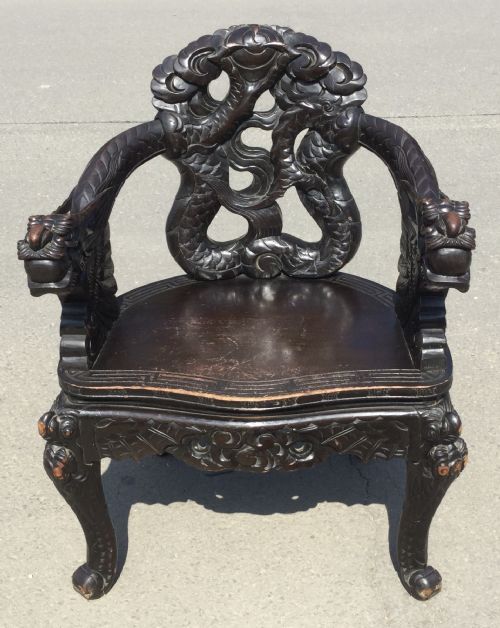

Antique Dragon Chair
An antique dragon chair brings intense carved power into a room, joining fierce mythical symbolism with centuries of timber mastery.
Antique Dragon Chair
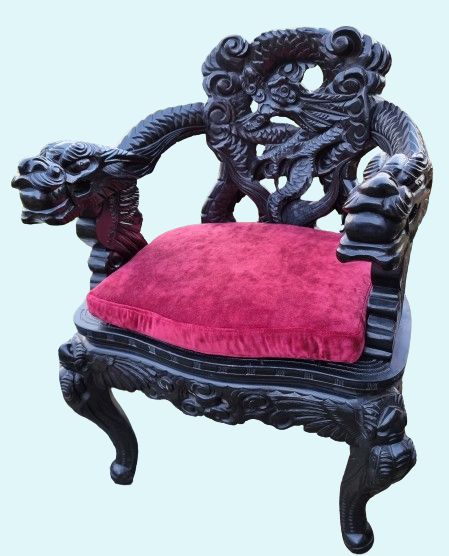
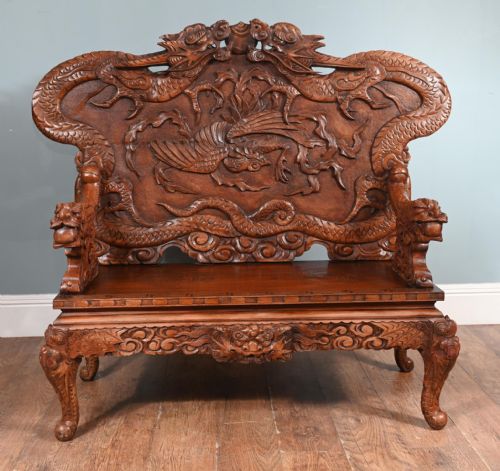
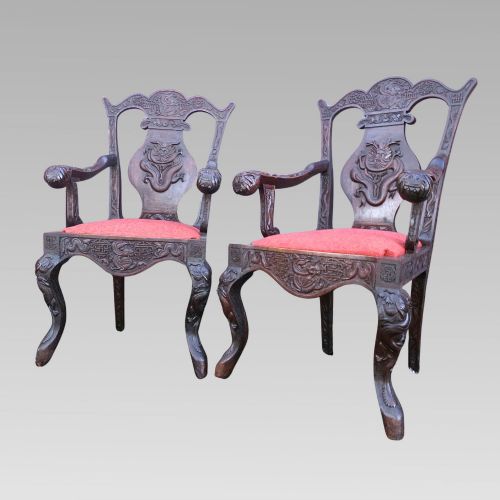
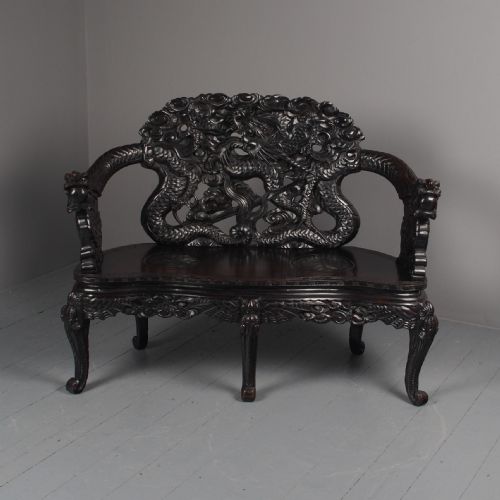
When you search for an antique dragon chair, you encounter substantial seating shaped by Chinese export and Qing dynasty traditions, alongside occasional European vernacular departures like Welsh folk art. The pieces taking centre stage on this page span armchairs, hall benches, settlers, and folding seats fashioned from dense timber.
The aesthetic is dominated by deep relief carving where imperial dragons twist amidst clouds and foliage. Most examples you meet date from the nineteenth century up to nineteen thirty, showing how traditional craftsmanship persisted into the twentieth century through specialised workshop production.
Hardwoods form the backbone of these selections, ranging from polished dark surfaces to cinnabar lacquer and elm. Buyers find everything from single accent chairs to matched pairs and wider seating sets suited for grand hallways or focal living spaces.
How they were made
Carpenters utilised dense tropical timbers including rosewood, teak, and heavy elm to build frames capable of supporting intricate sculptural work. These woods were selected for their stability and capacity to hold razor-sharp chisel marks without splintering.
Decoration relied on deep hand carving, where artisans undercut the timber to make dragon motifs stand free from the background panels. Certain pieces integrate specialised finishes like cinnabar lacquer or subtle bone inlay to heighten the contrast against the polished hardwood grain.
A solitary Welsh folk art spinning chair somehow slipped into a sea of imperial Chinese dragons, proving carpenters everywhere love a mythical beast.
What varies in quality
Timber selection and structural integrity also dictate worth, with dense rosewood and teak outperforming softer elm in longevity and finish retention. Original surfaces, whether polished dark hardwood or intact lacquer, hold far more visual authority than later interventions.
The Antique Dragon Chair Glossary
- Cinnabar lacquer
- A buildup of many layers of vermilion-pigmented tree sap carved with intricate patterns before hardening entirely. It provides a smooth, jewel-like surface frequently seen on benches.
- Qing Dynasty
- The final imperial dynasty of China, lasting from sixteen forty-four to nineteen twelve. Pieces from this era often feature formal dragon symbolism and traditional joinery.
- Chinese Export
- Objects manufactured in China specifically for Western markets during the eighteenth and nineteenth centuries. They combine traditional local motifs with forms suited to European interiors.
- Elm
- A resilient, tough timber valued for its interlocking grain and resistance to splitting. It serves as a paler, fibrous alternative to dense tropical hardwoods.
Antique Dragon Chair: Frequently Asked Questions
What is an antique dragon chair?
An antique dragon chair is a heavily carved wooden seat originating primarily from nineteenth century China, featuring symbolic dragon motifs.
These pieces range from formal armchairs to wide hall benches, built using dense hardwoods like rosewood, teak, and elm.
How were dragon chairs used originally?
In traditional settings, such carved seating denoted status and authority within a household or reception hall. Their substantial frames and symbolic imagery made them prominent fixtures in grand interiors.
Later pieces, including folding armchairs and settlers, provided both functional seating and decorative presence in reception spaces.
What woods should I look for?
The listings show a strong reliance on heavy timbers such as rosewood, teak, and dark polished hardwood. Elm and softer local varieties also appear, alongside specialised finishes like cinnabar lacquer.
Each material responds differently to light and touch, influencing the overall weight and visual depth of the carving.
How do I distinguish periods?
Dating relies on observing construction methods, timber patination, and stylistic markers associated with Qing dynasty and export traditions. Nineteenth century examples typically display deeper, more vigorous relief carving than later twentieth century interpretations.
Examining the underside and joinery helps clarify the age and workshop origin of each individual seat.