
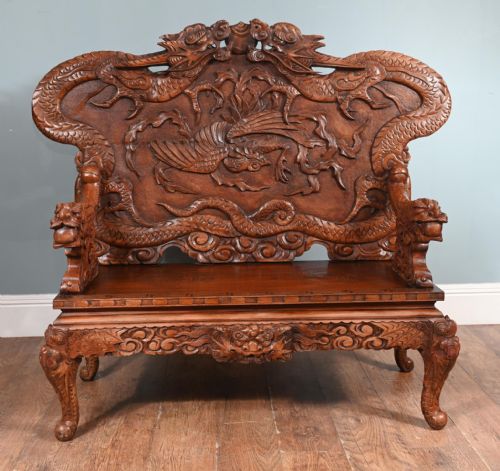


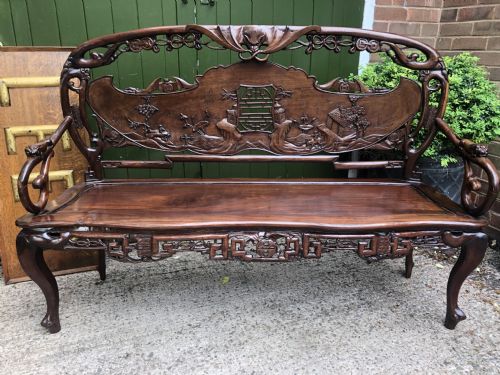
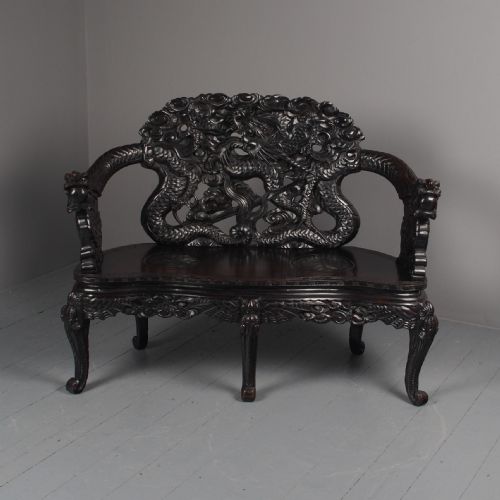


Chinese Dragon Bench Seat
A chinese dragon bench seat brings commanding carved detail and historic seating presence into an interior.
Chinese Dragon Bench Seat
A chinese dragon bench seat is a substantial wooden seating piece defined by intricate oriental carving and traditional craftsmanship. When you explore this selection, you encounter items originating from periods such as the nineteenth century up to nineteen thirty, including pieces associated with the Qing Dynasty and Chinese export styles.
The forms span practical hall benches, settles, corner benches, and broader dining suites that incorporate matching armchairs. Hardwood and rosewood predominate, occasionally enriched with cinnabar lacquer, marble inserts, or bone inlay to create strong visual impact.
You are most likely to meet carved hardwood hall benches and settles bearing deep relief work on the back panels or arms. These items served functional roles in traditional settings while showcasing prominent symbolic motifs including dragons and horseshoes.
Materials and construction methods
Makers utilised dense timbers such as rosewood and general polished hardwood to build sturdy frames capable of supporting heavy surface carving. These dark woods provide the structural strength needed for high-relief panels and integrated seating without losing stability over time.
Surface ornamentation relies on skilled hand carving alongside specialised finishes like red cinnabar lacquer and pigment application. Selected examples incorporate contrasting elements such as bone inlay or marble to punctuate the dark timber grain.
Joinery techniques followed traditional Chinese woodworking practices, allowing large benches and settles to withstand daily use. The combination of durable hardwood and careful surface detailing ensures each piece retains its structural integrity.
Assessing quality in carved seating
Quality rests upon the depth, sharpness, and complexity of the hand carving across the structural panels. Crisp detailing in dragon motifs and scrollwork distinguishes superior craftsmanship from simpler production.
The choice of primary material dictates much of the inherent value, with dense rosewood and well-preserved cinnabar lacquer standing above standard polished hardwoods. Original surface treatments and intact inlay work further elevate a piece.
Proportion and scale play significant roles, as balanced hall benches and complete seating sets demonstrate greater design ambition. The integration of structural elements like horseshoe arms or corner configurations reveals the maker's proficiency.
The Chinese Dragon Bench Seat Glossary
- Settle
- A wooden bench with a high back, solid arms, and often a box base or enclosed lower section. This form provides shelter from draughts in traditional hallways and large rooms.
- Cinnabar lacquer
- A traditional Chinese decorative technique involving multiple layers of red lacquer applied to a base and subsequently carved. It creates a rich, tactile surface with deep relief patterns.
- Rosewood
- A heavy, dense tropical timber valued for its dark grain and durability. It serves as the primary material for many high-status oriental seating pieces.
- Bone inlay
- The practice of embedding small pieces of carved bone into wooden channels to create contrasting geometric or figurative patterns. This technique highlights focal areas on panels and armrests.
Chinese Dragon Bench Seat: Frequently Asked Questions
Where did these benches sit?
These benches traditionally stood in grand entrance halls, reception rooms, and covered walkways of large houses. Their substantial presence made them ideal for welcoming guests and providing sturdy communal seating.
Today, they function effectively in spacious modern hallways, living rooms, and open-plan interiors as statement architectural furniture.
How do I care for hardwood?
Maintain the timber by keeping the piece away from direct sunlight and sudden temperature changes that can cause wood to dry and split. Regular dusting with a soft, dry cloth preserves the finish without harming delicate carved details.
Apply suitable furniture wax sparingly only when the wood appears dry, following the natural direction of the grain.
How are periods identified?
Period attribution relies on timber selection, carving style, joinery methods, and overall wear patterns. Nineteenth-century pieces often display deeper, more organic hand carving compared to later twentieth-century productions.
Examining the underside and interior construction reveals the age of the wood and the specific tools used by the maker.