


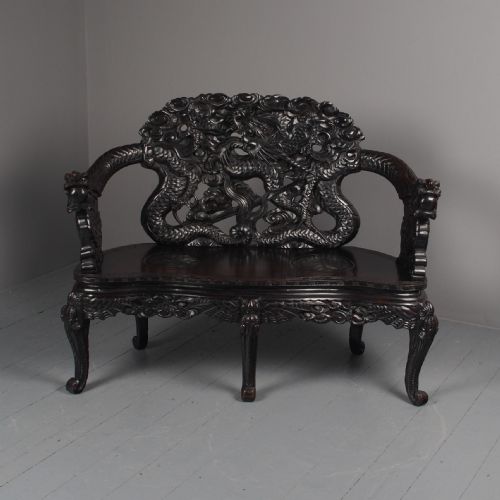


Carved Hardwood Hall Bench
A carved hardwood hall bench is a striking structural seat that brings immediate architectural presence and deep relief carving to an entryway.
Carved Hardwood Hall Bench
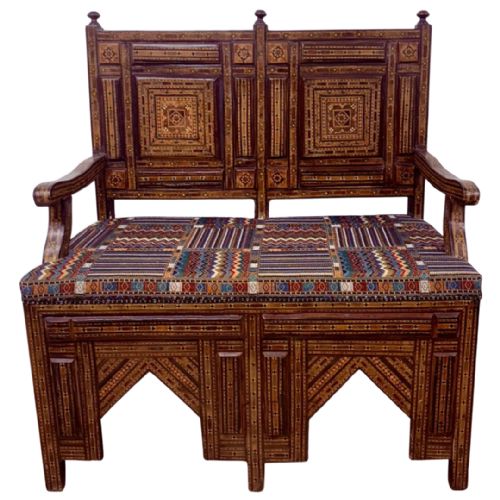
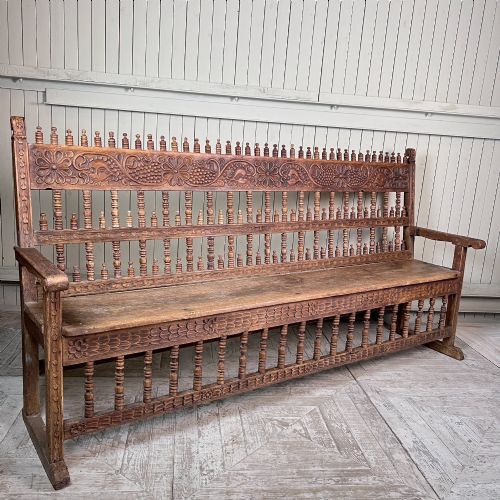
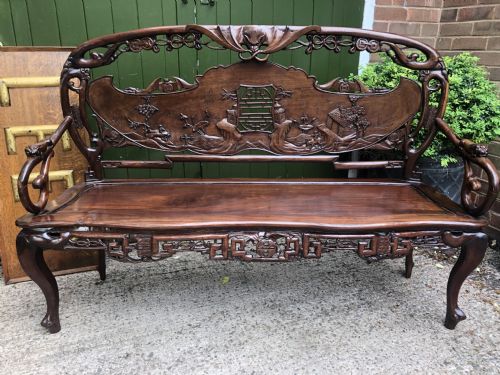
A carved hardwood hall bench is a substantial seating form designed primarily for passage spaces, featuring robust timber construction and ornamental carving. These pieces appear predominantly in Chinese Qing Dynasty styles and Spanish Colonial forms, spanning the eighteenth, nineteenth, and early twentieth centuries.
The selection on this page centres heavily on Chinese examples, including traditional forms, horseshoe designs, and corner seats. Alongside these sit large Spanish Colonial interpretations from the late eighteenth and early nineteenth centuries, offering distinct regional carved motifs.
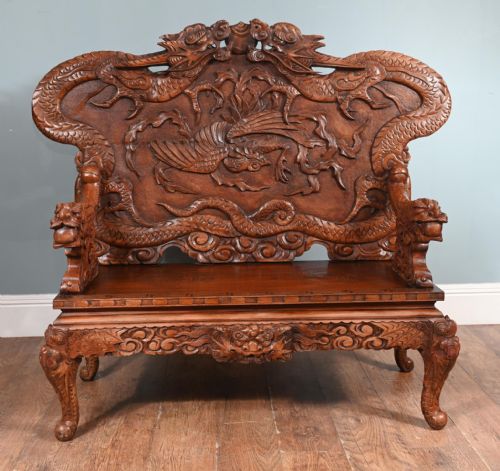
Makers utilised various timber species such as elm, rosewood, and blonde wood, occasionally combining carved structural elements with lacquer and pigment finishes. Buyers encounter everything from straightforward nineteenth-century hardwood seating to elaborate nineteenth-century cinnabar lacquer and dragon-carved variants.
How they were made
Carpenters constructed these benches using dense hardwoods, working with elm, rosewood, and ebonised timber to ensure structural stability for daily use. Joinery techniques relied on traditional framing methods that accommodated heavy carving across seats, backs, and panels.
Surface treatments involved meticulous hand-carving alongside applied layers of lacquer and pigment, notably seen in cinnabar finishes. Artisans rendered complex dragon motifs and traditional oriental patterns directly into the wood substrate or the layered lacquered surfaces.
Several benches feature carved dragons staring intently across the hallway, ensuring your coats are watched by mythical beasts.
What varies in quality
Quality in a carved hardwood hall bench rests upon the depth, crispness, and artistic execution of the relief carving. Pieces exhibiting deeply undercut dragons or intricate motifs display a higher tier of craftsmanship than simpler, shallower surface incisions.
The choice and preparation of the material also dictate the standard of the piece, with dense rosewoods and finely grained blonde woods commanding greater presence. Additionally, the integration of supplementary finishes like cinnabar lacquer elevates a bench from a functional seat to a work of decorative art.
The Carved Hardwood Hall Bench Glossary
- Hardwood
- Timber derived from broad-leaved trees, offering exceptional density and durability. These woods resist heavy wear, making them ideal for structural furniture subjected to daily seating.
- Cinnabar lacquer
- A traditional decorative coating built from multiple layers of coloured resin derived from the lacquer tree. Craftsmen carve intricate designs directly into the hardened layers once sufficient depth is achieved.
- Qing Dynasty
- The final imperial dynasty of China, lasting from the seventeenth to the early twentieth century. Furniture from this era often incorporates symbolic motifs such as dragons and elaborate floral relief.
- Horseshoe bench
- A seating form characterised by a continuous curved top rail that sweeps outward to form armrests. This ergonomic design requires advanced woodworking skill to join the curved members securely.
Carved Hardwood Hall Bench: Frequently Asked Questions
Where should I place a hall bench?
These benches suit entrance halls, corridors, and large landings where their architectural form provides both seating and visual impact. Ensure adequate floor space so the carved backrests and arms remain unobstructed.
Because of their substantial hardwood construction, they anchor a room effectively and stand well against neutral walls or wood-panelled interiors.
How do I clean carved hardwood?
Dust the intricate carvings regularly using a soft-bristled brush to prevent particulate buildup in the recessed areas. Avoid harsh chemical cleaners that might strip natural polish or damage lacquer finishes.
Applying a microcrystalline wax sparingly helps maintain the timber's sheen without attracting dust to the carved details.
Are these benches comfortable for sitting?
Most antique hall benches were designed primarily for formal reception and short-term seating rather than lounging. Their upright wooden seats and rigid backs encourage an upright posture.
Adding custom cushions can soften the seat if you intend to use the bench for extended periods in a dining or living space.
How can I tell the period of a bench?
Examine the timber shrinkage, tool marks, and wear patterns on the seat surface and joints to gauge age. Eighteenth and nineteenth-century pieces display hand-tooled joinery and patination developed over generations of use.
Stylistic markers, such as specific Qing Dynasty dragon motifs or Spanish Colonial structural lines, also help narrow down the manufacturing era.