
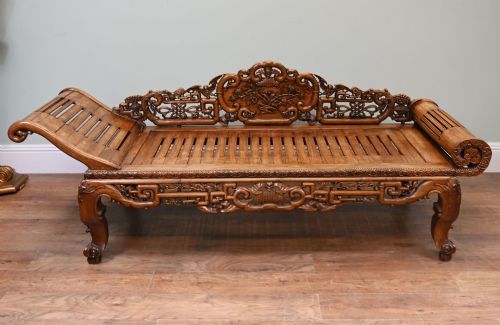


Antique Oriental Daybed
These antique oriental daybed pieces are versatile items of furniture designed for rest and display, offering historic craftsmanship for modern rooms.
Antique Oriental Daybed
An antique oriental daybed represents a diverse category of seating and sleeping furniture originating from China across the nineteenth and early twentieth centuries. When searching for an antique oriental daybed, buyers encounter forms ranging from low kang tables and childs beds to large marriage beds and open benches.
Makers utilised traditional construction methods to build robust daybeds, settle dining suites, and four-poster sleeping platforms. These pieces bridge the gap between functional seating and decorative historic sculpture within an interior.
Materials and construction
Carpenters constructed these daybeds using dense Asian hardwoods such as elm, mahogany, huanghuali, and huali, ensuring structural longevity. Artisans frequently applied red lacquer finishes and intricate carvings to transform plain timber into elaborate furnishings.
Selected examples incorporate contrasting materials like marble inserts, brass fittings, and woven rattan panels to provide textural variety. Joinery techniques allowed frames to hold heavy use without relying on modern metal fasteners.
Represented styles include Qing Dynasty, Chinese Qing Dynasty style, and the Chinese Republic period.
Assessing the range
Quality separates standard utility furniture from pieces bearing refined Qing Dynasty carving and deep scroll-end details. The choice of primary timber shifts the character of a daybed, with rarer woods displaying superior grain patterns and density.
The preservation of original red lacquer surfaces and intricate decorative panels dictates the visual impact of an item. Superior pieces retain crisp joinery and authentic hardware that reflect the skill of the original workshop.
The Antique Oriental Daybed Glossary
- Kang table
- A low platform table placed on a traditional heated brick bed or used independently for resting and dining. These items often feature carved scroll ends.
- Marriage bed
- An enclosed or semi-enclosed wooden bed structure historically given to newlyweds, featuring extensive panels and decorative lacquer work.
- Huali
- A fragrant and highly figured Chinese hardwood utilised in fine classical furniture construction. It yields rich reddish-brown tones.
- Settle
- A wooden bench with a high back and solid arms designed to block drafts in historic rooms. They appear in broader Chinese dining and hall suites.
- Lacquer
- A durable glossy finish applied in multiple layers from natural tree sap. It protects the underlying timber while providing a vibrant red or black surface.
Antique Oriental Daybed: Frequently Asked Questions
Where were these daybeds placed?
These pieces functioned primarily within main living quarters, reception halls, or sleeping chambers. Families utilised them for daytime resting, reading, and formal entertaining.
In modern homes, they serve equally well as daybeds in guest rooms or statement seating within large living spaces.
How do I care for lacquer?
Lacquer surfaces require protection from direct sunlight and extreme humidity fluctuations to prevent cracking. Regular dusting with a soft, dry cloth preserves the original sheen.
Avoid chemical polishes and abrasive cleaners that can damage the historic finish.
What is a kang table?
A kang table is a low piece of furniture traditionally used upon heated platforms in northern Chinese homes. They provided a stable surface for writing, dining, and drinking tea.
Today, collectors frequently repurpose these low tables as unique coffee tables.
How do I date a piece?
Dating relies upon examining the timber species, joinery construction, and stylistic motifs present on the frame. Nineteenth-century examples often display heavy hardwood construction and traditional Qing carving styles.
Later pieces from the Republic era incorporate transitional design elements influenced by changing domestic fashions.