




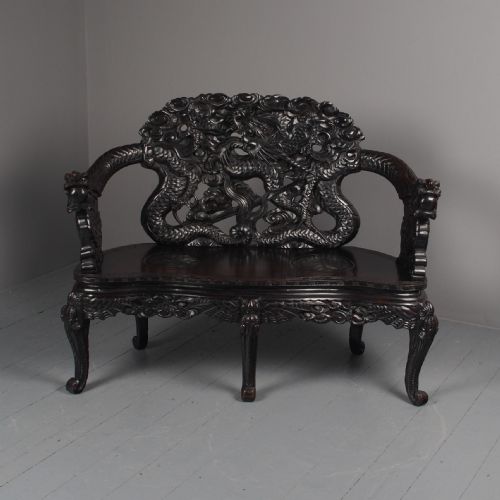
Dark Hardwood Sofa
A dark hardwood sofa brings deep grain and substantial form to an interior, drawing on nineteenth-century colonial and Chinese export traditions.
Dark Hardwood Sofa
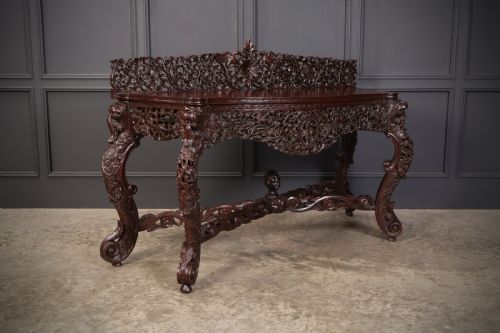
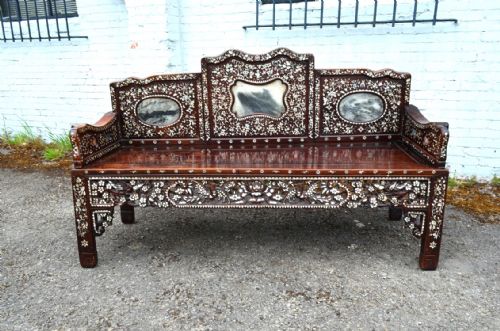
A dark hardwood sofa encompasses nineteenth-century seating, daybeds, and benches created across China, India, Ceylon, and Burma. These forms include Anglo-Indian carved wooden sofas, Chinese export benches inlaid with mother-of-pearl, and cane-paneled daybeds.
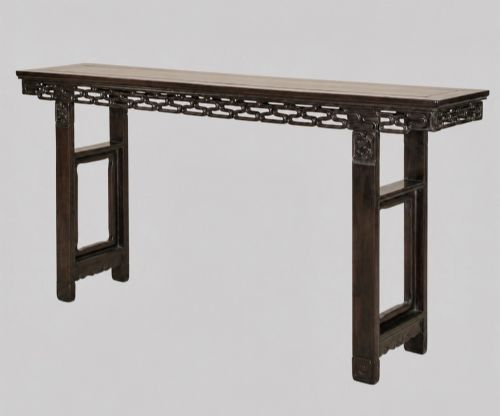
Buyers searching for a dark hardwood sofa will most frequently encounter nineteenth-century Chinese hardwood benches and Anglo-Indian carved seating. The selection balances sturdy utilitarian hall benches with decorative Qing Dynasty altar tables and seating suites.
Origins span distinct cultural traditions, uniting traditional Chinese craftsmanship with Anglo-Burmese and Anglo-Indian colonial aesthetics. The common thread across these pieces is dense timber framing paired with intricate hand carving.
How they were made
Construction relies on dense timbers such as padauk, huanghuali, and general hardwoods, often shaped by skilled hands into robust frames. Artisans utilised mortise and tenon joinery to ensure structural stability without relying on modern fasteners.
Surface enrichment frequently involves intricate relief carving depicting traditional motifs, alongside targeted embellishments like mother-of-pearl inlay. Caning and upholstery provide contrasting textures to the heavy wood structures.
Working with heavy hardwoods demanded specialised cutting and chiselling techniques to achieve deep, crisp details in the timber. Finished surfaces were smoothed and polished to highlight the natural grain and dark tone of the wood.
Several benches secretly double as conversation starters thanks to surprisingly chatty mother-of-pearl dragons peering from the backrests.
What varies in quality
Quality rests in the crispness and depth of the hand carving across the wooden frame, alongside the integrity of the joinery. Superior examples maintain structural rigidity and display precise alignment in complex joinery without undue movement.
The choice and execution of decorative elements, such as the precision of mother-of-pearl inlay or the tautness of cane work, separate finer pieces from simpler items. Timber selection also plays a role, with choice woods exhibiting superior grain patterns and uniform dark colouration.
The Dark Hardwood Sofa Glossary
- Hardwood
- Dense timber derived from angiosperm trees, valued for its durability and strength in antique furniture construction. It provides the heavy structure essential for nineteenth-century seating.
- Padauk
- A heavy tropical hardwood known for its deep colour and stability, frequently utilised in Burmese carved console tables and seating. This timber takes a fine finish and holds intricate carved details well.
- Altar Table
- A traditional long, narrow table form originating in China, often featuring upturned ends and substantial hardwood construction. These tables share aesthetic roots with related seating forms.
- Cane
- Woven material made from the outer portion of rattan palms, used to create breathable panels in seating backs and seats. It offers a lighter textural contrast to heavy hardwood frames.
Dark Hardwood Sofa: Frequently Asked Questions
How do I clean a dark hardwood sofa?
Dust the timber regularly with a soft, dry cloth to prevent particulate buildup in the carved recesses. Avoid harsh chemical cleaners that can strip the historic finish from the wood.
Condition the wood periodically with appropriate furniture wax to nourish the grain and maintain its deep tone. Protect cane and upholstered elements by keeping them away from direct sunlight and excessive moisture.
Are these sofas comfortable for daily use?
Many nineteenth-century examples feature firm wooden seats or cane panels designed for upright posture rather than deep lounging. Adding loose cushions can adapt these historic benches for contemporary seating comfort.
Daybeds and padded suites offer alternative configurations that accommodate reclining and relaxation. The solid hardwood frames provide dependable structural support for everyday living.
How do I date a Chinese hardwood bench?
Examine the construction methods, tool marks, and joinery style to assess the age of the piece. Nineteenth-century examples often display hand-cut joinery and signs of genuine age-related wear in the timber.
Compare decorative motifs and wood types against known nineteenth-century export styles, such as Qing Dynasty carvings or mother-of-pearl inlay techniques. Consistent patina across high-touch areas also indicates historical use.
Will a dark hardwood sofa fit modern interiors?
The rich tones and clean lines of nineteenth-century hardwood seating complement both traditional and contemporary interior schemes. Their sculptural forms function well as statement pieces in hallways, living rooms, or bedrooms.
Pairing these benches with neutral textiles and modern lighting highlights their craftsmanship without overwhelming a room. Their narrow profiles often make them practical for spaces where bulky modern sofas do not fit.