



Qing Dynasty Buddha
A qing dynasty buddha is a ritual sculpture or temple deity, brought home for its sculptural depth and quiet presence.
Qing Dynasty Buddha
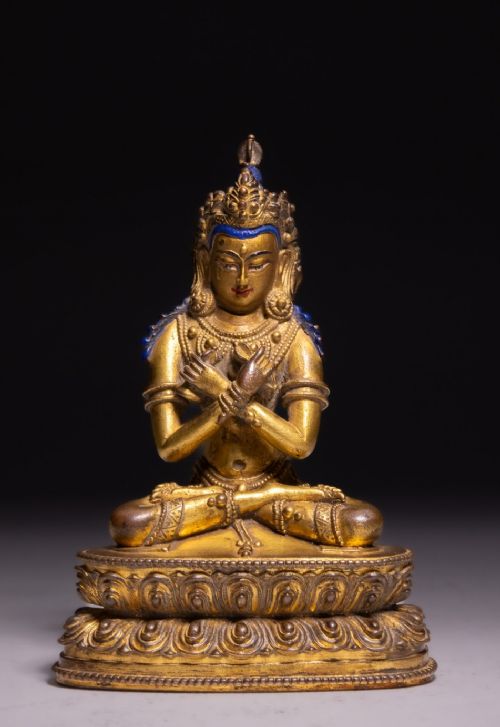
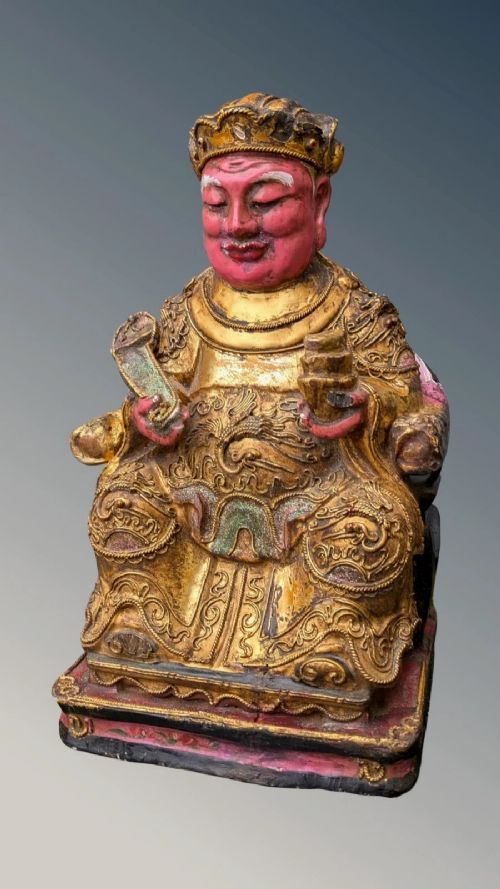
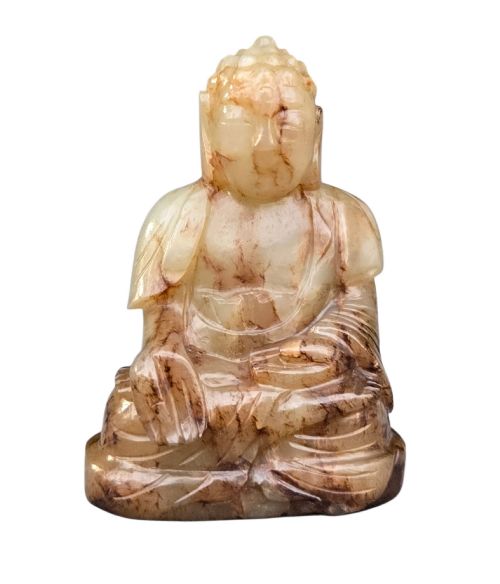
When you search for a qing dynasty buddha, you encounter ritual sculptures and temple figures spanning wood, bronze, and stone. The majority of pieces on this page date from the nineteenth century, alongside eighteenth-century works and transitional pieces from the late Ming period. Forms range from seated figures and temple guardians to standing deities and reclining forms.
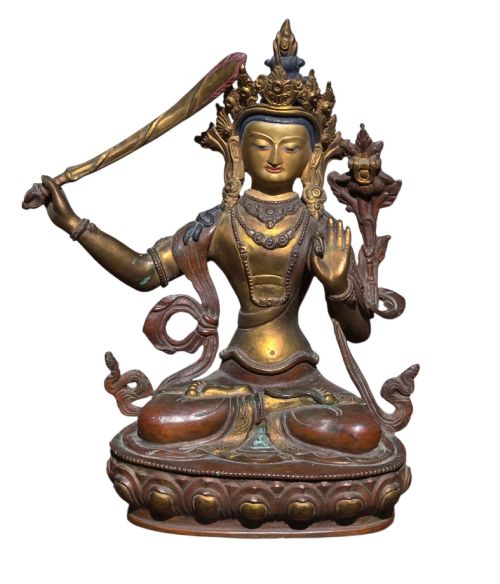
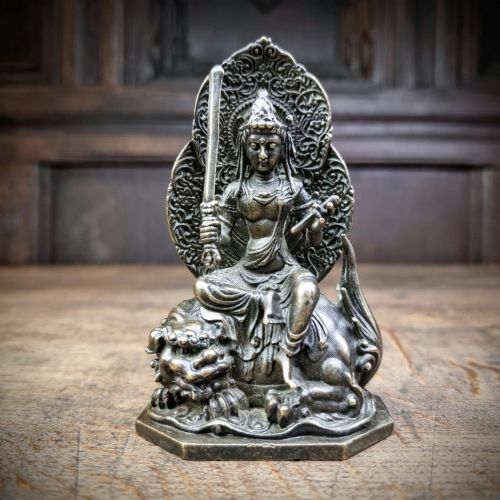
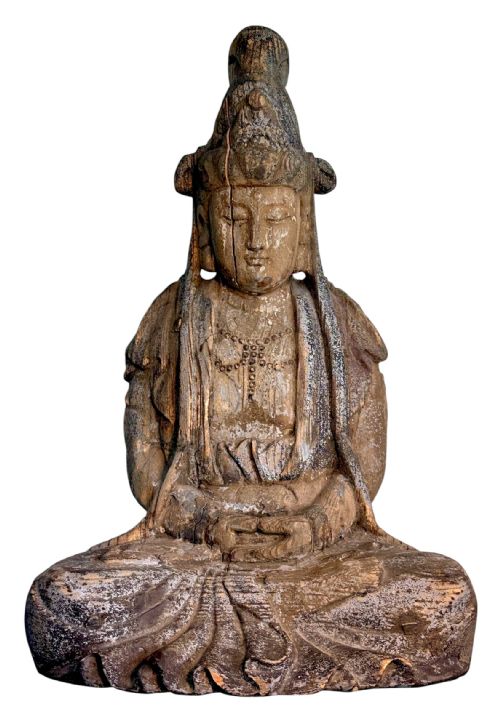
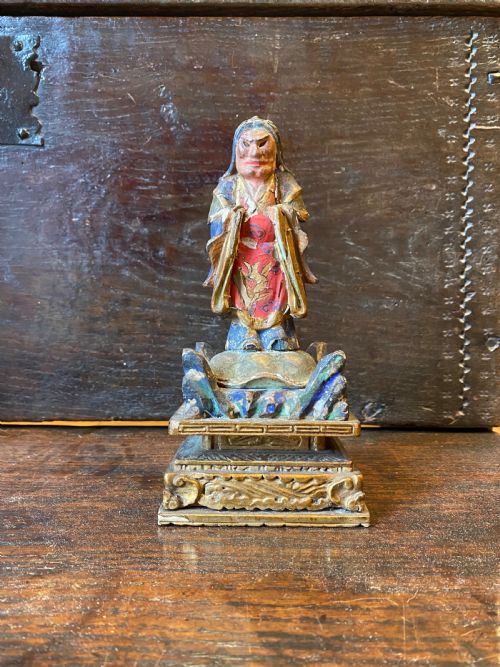
Wooden examples frequently retain traces of pigment, gesso, or gold leaf applied to the carved surface. Metal figures include gilt bronze and iron, often depicting specific deities such as Guanyin, Manjushri, or Budai. Collectors encounter both large monumental temple pieces and smaller domestic figures accompanied by wooden stands.
How they were made
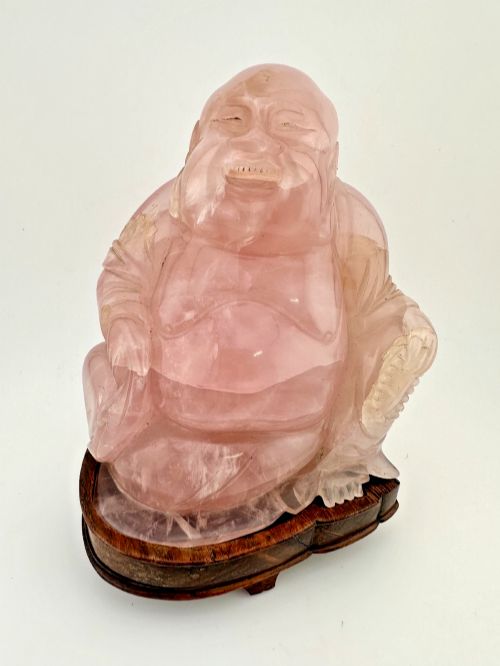
Metal statues utilised bronze casting techniques, subsequently fire-gilded with gold leaf or left with dark patination. Stoneworkers carved jade, rose quartz, and turquoise-coloured Peking glass into small pendants and figural groups. Ceramic and porcelain pieces, including Shiwan glazed figures, underwent high-temperature kiln firing with specialised mineral glazes.
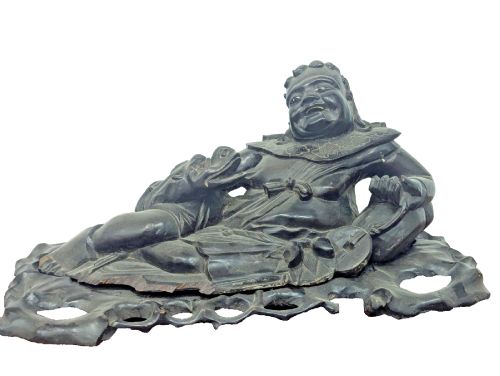
One corpulent Buddha appears in a delightfully relaxed reclining posture.
What varies in quality
The retention of original polychrome pigment, gold leaf, and gesso substantially elevates a piece's material depth. Figures complete with their original carved wooden stands demonstrate greater historical cohesion than those separated from their mounts.
The Qing Dynasty Buddha Glossary
- Budai
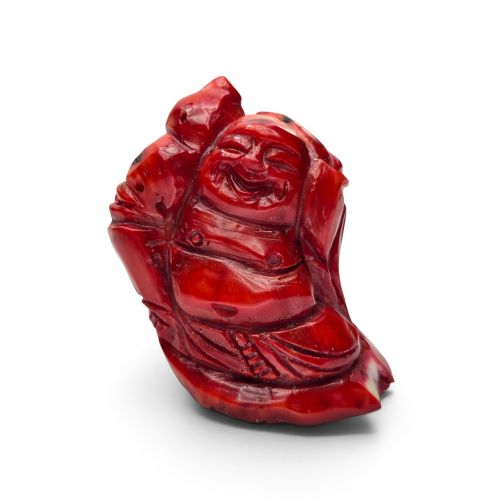
- A corpulent, laughing manifestation of Maitreya Buddha, often depicted with a sack and beads. This popular subject appears frequently in carved hardwood and rose quartz.
- Guanyin
- The bodhisattva of compassion, widely represented in Chinese sculpture across wood, bronze, and ceramic. Figures often show the deity seated in royal ease or standing upon a lotus base.
- Sino-Tibetan
- A stylistic crossover blending Chinese manufacturing techniques with Tibetan Buddhist iconography. Pieces from this tradition frequently employ gilt-bronze casting.
- Polychrome
- The application of multiple colours of paint to a carved wooden or plaster surface. This finish often survives only in fragments on temple figures.
- Gilt Bronze
- Metal sculpture coated with a thin layer of gold or gold amalgam. Surviving examples display varying degrees of warm metallic lustre.
Qing Dynasty Buddha: Frequently Asked Questions
What materials were used for these sculptures?
Artisans utilised a wide array of organic and mineral substances depending on the intended function of the piece. Wood, hardwood, boxwood, and iron appear alongside gilt bronze, jade, rose quartz, and Peking glass.
Surface finishes frequently incorporate gesso, polychrome pigment, and gold leaf. Many wooden temple figures combine several of these decorative layers.
Where were these figures placed originally?
Many larger sculptures served as temple guardians or focal points within Buddhist shrines and domestic ritual spaces. Monumental wooden guardians and iron busts stood in protected religious environments.
Smaller carved jade pendants, boxwood figures, and porcelain pieces functioned as portable objects of devotion or scholarly desk ornaments. Their scale determined whether they lived on altars or furniture.
How should I care for an antique wooden figure?
Keep wooden and polychrome sculptures away from direct sunlight, heating vents, and rapid humidity fluctuations. Stable environmental conditions preserve fragile gesso and pigment layers.
Dust the carved surfaces gently with a soft, dry brush rather than applying liquid cleaners or polishes. Allowing the natural patina to remain safeguards the historical surface.