




Provincial Oak Longcase Clock
A provincial oak longcase clock brings regional cabinet-making and mechanical timekeeping together into a commanding domestic presence.
Provincial Oak Longcase Clock
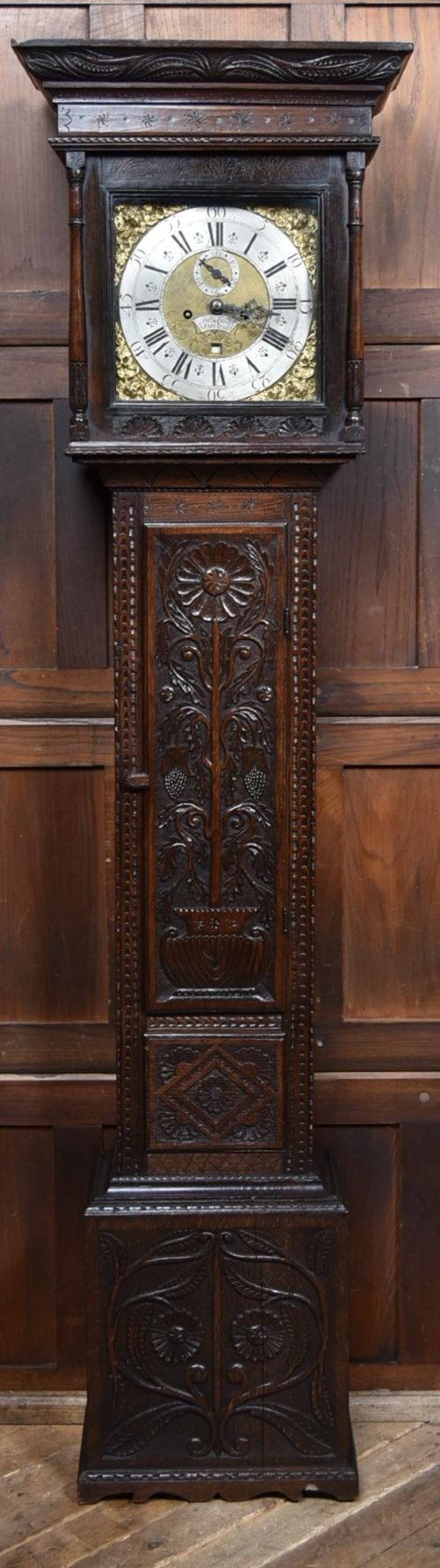
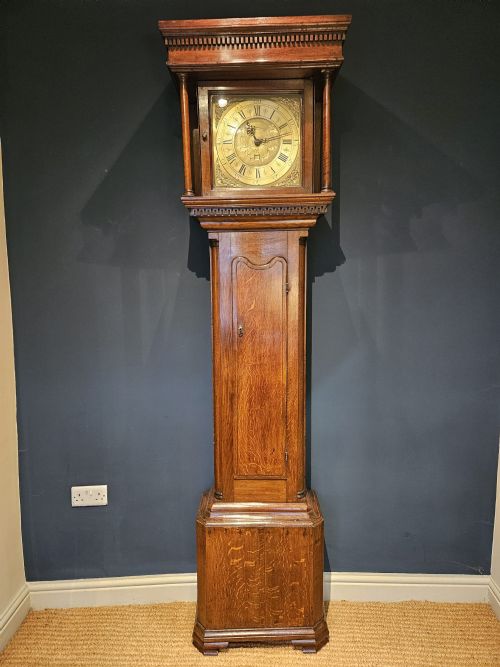
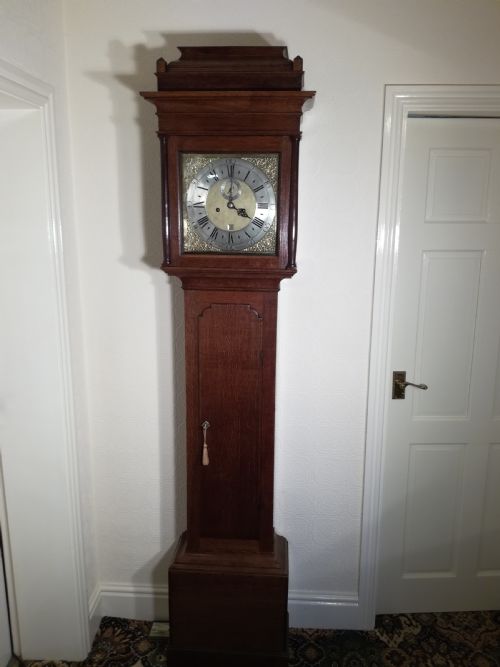
A provincial oak longcase clock stands as a substantial piece of vernacular furniture enclosing a weight-driven movement. These timepieces originate from various English regions, made by local horologists rather than metropolitan workshops.
Most examples found here date from the Georgian period and the eighteenth century, constructed primarily in oak with occasional mahogany accents. The forms range from small slim cases to imposing regional designs.
Makers such as John Smith, John Salmon, and James Draycot signed these works, tying specific clocks to towns from Macclesfield to Wells. The dial faces often feature brass and iron components protected behind glass doors.
How they were made
Cabinet-makers built the tall wooden housings using solid oak planks, frequently incorporating mahogany for contrasting details or richer grain. The timber was joined with traditional joinery methods suited to housing heavy movements securely.
Horologists constructed the internal gear trains in brass and iron, housing either thirty-hour or eight-day weights. Dials combined engraved brass plates with applied chapter rings and subsidiary indicators.
Makers span regional English towns including Nantwich, Halifax, Diss, and Wells.
What varies in quality
The refinement of the provincial cabinet-work dictates much of the distinction, separating simple vernacular boxes from finely proportioned cases with polished architectural detailing. Proportions matter significantly, with narrower slimline proportions often showing greater cabinet-making ambition.
Dial execution reveals the standing of the local maker, distinguishing standard engraved brass faces from more complex mechanisms like rolling moon phases. The presence of original signatures and regional provenance adds distinct character to the construction.
Jn° Smith Macclesfd·Haythornwaite Kirkby Lonsdale·John Salmon Nantwich·Stanyer Nantwich·Samuel Buxton Diss·James Draycot Wells·Herbert of Haversham·Richard Midgley of Halifax
The Provincial Oak Longcase Clock Glossary
- Longcase clock
- A tall pendulum clock enclosed in a wooden case designed to stand directly on the floor. These pieces are also historically termed grandfather clocks.
- Thirty-hour clock
- A movement requiring manual winding once a day, typically driven by a single weight or simpler train. Such mechanisms represent common provincial production.
- Eight-day clock
- A movement designed to run for just over a week between windings, requiring twin weights and more complex gearing. This format appears across eighteenth-century examples.
- Rolling moon
- A mechanical dial display tracking the phases of the lunar cycle behind a shaped aperture. This feature adds visual complexity to the clock face.
- Chapter ring
- The circular ring on the dial bearing the numerals for hours and minutes. These brass rings were often silvered and engraved by the maker.
Provincial Oak Longcase Clock: Frequently Asked Questions
How do thirty-hour and eight-day clocks differ?
Thirty-hour movements require winding once a day and typically use simpler internal gearing. Eight-day movements run for over a week and require more complex weight-driven trains.
Both types utilise brass and iron components housed within tall wooden cases. The winding duration reflects the technical ambition of the provincial maker.
Where were these clocks made?
Makers constructed these timepieces in towns and rural areas across England rather than in London workshops. Regional centres such as Nantwich, Halifax, and Diss produced distinctive local styles.
Signatures on the dial often record the specific town and maker. This regional diversity creates variations in both case design and dial ornamentation.
How do you date an oak longcase clock?
Dating relies on stylistic clues in the oak case construction and the layout of the brass dial. Eighteenth-century examples often display simpler proportions compared to later nineteenth-century pieces.
Maker signatures and regional attribution also help narrow down the period. Documentary records of provincial clockmakers provide precise working dates for many signed pieces.