
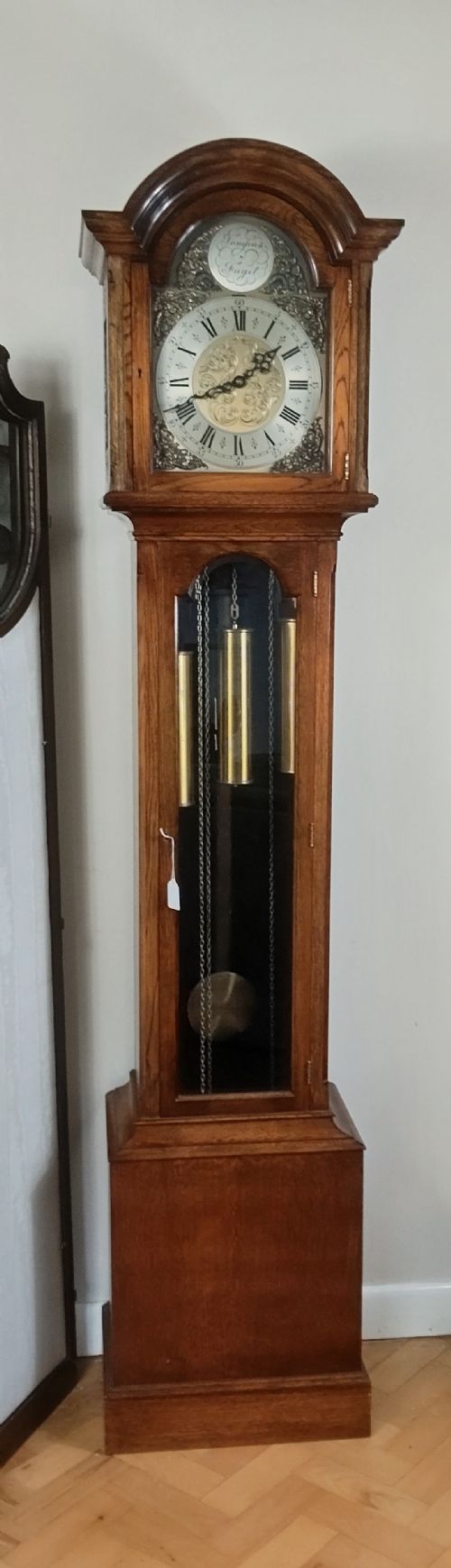


Warm Brown Grandfather Clock
A warm brown grandfather clock anchors a room with steady ticking and rich timber tones, offering timeless utility and heritage craftsmanship.
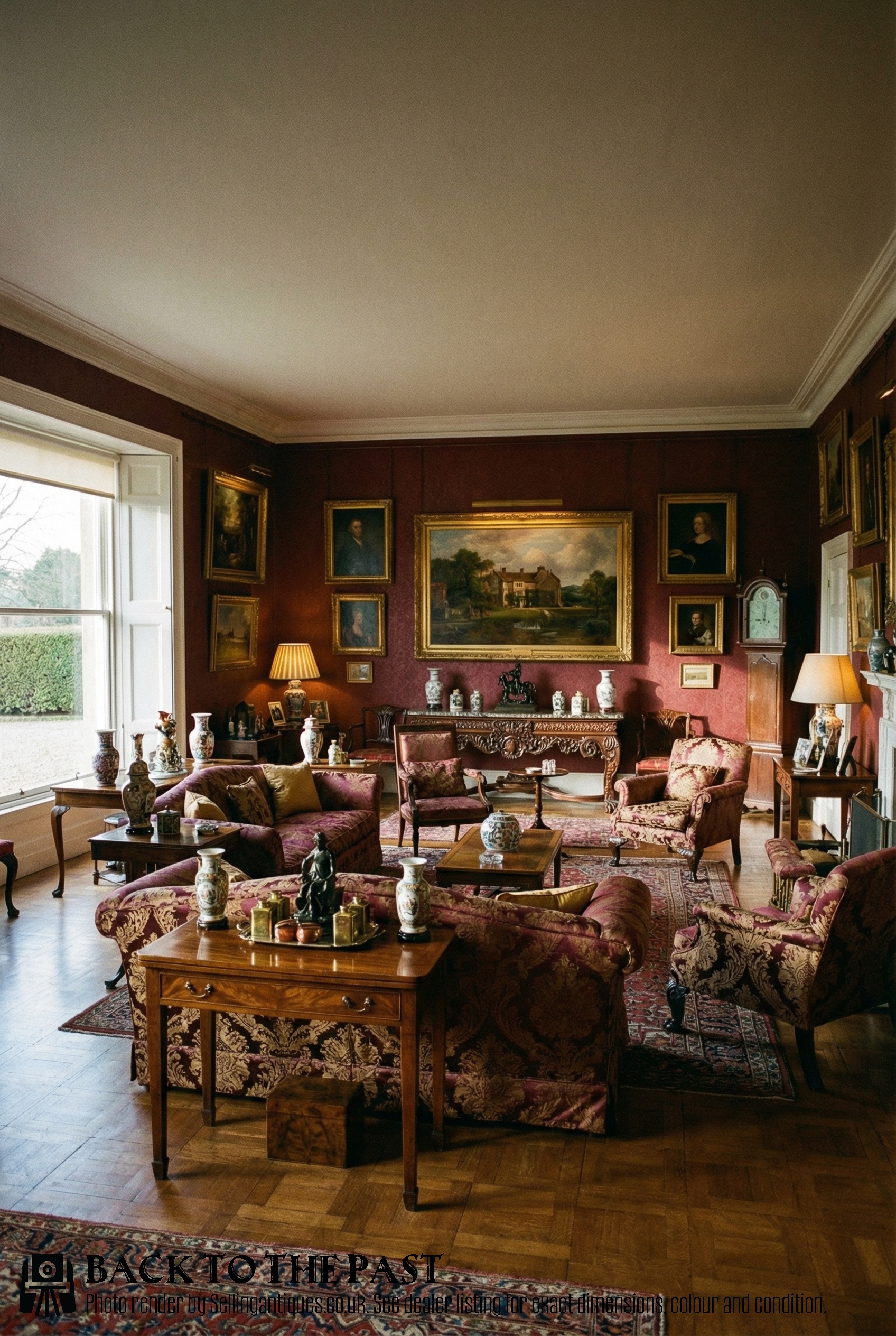
Warm Brown Grandfather Clock
A warm brown grandfather clock is a tall floor-standing timepiece housed in a timber case, designed to measure hours with pendulum precision. These items are frequently encountered in oak and mahogany across this selection.
The pieces listed here span the Georgian, Victorian, and 1930 periods, showing both regional Scottish origins and English workshops. Forms range from compact proportions to arched dial variations.
Buyers seeking a warm brown grandfather clock will most often find traditional longcase structures featuring brass or painted dials and glazed trunk doors. Oak examples from the Georgian era feature prominently.
Construction and materials
Cases were constructed primarily from solid oak and mahogany timbers, joined carefully to house the lengthy pendulum and weight-driven mechanisms safely. Timber selection provided the characteristic warm brown palette seen across the collection.
Dials combine brass chapter rings and engraved spandrels with glass protection in the hood, protecting delicate movement components while allowing a clear view of the time.
The listings span multiple centuries, uniting 18th-century pieces with 1930s examples through shared oak and mahogany materials.
Judging quality in longcase clocks
Quality rests upon the crispness of dial engraving and the fidelity of the timber case proportions, distinguishing utilitarian work from finer cabinetmaking. Dial signatures by known makers also elevate a piece.
The sophistication of the movement, such as quarter chiming or eight-day duration, separates standard timekeepers from more complex mechanisms designed for discerning households.
The Warm Brown Grandfather Clock Glossary
- Longcase clock
- The formal term for a grandfather clock, describing the tall wooden case that encloses the pendulum and weights. This name appears frequently in period documentation.
- George III
- A stylistic and historical period spanning the late eighteenth and early nineteenth centuries, noted for refined proportions in cabinetwork. Pieces from this era often feature mahogany or oak.
- Quarter chiming
- A mechanical capability allowing the clock to sound four distinct notes at each quarter hour before striking the full hour. This function requires a more intricate gear train.
- Chapter ring
- The circular ring on the clock face bearing the numerals for hours and minutes. These are frequently fashioned from brass.
Warm Brown Grandfather Clock: Frequently Asked Questions
Where should I place a grandfather clock?
Position your clock against a sturdy interior wall away from direct sunlight, central heating vents, and exterior doors to protect the timber and mechanism from sudden temperature fluctuations.
Ensure the floor beneath the clock is level so the pendulum swings evenly and keeps accurate time without catching on the case interior.
How do eight-day movements work?
An eight-day movement requires winding via the dial once a week using a specialised key to pull up the suspended internal weights that power the going train.
This mechanism offers convenience compared to daily-wound clocks while maintaining the traditional weight-driven operation characteristic of period longcases.
How do I identify a Georgian clock?
Examine the timber patination, dial layout, and case construction methods to spot Georgian characteristics, which often include solid oak panels and brass arched faces.
Proportions during this era favored understated elegance and robust joinery rather than heavy Victorian ornamentation.