
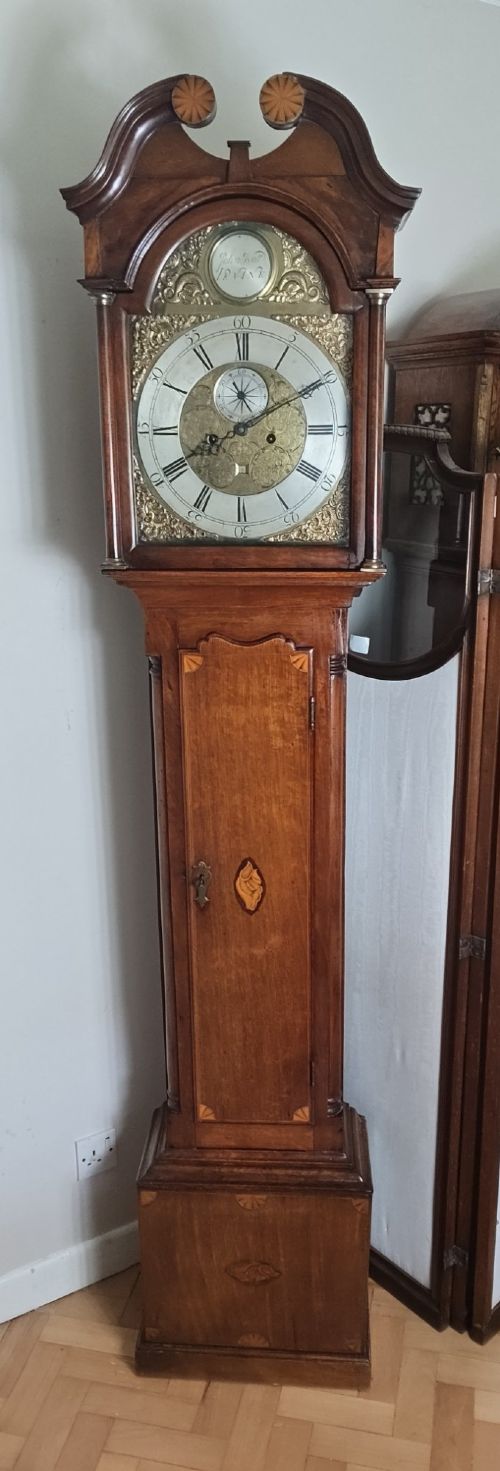
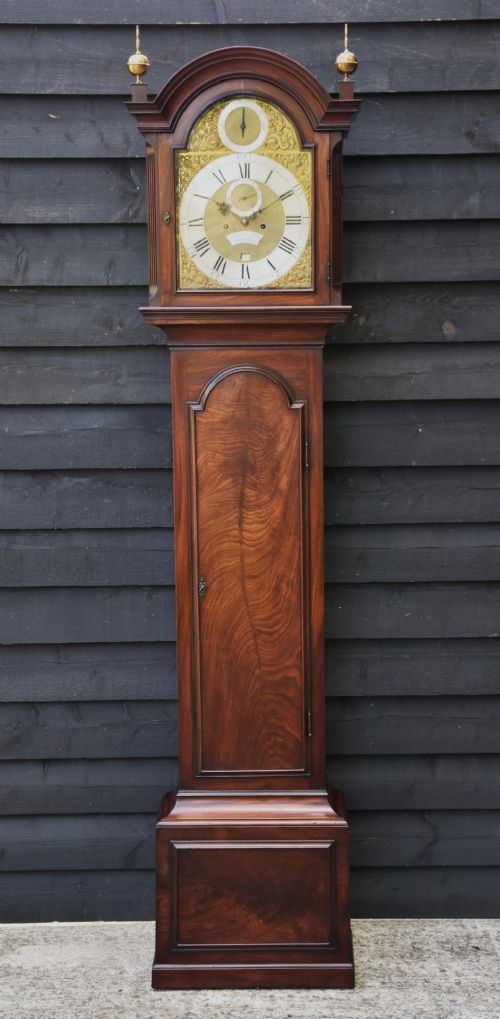
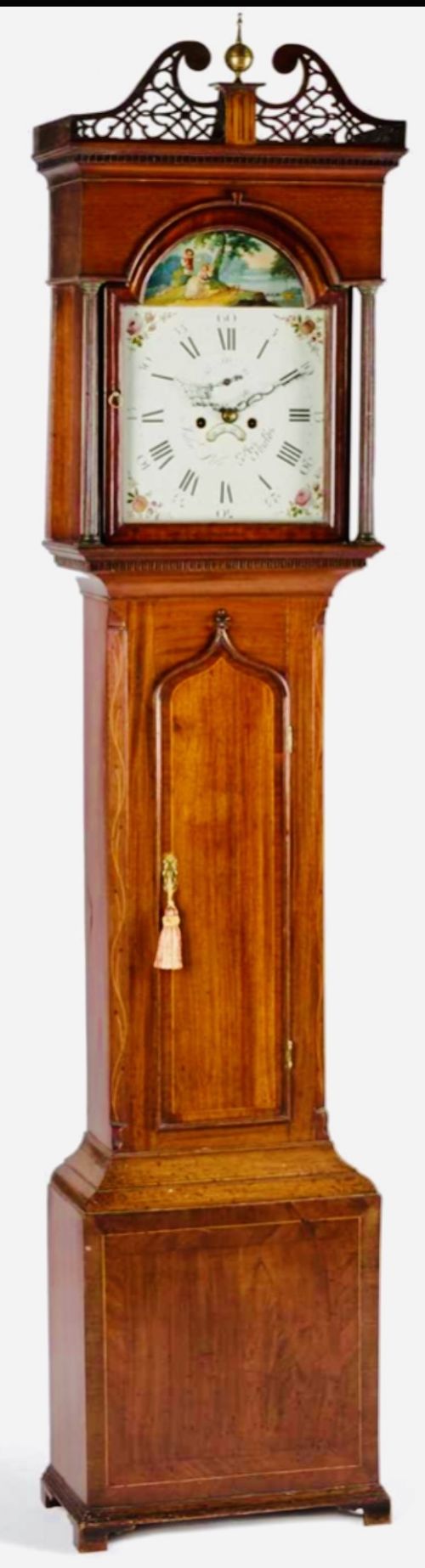
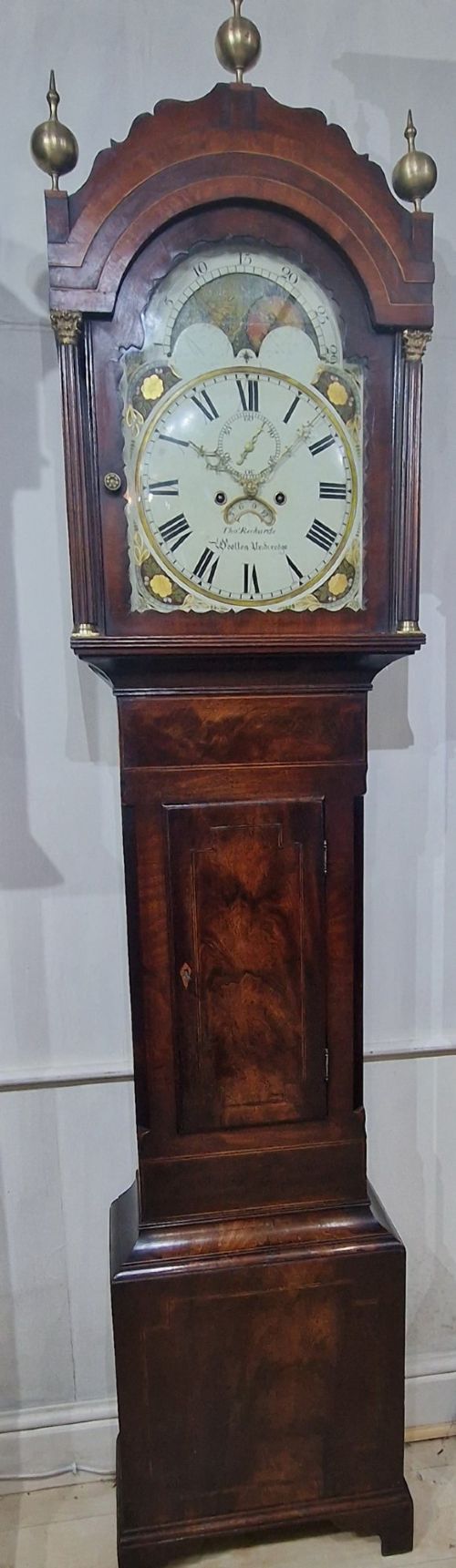


Brown Wood Tallcase Clock
A brown wood tallcase clock stands as a commanding vertical presence, bringing traditional mechanical timekeeping and rich timber grain directly into your home.
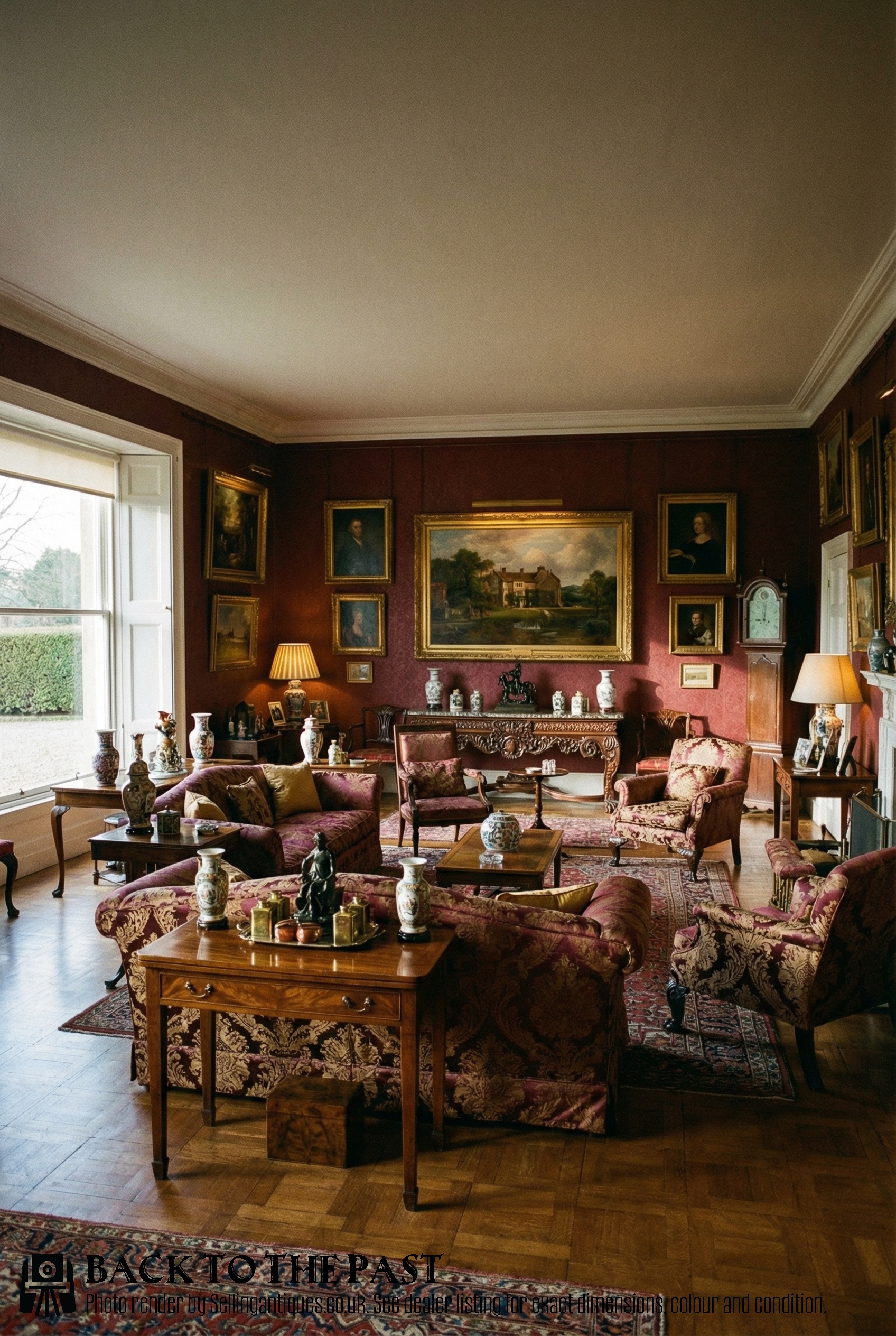
Brown Wood Tallcase Clock
A brown wood tallcase clock typically appears as a longcase or grandfather clock, designed to house weight-driven movements within a substantial timber enclosure. These vertical timepieces span periods from the Georgian era through to the Victorian and Edwardian periods, demonstrating enduring appeal in domestic interiors.
The versions most commonly met on this page combine traditional timber carcases with brass dials, often featuring eight-day movements or moon rollers. Regional British variations and occasional continental examples provide distinct regional character within the selection.
Materials and construction methods
Cabinet makers utilised dense hardwoods such as mahogany and oak for the structural carcases, frequently selecting figured veneers or flame mahogany to enhance the visual depth of the timber. Inlaid details, marquetry, and paterae motifs further decorate the exterior surfaces of these tall enclosures.
Internal mechanisms combine brass, steel, and iron components to drive the gear trains and striking systems, protected behind glass-fronted hood doors. Painted metal or enamel dials display the hours, often accompanied by subsidiary seconds dials or intricate moon phase mechanisms.
Brown Wood Tallcase Clock Retail Price Guide 2026
Typical asking prices for brown wood tallcase clock among the pieces listed under this phrase on Sellingantiques today, from the lower quarter to the upper quarter. They describe what is for sale here now, not the wider market.
Listings feature oak and mahogany timbers alongside brass dials, spanning the Georgian, Victorian, and Edwardian periods.
Distinctions in quality
The standard of the timber selection largely determines the visual impact of the case, with figured mahogany and well-matched oak veneers marking out finer examples. Cabinet joinery, the crispness of inlaid work, and the original proportions of the hood and base contribute significantly to the overall presence.
Horological refinement sets apart superior movements, particularly those incorporating musical plays, moon rollers, or complex dial artwork signed by known makers. The preservation of original mechanical parts and harmonious dial execution reflect the original investment in the clock's manufacture.
Rickards Wotton Under Edge·Richard Alexander Devizes·Dan Williams Crickhowell·W Prior Skipton·W M Smith Of Leith
The Brown Wood Tallcase Clock Glossary
- Longcase clock
- A tall, free-standing pendulum clock enclosed in a wooden case with a weighted movement. These pieces are frequently referred to as grandfather clocks.
- Moon roller
- A rotating cylinder behind an arched dial aperture that tracks the phases of the lunar cycle. This mechanical complication adds visual interest to the clock face.
- Paterae
- Small circular or oval decorative ornaments carved or inlaid into furniture surfaces. They appear frequently on neoclassical and Georgian timber designs.
- Drum head
- A circular dial housing positioned at the top of the tall wooden trunk. This distinctive case shape became particularly popular during the Victorian era.
Brown Wood Tallcase Clock: Frequently Asked Questions
How do I wind a tallcase clock?
Winding involves using a specialised crank key to pull up the hanging weights inside the trunk until they reach the top of the case. Care must be taken not to overwind the mechanism.
Different movements require attention at different intervals, typically ranging from daily running up to eight-day durations between winding sessions.
Where should I place a grandfather clock?
Position the clock against an interior wall away from direct sunlight, heating vents, and damp areas to protect the timber carcase and delicate wood veneers. A stable, level floor is essential.
Providing a solid foundation ensures the pendulum swings evenly and the escapement mechanism keeps accurate time without sticking.
How can I identify the period of a clock?
Examine the timber species, the style of the hood pediment, and the decorative motifs such as inlay, marquetry, or brass dial spandrels. Georgian examples often display architectural elements.
Signatures painted or engraved on the dial provide additional clues, sometimes naming the regional maker and town associated with the piece's origin.
What is an eight-day movement?
An eight-day movement requires winding approximately once a week, utilising two suspended weights that slowly descend as the gear train operates. This offered greater convenience than daily-wind alternatives.
Most high-quality tallcase clocks from the Georgian and Victorian periods adopted this system to balance domestic practicality with mechanical reliability.