
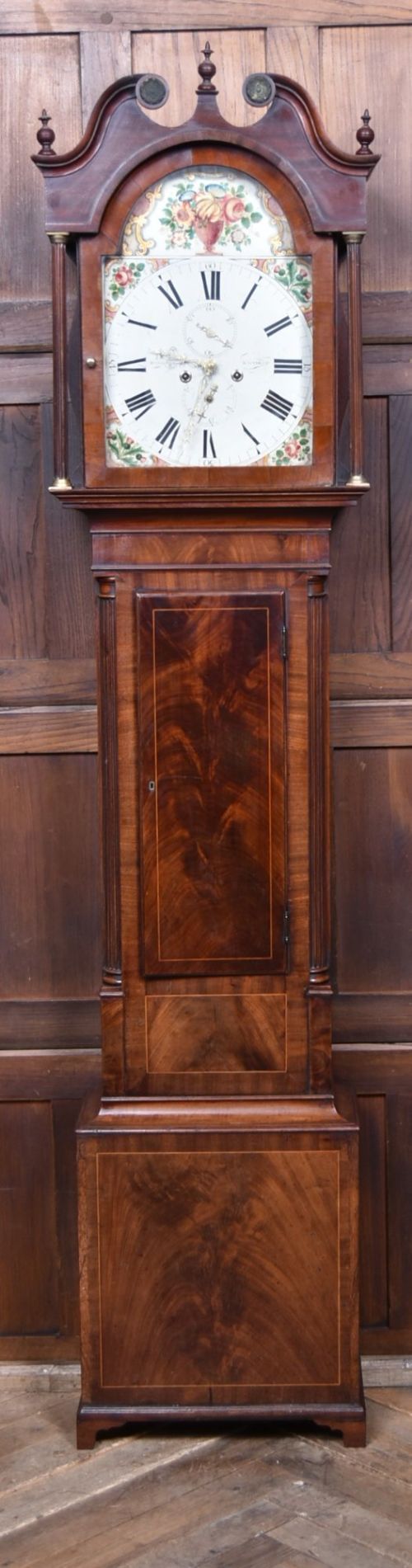
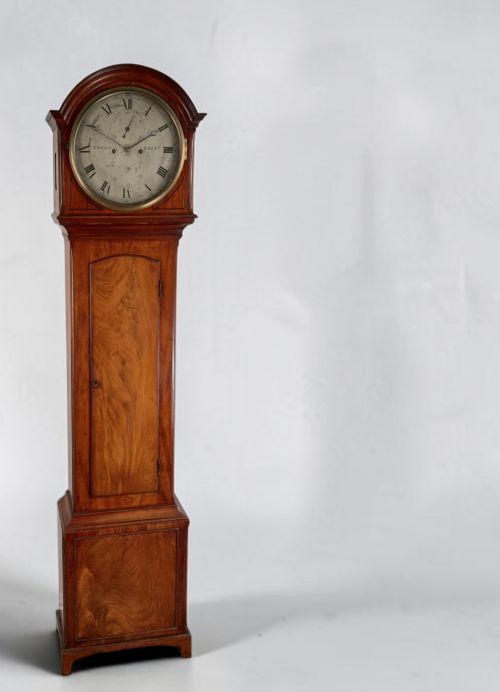
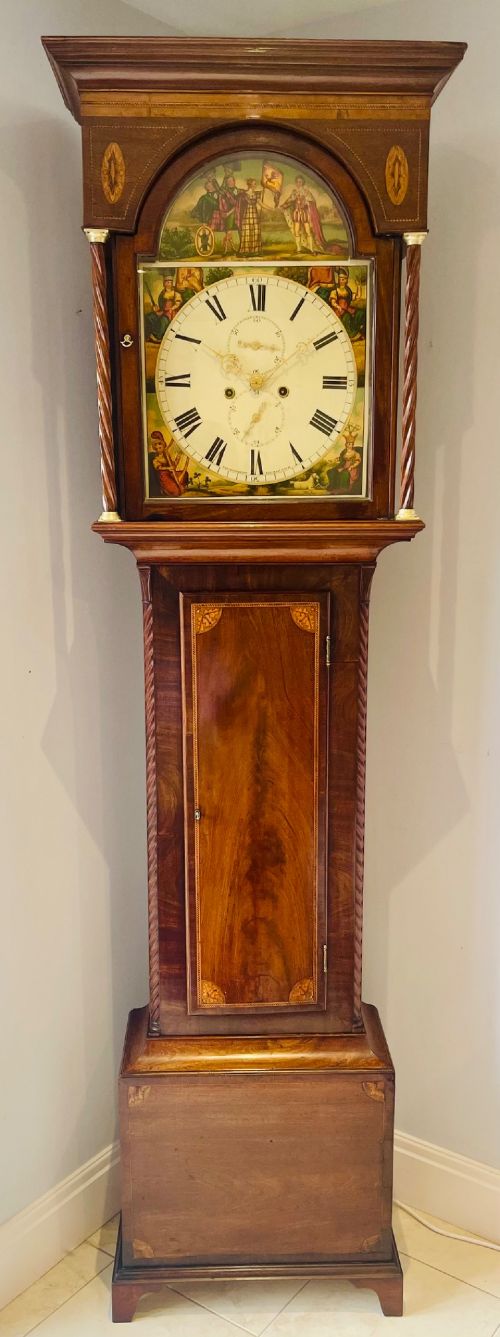
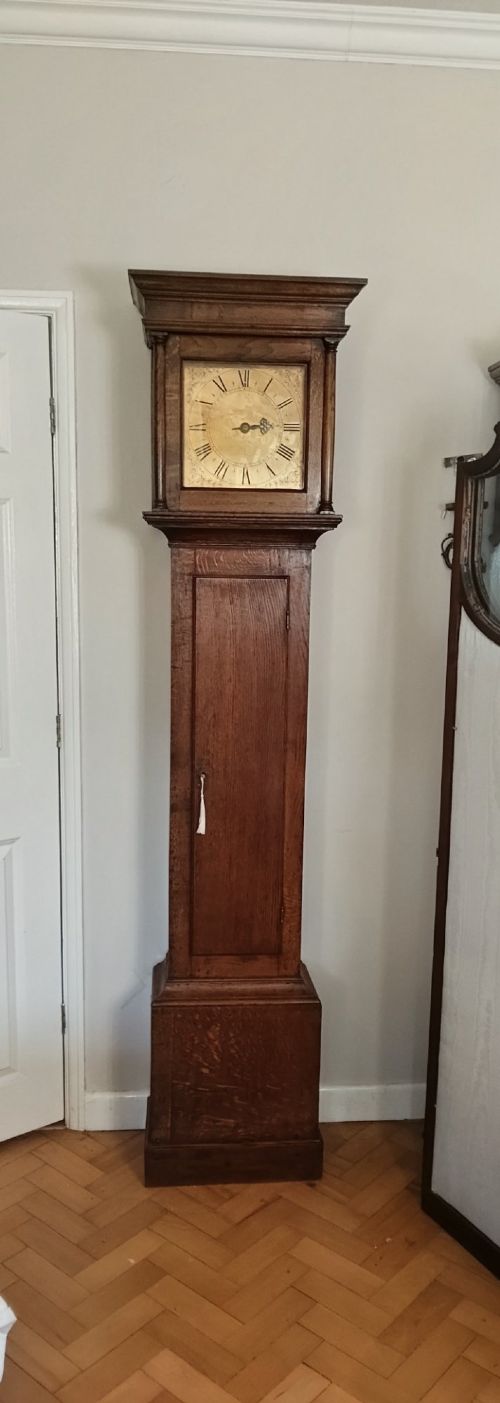


Wooden Floor Standing Clock
A wooden floor standing clock anchors a room with mechanical rhythm, offering grand proportions and traditional cabinetwork.
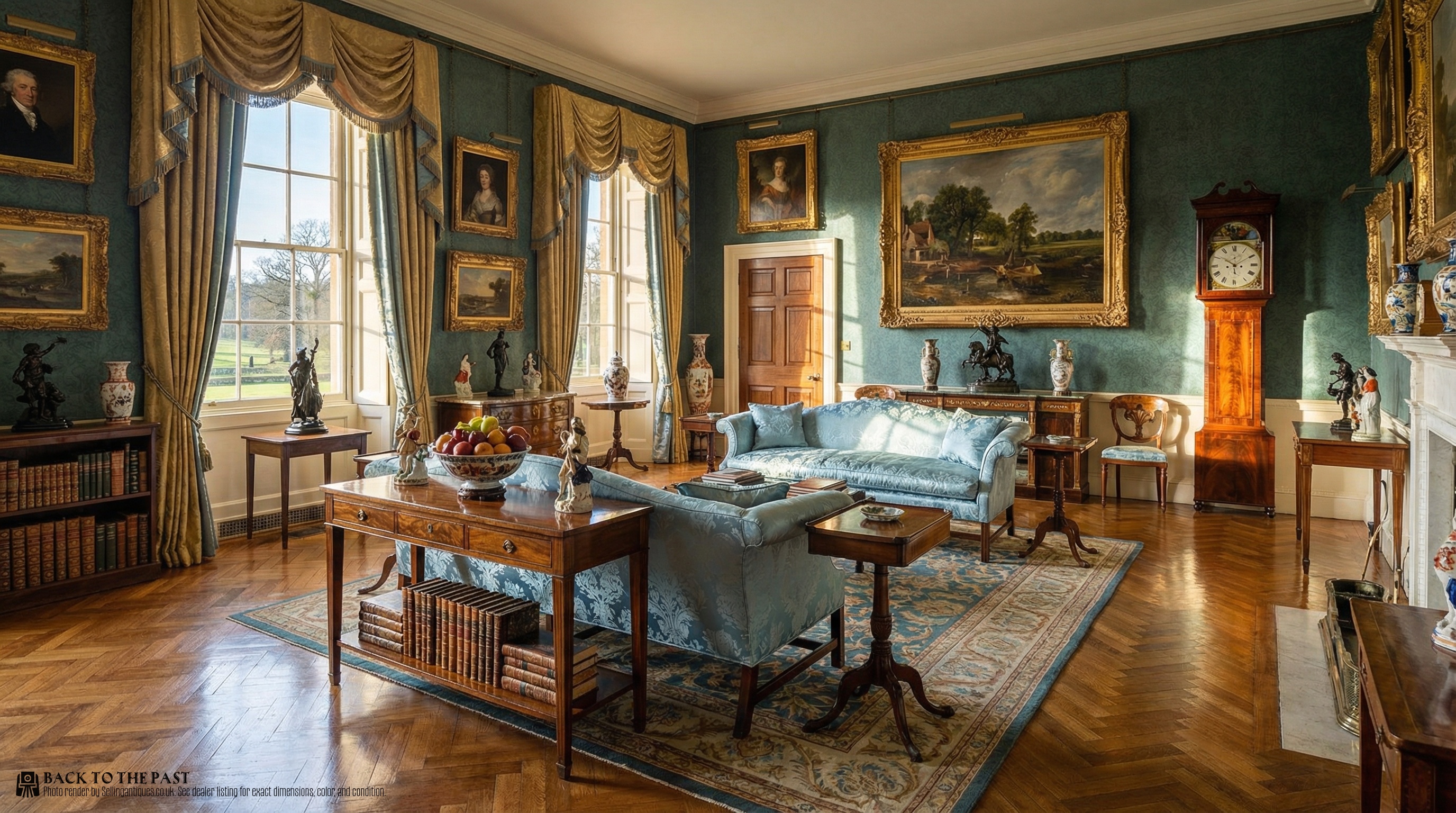
Wooden Floor Standing Clock
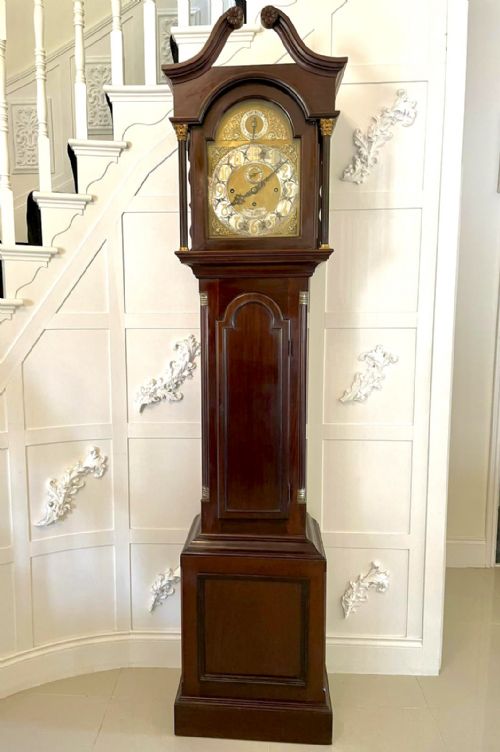
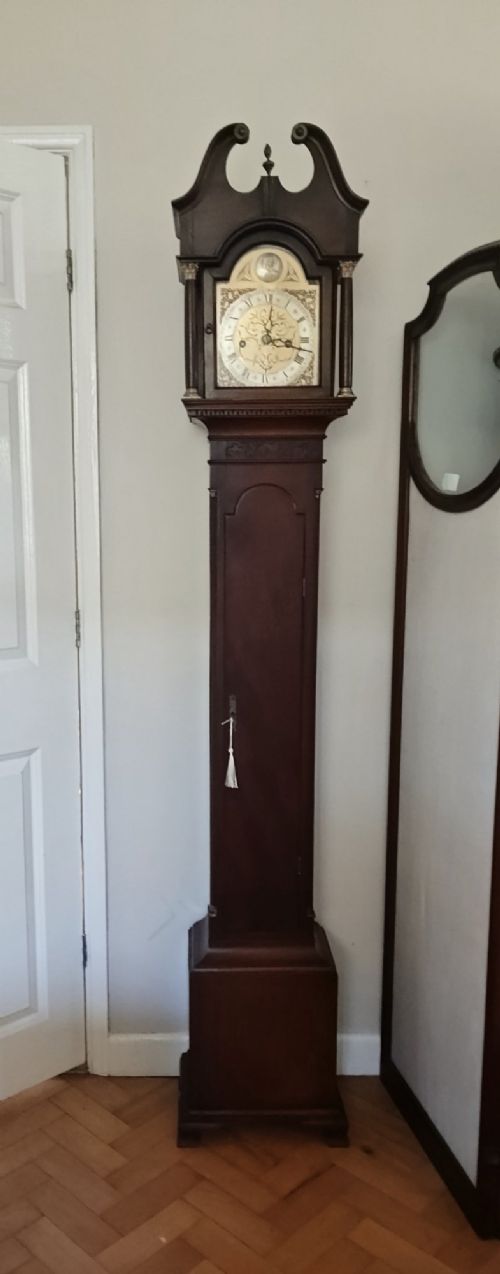
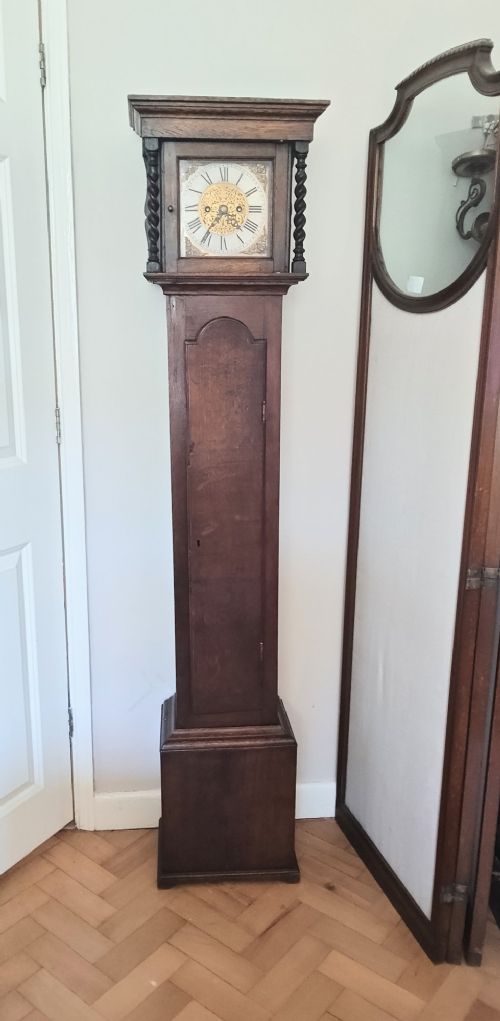
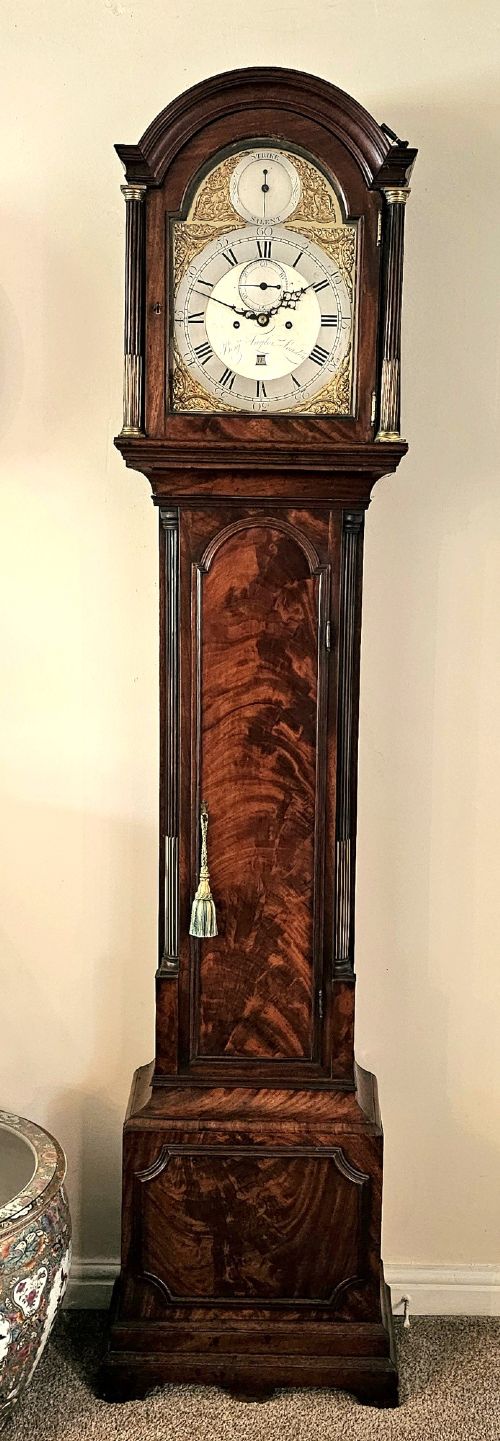
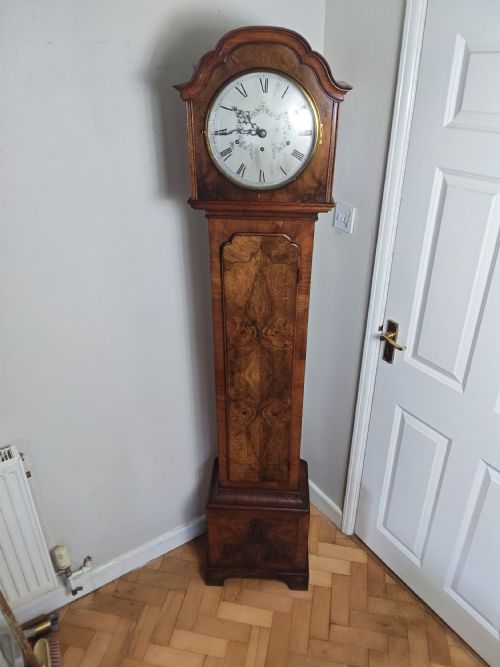
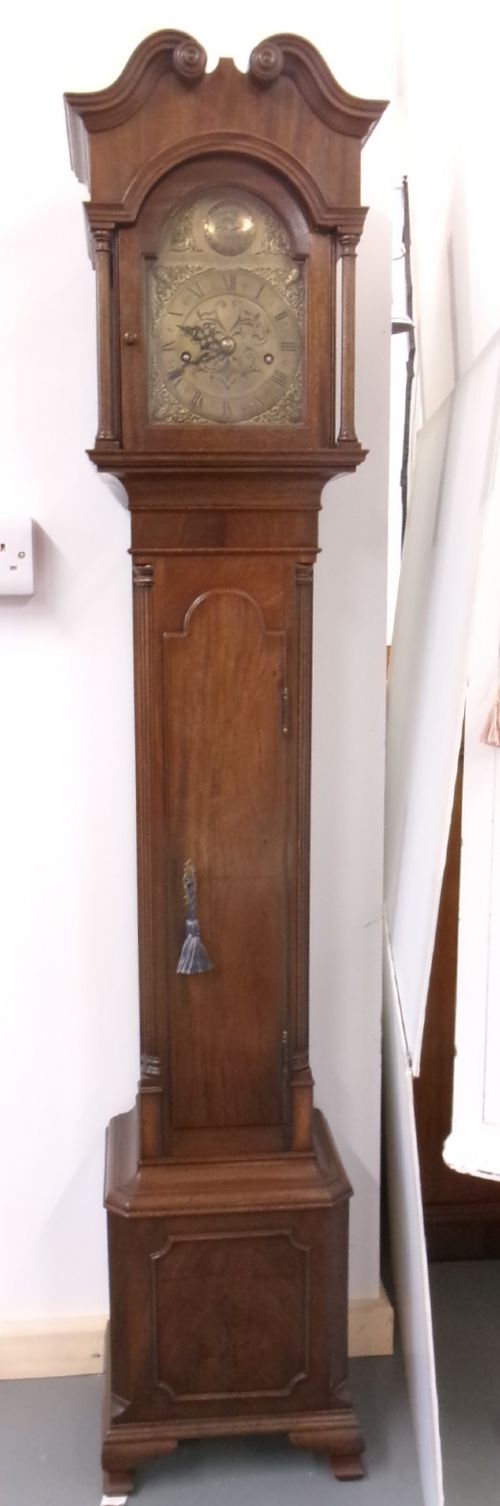
A wooden floor standing clock, frequently called a longcase or grandfather clock, stands upright to house a tall weight-driven movement and pendulum. The selections on this page span several centuries, reaching from the seventeenth century through the Georgian and Victorian eras into the twentieth century, encompassing smaller scaled grandmother and granddaughter variants.
Cabinet timber defines the visual presence of these pieces, with mahogany, oak, and walnut appearing repeatedly across regional workshops. Regional variations emerge clearly in the titles, from Scottish examples originating in Edinburgh, Dunfermline, and Forres to pieces bearing the marks of makers in London, Norwich, Exeter, and Henley.
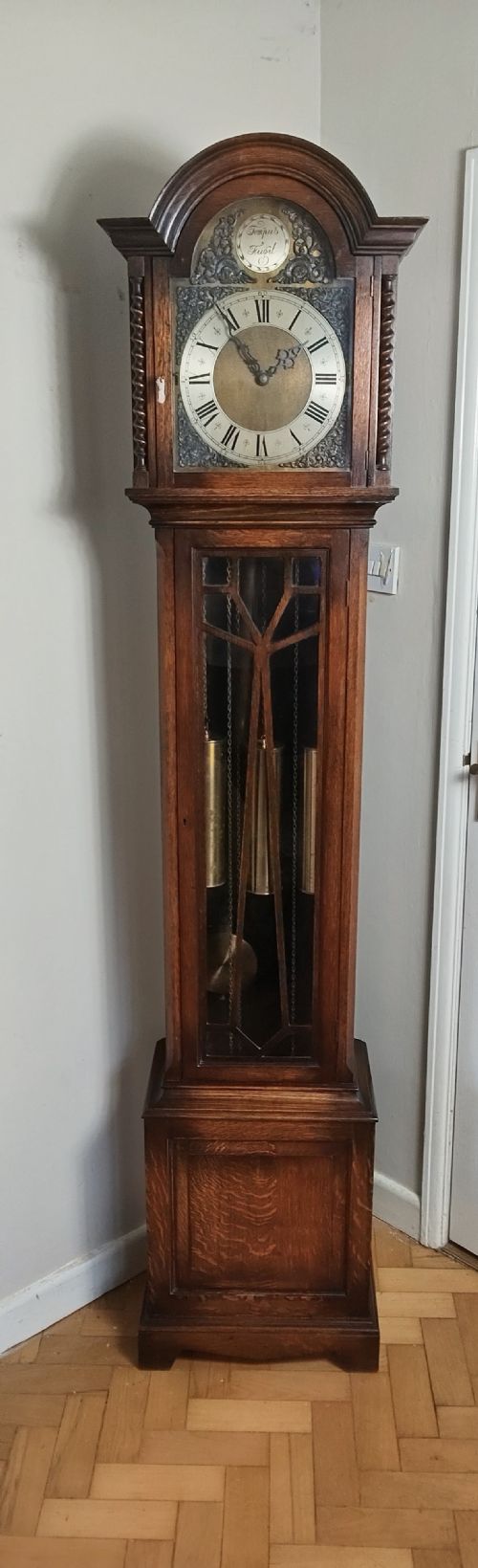
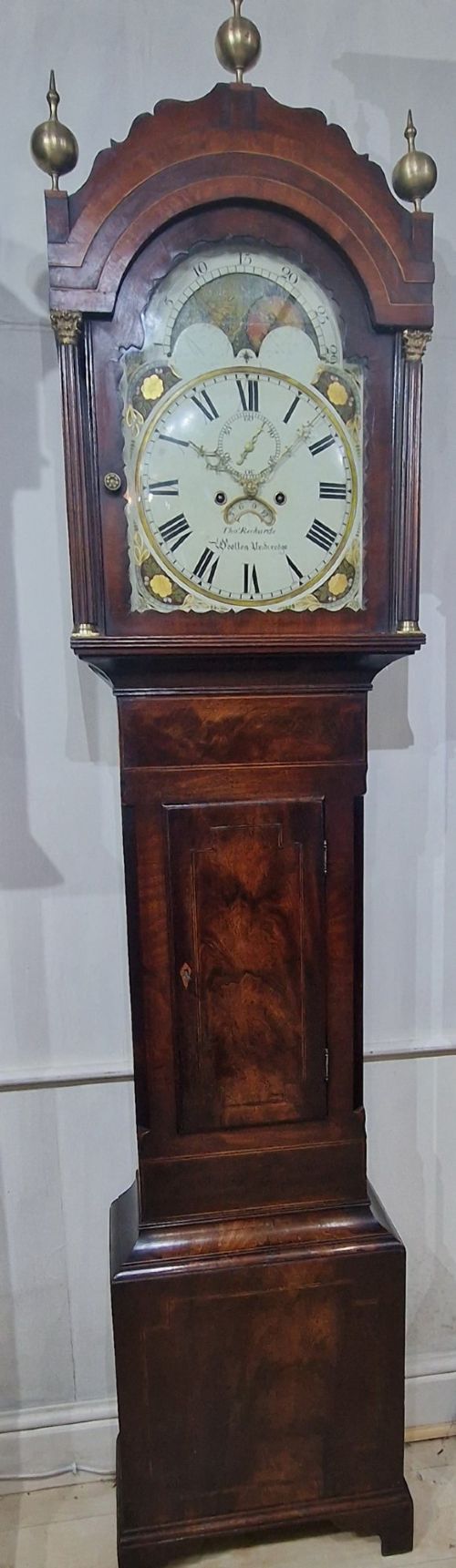
Dial presentation varies from brass faces to painted dials, sometimes incorporating rolling moon phases and musical mechanisms with multiple weights. Collectors encounter both full-sized longcase clocks and more compact grandmother and granddaughter clocks dating to the Edwardian period and the nineteen-thirties.
How wooden floor standing clocks were made
Cabinetmakers constructed the tall wooden cases using native and imported timbers, selecting sturdy oak for early provincial pieces and fine mahogany or figured walnut for more refined examples. Veneers such as flame mahogany and burr walnut were applied carefully to flat surfaces and door panels to create rich grain patterns.
Clockmakers fitted brass or painted dials into the hoods, connecting them to weight-driven movements with eight-day or thirty-hour durations. Complex models integrated chime arrangements, multiple weights, and moonphase mechanisms behind glazed dial doors.
Listings feature oak, mahogany, and walnut cases spanning the Georgian, Victorian, and Edwardian periods.
What varies in quality in wooden floor standing clocks
The refinement of the cabinetwork separates standard examples from exceptional pieces, particularly in the selection of timbers like flame mahogany or burr walnut and the execution of quarter veneering. Proportions dictate elegance, with slimmer cases and well-balanced hood designs holding greater presence.
Movement complexity introduces another distinction, as eight-day durations, musical chimes, and rolling moon complications require sophisticated engineering from the maker. Retaining an original signed dial and movement together with its matching case preserves the integrity of the piece.
Hendrie Ogg Dunfermline·Green of Edinburgh·Winsor Bishop Norwich·Benjamin Taylor·Edward Upjohn Exon·Edward East·Joseph Knibb·John Banks Oldham
The Wooden Floor Standing Clock Glossary
- Longcase clock
- A tall weight-driven timekeeper housed in a wooden floor-standing case. It is often referred to colloquially as a grandfather clock.
- Grandmother clock
- A smaller, more slender version of the traditional longcase clock. These usually date from the twentieth century or late Victorian period.
- Quarter veneered
- A cabinetmaking technique arranging four matched veneer segments to create symmetrical grain patterns. This is commonly seen on walnut cases.
Wooden Floor Standing Clock: Frequently Asked Questions
How do I choose between a grandfather and a grandmother clock?
Grandfather clocks offer full proportions and dominate a high-ceilinged room with their substantial height. Grandmother clocks provide a scaled-down alternative suited to tighter spaces while retaining traditional mechanical movements.
Consider the available floor space and ceiling height in your home before selecting a case size.
Where should I place a longcase clock in my home?
These clocks require a stable, level floor and a firm interior wall to hang plumb and run accurately. Avoid placing them in areas subject to heavy vibrations, direct sunlight, or damp conditions that could affect the wood.
Choose a hallway, landing, or principal room where the chime and pendulum swing can be appreciated.
How do I tell an 18th century clock from a later reproduction?
Examine the construction of the case interior, the timber shrinkage, and the integration of the movement to the seat board. Eighteenth-century pieces display hand-cut joinery and signs of age appropriate to provincial workshops.
Compare the dial signature and style against known records of the named maker.
What does an eight-day movement mean?
An eight-day movement requires winding once a week using a crank or key to pull up the driving weights inside the trunk. This differs from thirty-hour movements which need daily or frequent attention.
Most high-quality longcase clocks from the Georgian era onwards utilise this eight-day system.