
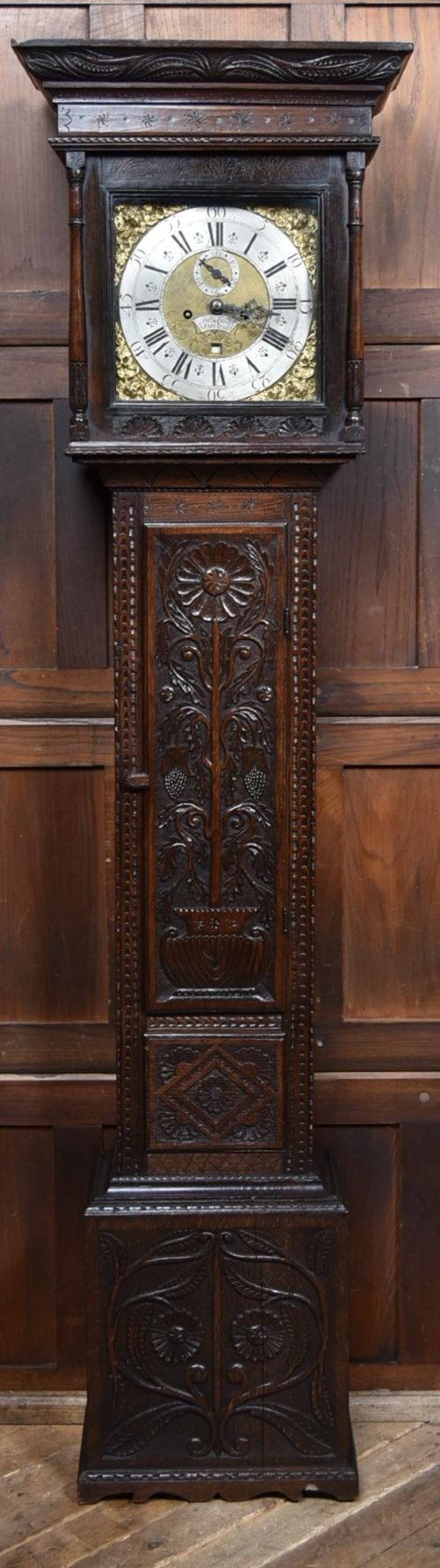


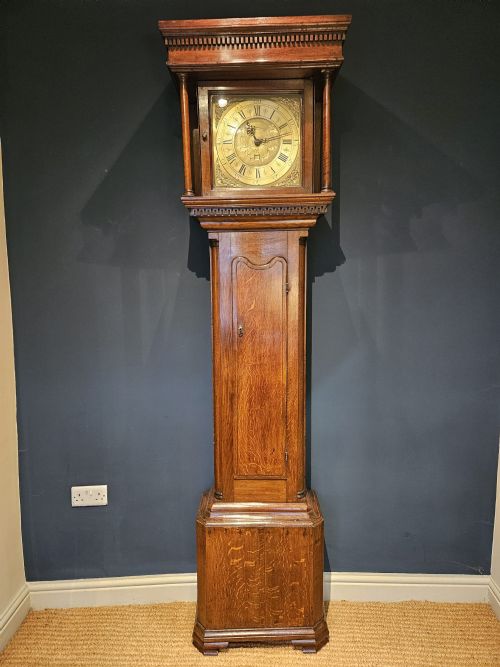


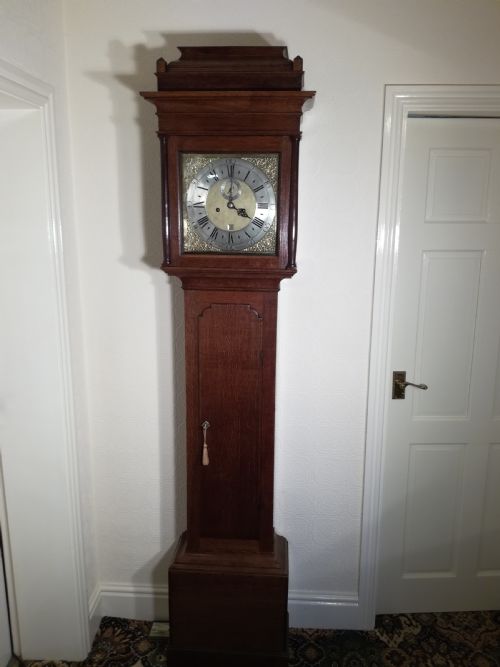
Provincial Oak Grandfather Clock
These provincial oak grandfather clocks bring local character and centuries of timekeeping tradition straight into a hallway.
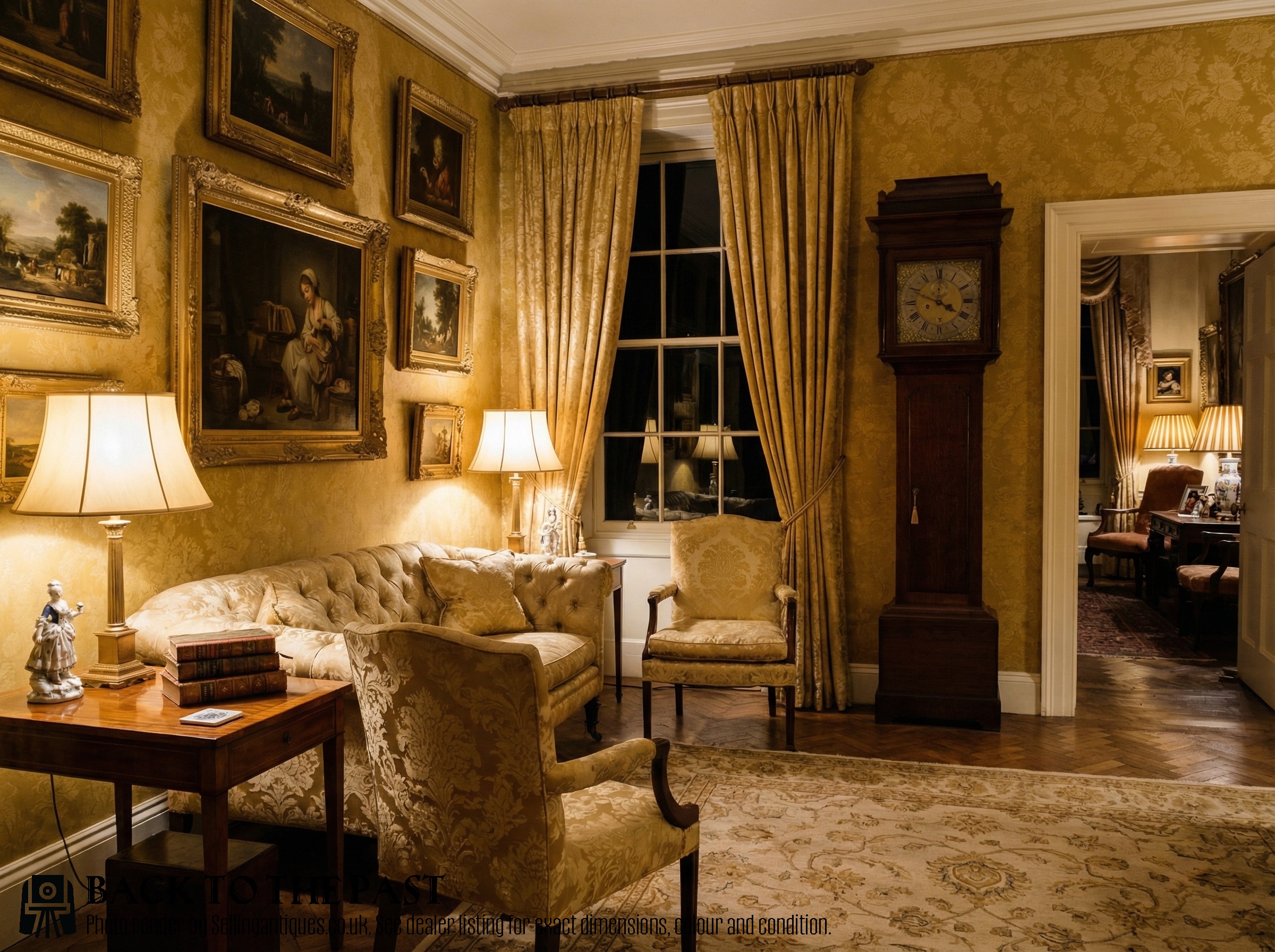
Provincial Oak Grandfather Clock
A provincial oak grandfather clock represents a domestic timekeeper shaped by regional cabinet makers during the Georgian and nineteenth-century periods. These longcase clocks appear in proportions ranging from small slim builds to imposing regional formats.
Most examples found here combine solid timber construction with brass dials, often featuring signed faces that link the piece to specific market towns and makers across Britain. The forms vary from straightforward thirty-hour movements to more complex eight-day mechanisms.
Buyers seeking a provincial oak grandfather clock encounter regional traditions from Norfolk, Cheshire, Lancashire, and Yorkshire. These pieces reflect the utilitarian yet ambitious work of provincial horologists operating outside major metropolitan centres.
How they were made
The primary material is oak, occasionally paired with mahogany details or glass hood doors to protect the dial. Cabinet makers constructed these tall cases using sturdy timber frameworks designed to house weighted movements securely.
Dial construction typically involves brass components, sometimes enhanced with rolling moon mechanisms or engraved signatures recording the maker and location. Iron and brass internal gear trains were assembled by hand to drive the thirty-hour or eight-day cycles.
Listings span the Georgian period, the eighteenth century, and the nineteenth century, utilising oak, mahogany, brass, glass, and iron.
What varies in quality
Quality separates simple regional utility pieces from ambitious provincial masterworks through the sophistication of the cabinet work and the complexity of the dial. Cases with refined proportions and secondary woods like mahogany show greater ambition.
The movement and dial execution dictate the upper tier of the range, particularly where signed brass faces feature rolling moon complications or intricate engraving. Simpler thirty-hour oak clocks form the utilitarian baseline of the tradition.
Jn° Smith Macclesfd·Haythornwaite Kirkby Lonsdale·John Salmon Nantwich·Stanyer Nantwich·Samuel Buxton Diss·James Draycot Wells·Herbert of Haversham·Richard Midgley of Halifax
The Provincial Oak Grandfather Clock Glossary
- Longcase clock
- A tall pendulum clock housed in a wooden case designed to rest directly on the floor. These pieces are also widely known as grandfather clocks.
- Thirty-hour clock
- A timekeeper requiring winding once a day, typically driven by a single weight and possessing a simpler gear train. These movements often lacked striking trains or featured basic countwheel striking.
- Eight-day clock
- A timekeeper requiring winding approximately once a week, utilising two weights or spring drives. This mechanism represents a more complex level of horological engineering.
- Rolling moon
- A dial mechanism displaying the phases of the lunar month through a rotating disc behind an aperture. This feature adds visual complexity to regional brass faces.
Provincial Oak Grandfather Clock: Frequently Asked Questions
What is a provincial oak grandfather clock?
A provincial oak grandfather clock is a tall floor-standing timekeeper made outside London by regional cabinet makers and horologists during the eighteenth and nineteenth centuries. These pieces utilise local timber and feature hand-assembled movements.
They serve as both functional timepieces and architectural tall furniture built to stand in domestic hallways and living spaces.
How do thirty-hour and eight-day movements differ?
Thirty-hour movements require winding daily and generally utilise simpler internal gear trains suited to everyday domestic use. Eight-day movements need winding roughly once a week and involve more complex weight-driven mechanisms.
Both systems were housed within the same tall oak case formats depending on the original commission.
Where were these regional clocks made?
Regional clocks were produced by makers working in market towns across Britain, including locations in Cheshire, Lancashire, Norfolk, and Yorkshire. Each maker stamped or engraved their name and town onto the brass dial.
These inscriptions connect individual timekeepers to specific local workshops and trading centres.