


Brass Spandrel Grandfather Clock
A brass spandrel grandfather clock houses weight-driven timekeeping in a tall wooden case, bringing mechanical mastery and presence to a room.
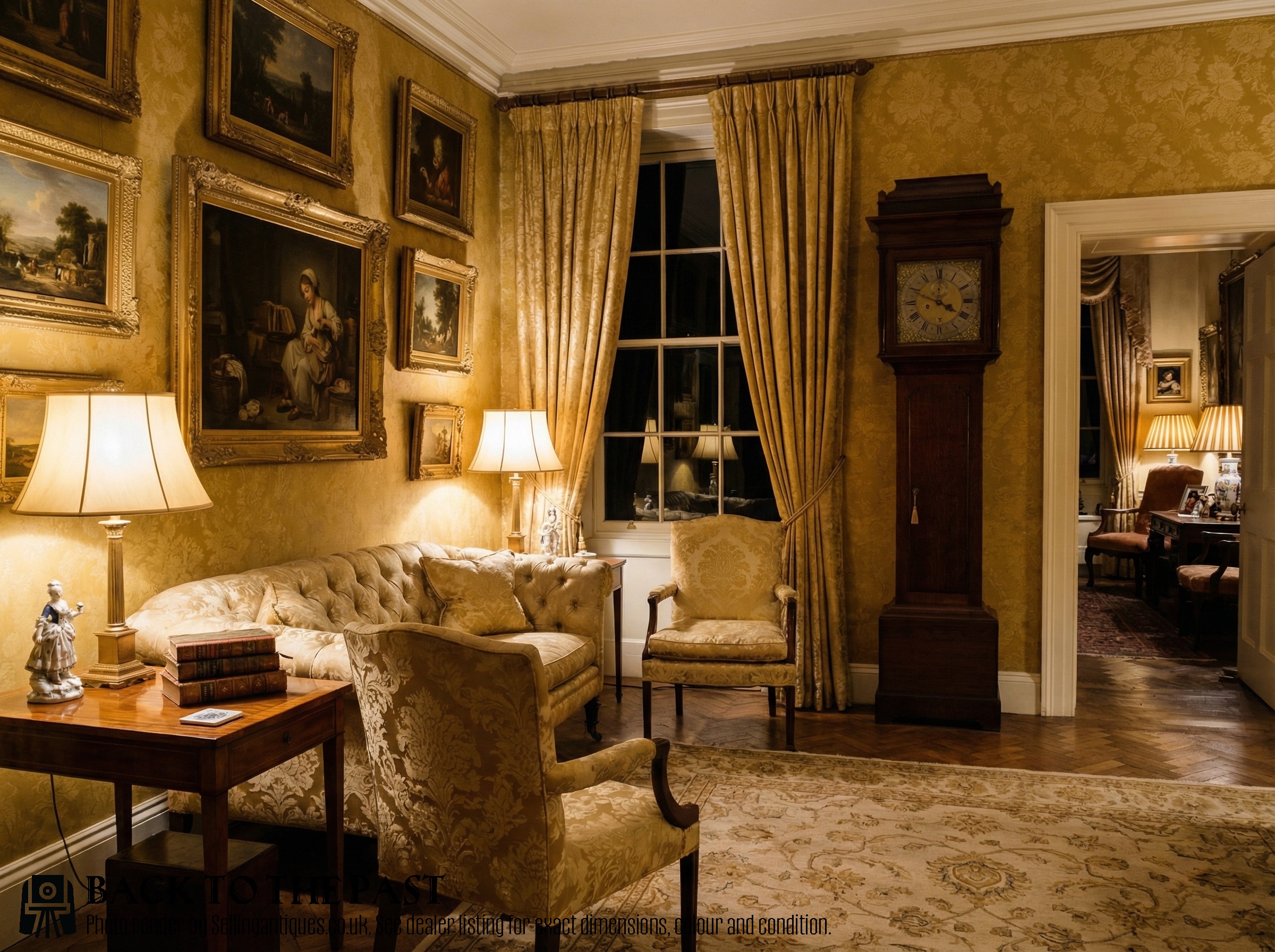
Brass Spandrel Grandfather Clock
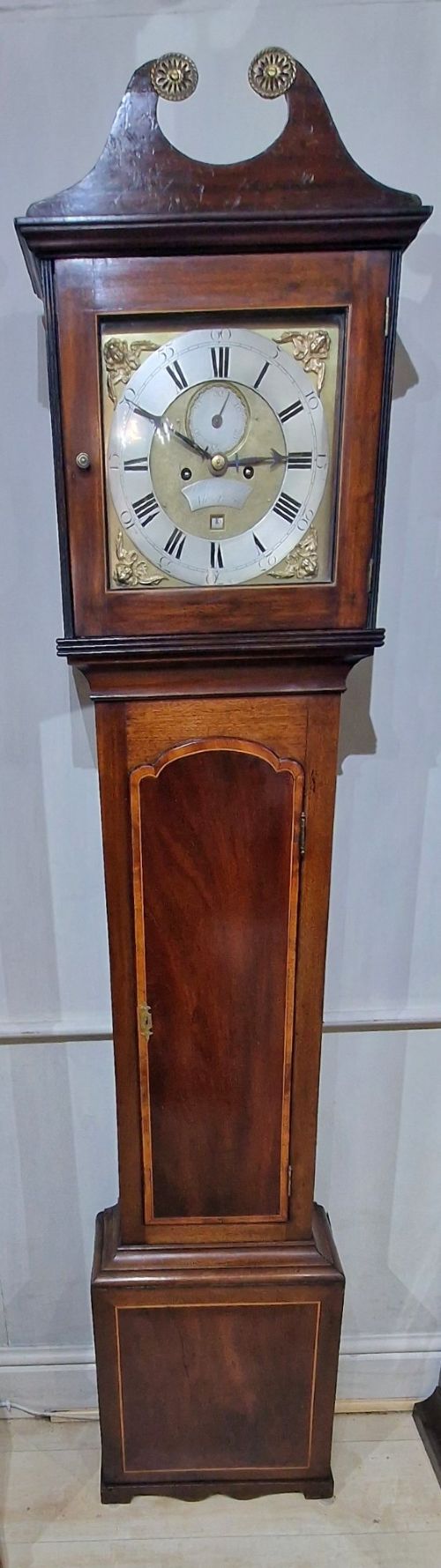
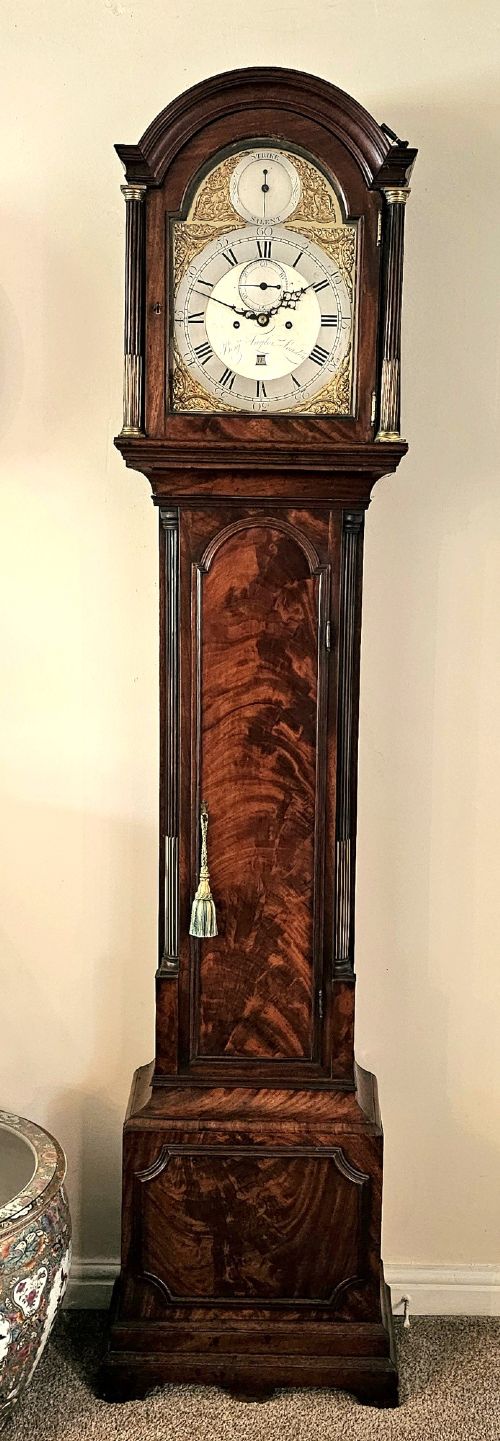
A brass spandrel grandfather clock represents tall case timepieces enclosing brass dial furniture within oak or mahogany housings. These tall timekeepers derive from the Georgian and eighteenth century periods, often carrying provincial or London signatures.
The version most commonly met on this page is the oak or mahogany longcase clock bearing brass dial appurtenances from the eighteenth century. Makers such as Thomas Utting, Benjamin Taylor, and William Lister appear across these examples.
Tall timepieces span walnut, pollard oak, and flame mahogany enclosures, whilst movements range from single-handed thirty-hour trains to eight-day mechanisms. Dial sizes and timber choices reflect the workshop origin and the period of assembly.
How they were made
Cabinetmakers constructed tall cases from solid oak, mahogany, and walnut timbers, frequently employing flame mahogany veneers for rich surface figure. Joinery relied on traditional pegged and dovetailed construction to house heavy weights and swinging pendulums.
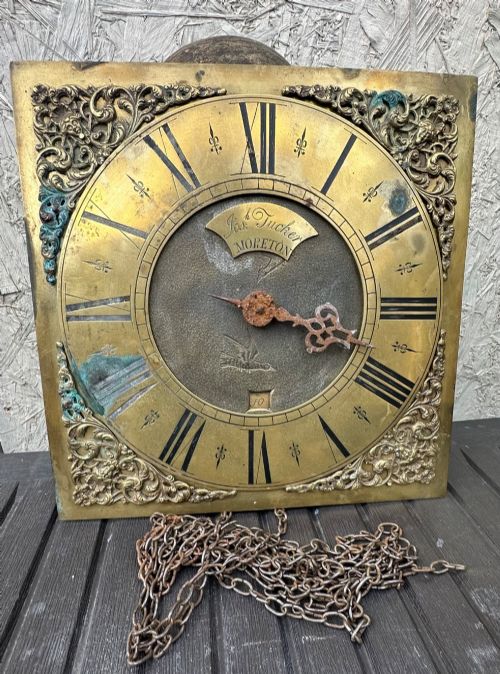
Clockmakers cast dial plates and corner ornaments in brass, then engraved numerals, maker signatures, and subsidiary chapters into the metal surface. Steel components formed the internal gear trains, escapements, and motion works that transferred force from suspended lead or iron weights.
Listings feature eighteenth-century and Georgian pieces constructed from oak, mahogany, and brass.
What varies in quality
The distinction between ordinary and superior longcase clocks rests upon the crispness of brass engraving and the depth of cast corner ornaments. Finer dials display intricate hand-chased detail and silvered auxiliary rings rather than plain stamped plates.
Timber selection and cabinet proportion dictate visual merit, with figured flame mahogany and pollard oak standing apart from plain deal or standard oak. Well-proportioned hoods and columns demonstrate the cabinetmaker's skill in balancing the tall trunk and base.
The Brass Spandrel Grandfather Clock Glossary
- Spandrel
- The triangular corner space on a clock dial outside the chapter ring, frequently filled with cast brass ornamentation. These decorative corners help date the movement by their changing stylistic motifs.
- Longcase clock
- A tall weight-driven timekeeper enclosed in a wooden case with a pendulum swinging inside the trunk. Commonly termed a grandfather clock, these pieces measure time across thirty-hour or eight-day durations.
- Chapter ring
- The circular band on a clock face inscribed with numerals to indicate the hours and minutes. On brass dials, this ring is often silvered to contrast against the yellow metal ground.
- Movement
- The mechanical assembly of wheels, gears, weights, and escapement that drives the hands and powers the striking train. Longcase movements are built around brass plates held together by pillars.
Brass Spandrel Grandfather Clock: Frequently Asked Questions
How do I wind an eight day clock?
Wind an eight day longcase clock by inserting the crank key into the winding holes on the dial face and turning clockwise until the weights rise. Care must be taken not to overwind the movement.
Ensure the weights lift evenly and avoid letting the key slip during the process to protect the internal arbors.
Why does the clock have only one hand?
Early longcase clocks utilised a single hand because minute accuracy was less critical in domestic life during the eighteenth century. The dial subdivisions permitted reading time to the nearest quarter hour.
Single-handed movements often indicate an earlier period of manufacture before twin-train eight-day mechanisms became standard.
Where should I place a longcase clock?
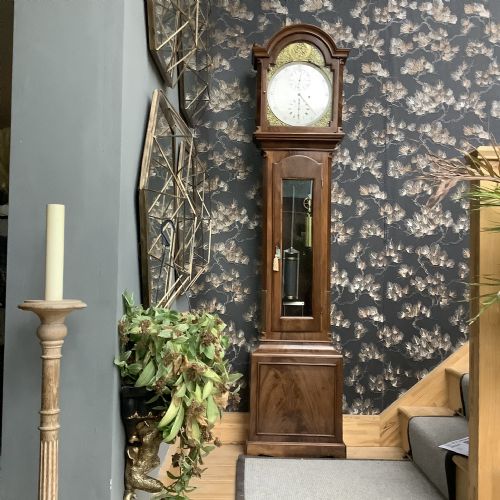
Position a tall clock on a solid, level floor against a secure wall to ensure the pendulum swings freely without catching. Hallways and landings provide traditional placement where the striking mechanism can resonate.
Keep the case away from direct sunlight and strong draughts to protect the wooden veneers and internal steel components.
How do I tell an 18th century dial apart?
Eighteenth century brass dials feature cast corner spandrels, engraved maker signatures, and separate applied chapter rings mounted to a brass plate. Earlier dials often present square proportions before arched tops became popular.
Signatures engraved directly into the metal plate near the base of the chapter ring usually name provincial or London makers.